By Lana Gunnlaugson, National SeaChoice Manager

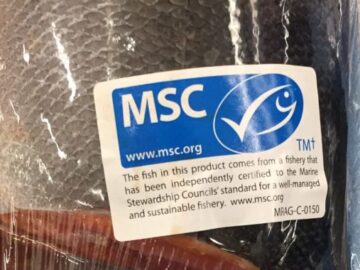
Fish marketCountry-of-origin labelling (COOL) has been mandatory in the US since 2002 and in 2009, US Congress even expanded COOL requirements to include fresh fruits, nuts, and vegetables – yup and you guessed it – seafood too. Canada opposed the COOL regulations arguing that COOL labelling was discriminating and against US World Trade Organization obligations. Today, in Canada, some fish and shellfish products are required to declare their country of origin on the label under the Food and Drugs Act and Fish Inspection Act, according to the the Canadian Food Inspection Agency (CIFA). Some is a start, but wouldn’t it be great if all seafood in Canada required COOL labelling?

And seafood labels could be so much more that just COOL! Imagine knowing how our seafood was caught or farmed. Heck, while we are at it, why not know the exact region?! Unfortunately, the Canadian Food Inspection Agency (CIFA) does not agree that these details are important, and as a result, this information is not available to most Canadians unless the retailer chooses to supply this information.

Luckily, retailers and smaller fishmongers recognize the importance of having detailed seafood labels. This information not only helps Canadians determine if their seafood is ocean-friendly, but it also helps to determine health considerations as well as food safety.

Seafood traceability is important. Although knowing where your fish came from doesn’t automatically mean that it is ocean-friendly, it does help to answer the necessary questions in determining seafood sustainability. Projects like ThisFish are excellent in helping Canadians understand the traceability of their seafood so that they can make more informed seafood decisions for the health of our oceans today and tomorrow.

If you are like me, and you think that Canadians deserve to know more about their seafood with better labelling regulations, please take action and write a letter to the federal government or your local seafood retailer.


Posted by... lana on May 16, 2013

Start small, give it a try, and see what happens!

Guest blog by Samantha Crowley,  Dalhousie University Student

salmonHow many times have you eaten something and thought to yourself, “I’m just not going to think about what’s in this/where it came from?”  If you’re like me, way too many times. Often it is from a fast-food chain, or out of a vending machine.  Rarely do we think of our fish dinners in this way; we generally think of fish as being a healthier and more sustainable choice than a hamburger.  However, as a marine biology student I am learning things about the oceans, that are making me think twice about the fish I eat.

Overfishing. By-catch. Ocean beds destroyed through bottom-trawling. Aquaculture’s dubious gifts of pollution and disease. After learning all this, I have had to take a very hard look at the fish I am eating, and have found myself asking the question I normally reserve for my guilty pleasure foods: just what exactly is the story behind what I am eating?

There are ways to find out, although for seafood finding information can be very difficult. Canada does not have mandatory seafood labelling which would tell the consumer where and how the seafood was caught or farmed. Yet without this  information we cannot determine a product is sustainably sourced or not.

Programs such as SeaChoice, which rates seafood based on Monterey Bay Aquarium’s criteria, are a great resource, but since product labels don’t give enough information, the consumer still needs to do some work. Start by doing some research on your favourite seafood and see if any of them are sustainable. And, start asking some questions: if no one is ever asking for more information, why on earth should suppliers feel the need to give us any?

It is often easy to feel that the earth’s situation is hopeless, that we have already messed up the planet so much there is nothing worth doing to try and save it, but this isn’t true.  No one is perfect, but little changes can make a big difference. Start small, give it a try, and see what happens!

By Lana Gunnlaugson, National SeaChoice Manager

Credit: Barry J Brady

Credit: Barry J Brady

Earlier this year, a motion was tabled in the House of Commons asking to make National Sustainable Seafood Day official in Canada. Since then, the Vancouver Aquarium’s Ocean Wise program and SeaChoice have been working with Blueyou Consulting and Executive Chef Ned Bell of Yew Restaurant + Bar to help build support for a National Sustainable Seafood Day in Canada.

Last Friday, David Suzuki joined special guests National Geographic Fellow, Barton Seaver and 12 celebrity chefs for a sustainable seafood celebration in Vancouver.

David Suzuki Credit: Barry J Brady Photography

David Suzuki Credit: Barry J Brady Photography


With 10 unique Canadian sustainable seafood tasting stations plus two global features all prepared by some of Canada’s top chefs, this event was not only a culinary adventure, but the inspirational stories of each fishery or farm offered not only solutions for seafood lovers, but more importantly hope for our oceans.

And just because the event is over, this doesn’t mean that our work is over, Canada! We need to gain support for National Sustainable Seafood Day to get it passed in Parliament and official on Canada’s calendars.

So what can you do to support us?

  • Sign the petition.
  • Write your local MP and ask them to support National Sustainable Seafood Day.
  • Buy a T-shirt to support the work of Ocean Wise and SeaChoice – email info@seachoice.org
  • Spread the word!

A BIG thanks to all the chefs, fishers, producers, sponsors and volunteers who made last Friday’s Seafood Celebration with David Suzuki and Special Guests one to remember!

Posted by... lana on May 2, 2013

One of Canada’s Favourite Sports

By Katherine Dolmage, Sustainable Seafood Market Analyst

Credit: Lana Gunnlaugson

Credit: Lana Gunnlaugson

I grew up in the “Salmon Capital of the World,” Campbell River. Every summer there was a huge influx of tourists to visit the world famous fishing lodges, and a constant scattering of boats fishing “The Hump” off Quadra Island. I also spent my summers working at a marine supply store where I would fill out endless fishing licenses, and sell hundreds of hoochies, cannonballs, and GPS units.

The sports fishing industry is huge across Canada: in BC alone recreational anglers directly spent over $600 million in 2010. People spend this money because a huge number of fish, many commercially important, are caught by sports fishers. 15 per cent of the annual halibut quota, or over 1 million pounds, is designated to sports fishers. In some areas of BC, the majority of salmon caught are by recreational fishers.

Fisheries and Oceans strictly regulates many of the sports fisheries. There are strict limits, for example, to the size and number of halibut that any one person may catch. Fish over 163cm must be released, and only 6 fish per season may be retained. Salmon also have strict regulations with regard to number and size of fish that may be retained. These regulations ensure that small fish, which have not had a chance to reproduce, and large, more fecund fish, will not be harvested. Similar regulations are in place for shellfish.

Recreational fishing licenses are required for anybody fishing in BC waters, and separate licenses are available for fresh and salt water. In addition, if you will be fishing for salmon a salmon conservation stamp must be added to your license. DFO has some suggestions about how to fish responsibly on their website, as well as great tips on how to successfully release fish to ensure their survival.

In my opinion, there is little more satisfying than being able to serve something that you’ve harvested yourself, whether it’s a fish you’ve caught or veggies you’ve grown, and there is absolutely nothing more satisfying than a day spent on the water (even when you come home empty handed)! A 2013 license is good until March 31, 2014, so to get the most bang for your buck, pick yours up soon; ready your boat, and maybe your guide, and enjoy yourself on the water this spring.

Posted by... lana on Apr 25, 2013

Meet the Chefs!

By Lana Gunnlaugson, National SeaChoice Manager

NSSD LogoNext Friday, 12 top chefs are coming to Vancouver to join forces in support of making National Sustainable Seafood Day official in Canada. Each chef is preparing a unique “Best Choice” seafood culinary creation that is not to be missed. Trust me, I’ve seen the line-up of dishes and my mouth is already watering! And not only will chefs be attending, but the fishers and aquaculture producers will be there to share their seafood solution stories for our oceans. And the icing on the cake will be hearing our keynote speakers, David Suzuki and Chef Barton Seaver.

The chefs involved with this event are key ocean ambassadors that have the power to influence not only their restaurant’s menu and customers, but as celebrity chefs they influence food lovers and communities at large across the nation. We hope you will be able to join us for this special seafood celebration to toast these amazing chefs for making the commitment to serve ocean-friendly menus and keep our oceans healthy for today and tomorrow. Oh, and definitely take 2 seconds to sign your name to the petition in support of National Sustainable Seafood Day.

Introducing the chefs:

Ned BellChef Ned Bell – YEW Restaurant and Bar (Vancouver)

The co-host and heart behind this event, Chef Bell is not only helping to bring us this amazing event, but he has been behind the scenes from the beginning to make National Sustainable Seafood Day official in Canada. Executive Chef of YEW Restaurant and Bar at the Four Seasons Hotel Vancouver, Chef Bell will be working his culinary magic to feature two inspirational global solutions –Selva prawns and yellowfin tuna- both generously donated by Blueyou.

Rob ClarkChef Robert Clark – (Vancouver)

Co-founder of Ocean Wise and the annual Spot Prawn Festival in Vancouver, winner of the Murray A. Newman Award in recognition of his invaluable contribution to Pacific Northwest aquatic ecosystems, and an advocate of sustainable seafood, Chef Rob Clark will be joining us to prepare a local favourite – the BC spot prawn. There couldn’t be a better pairing for this ocean-friendly treat which is kindly supplied by Organic Ocean.

Robert WongChef Robert Wong – Szechuan Chongqing (Vancouver)

Fourth generation chef, and 2006 winner of the “Best Sichuan Dish” from Hong Kong Tourism, Robert Wong is the head chef of Szechuan Chongqing, the first Chinese restaurant to go ocean-friendly with Ocean Wise in Canada this past year. Chef Wong will be preparing scallops, which have generously been donated by Taylor Shellfish Farms.

Ben GenailleChef Benedict Genaille – (Vancouver)

Instructor at the Thompson Rivers University’s Aboriginal Cuisine course, Chef Genaille will bring his passion for food by preparing Kanata cuisine which uses Canadian First Nations food in traditional recipes with modern flair. Chef Genaille will be preparing a smoked sablefish dish, with the sablefish donated by the Canadian Sablefish Association .

Hyatt Head Shots KYLE 0058Chef Kyle Groves – Catch Restaurant and Oyster Bar (Calgary) Chef Kyle Groves is travelling from Alberta to prepare a landlocked closed-containment farmed salmon tasting, which is generously being supplied by Albion Fisheries and the Freshwater Institute. Chef Groves once listed sustainable seafood as one of the five ingredients he couldn’t live without – which makes him the perfect match for this seafood celebration!

hi_res_JasonBangerter3Chef Jason Bangerter – Luma (Toronto)

Executive Chef Jason Bangerter joins us all the way from Toronto to prepare lobster from our east coast. Chef Bangerter was trained in London and has cooked at Michelin-starred restaurants in France and Switzerland. His contribution is guaranteed to please with this Canadian east coast ingredient kindly donated by Sing Lobster.

_BARTON SEAVER HEADSHOTChef Barton Seaver – (Washington)

Chef Barton Seaver is joining us all the way from the US to celebrate sustainable seafood. Cookbook writer and National Geographic Fellow Barton Seaver has dedicated his culinary career to helping us restore our relationship to the ocean. Chef Seaver will be serving oysters kindly supplied by Taylor Shellfish Farms.

SONY DSCChef Craig Dryhurst – YEW Restaurant (Vancouver)

Executive Sous Chef Craig Dryhurst from the Four Season Vancouver Hotel’s YEW restaurant is pairing up with Chef Seaver to shuck up the mouth-watering oysters donated by Taylor Shellfish Farms.

Quang

Chef Quang Dang – West Restaurant (Vancouver)

Executive Chef Quang Dang has worked in some of Vancouver’s finest kitchens while competing in international food competitions such as Bocuse D’Or in Lyon, France. Chef Dang joins us to  prepare BC albacore tuna kindly donated by North Delta Seafoods and the Canadian Highly Migratory Species Association.

Chris WhittakerChef Chris Whittaker – Forage Restaurant (Vancouver)

Chef Whittaker is representing the BC Chefs’ Table Society as he prepares mussels generously supplied by Taylor Shellfish Farms. Chris has been a key ocean ambassador over the years with his involvement in the Canadian Chefs’ Congress, local Spot Prawn Festival and most recently the opening of the Vancouver restaurant Forage.

frankpabst_mediaChef Frank Pabst – Bluewater Restaurant bar + cafe (Vancouver)

One of Canada’s most accomplished chefs and widely recognized for his leadership in responsible seafood practices, Chef Frank Pabst joins us to prepare a personal favourite, the Pacific sardine, which has kindly been donated by North Delta Seafoods and the Canadian Highly Migratory Species Association.

LeeChef Lee Humphries – C Restaurant (Vancouver)

Chef Humphries is the Executive Chef at C Restaurant where his passion for local and sustainable ingredients inspire his culinary creations. Chef Lee is serving up Canadian closed-containment sturgeon and caviar which has kindly been donated by Northern Divine.

Posted by... lana on Apr 19, 2013

Where does your canned tuna stack up?

By Katherine Dolmage, SeaChoice Sustainable Seafood Market Analyst

Greenpeace Canada

Greenpeace Canada

Tuna is a confusing species, especially when you are trying to determine the sustainability of one product versus another. There are so many species, stocks fishing methods, and who knows what “chunk light” means, anyways? Many tuna stocks are overfished or depleted, and illegal, unreported and unregulated (IUU) fisheries are common on the high seas where tuna often are found.

That’s why the annual Greenpeace Canned Tuna Sustainability Ranking is such a huge help to consumers. These rankings represent the results of extensive surveys sent to the major canned tuna producers in Canada, asking for information not only on what types of tuna, methods and areas of catch are used, but also what policies producers have in place for tuna procurement as well as to ensure that the vessels catching the fish are operating legally and adhering to labour laws.

For the third year in a row, Raincoast Trading and Wild Planet lead the way for sustainability in canned tuna. Both of these companies’ source pole and line caught tuna, support sustainable fisheries and also push for large scale changes in the industry.

SeaChoice was involved with the Greenpeace process with two of our partners, Canada Safeway and the Overwaitea Food Group, and are excited to see both retailers move up in the rankings this year. After many months of hard work to produce the first fish aggregating device (FAD)-free skipjack tuna by a national brand, Canada Safeway is deserving of the rank of top retailer. Greenpeace notes that both Canada Safeway and Overwaitea Foods have plans to continue their procurement of more sustainable tuna, and we are excited to work with them to bring these products to shelves.

As consumers, it is extremely hard to do all of the research and know all of the facts behind where all of your products come from. But hopefully this information will make it easy to purchase tuna that you can feel confident is not only a healthy option for you, but one that supports healthy oceans as well!

Posted by... lana on Apr 11, 2013

What makes aquaculture sustainable?

Closed Containment Farm - Credit: Lana Gunnlaugson

Closed Containment Farm – Credit: Lana Gunnlaugson

By Katherine Dolmage – SeaChoice Sustainable Seafood Market Analyst

A few weeks back, I discussed the four elements evaluated to determine the sustainability of wild fisheries. But the process is quite different when considering aquaculture. The knee-jerk reaction for many people is to say that aquaculture is bad. But that is just not true! Nearly 50 per cent of the seafood consumed worldwide comes from aquaculture, and there are many sustainable options. When evaluating aquaculture, eight areas are considered.

  1. Data: seafood farmers must be transparent and provide data requested from the evaluator. This may relate to chemical inputs, feed, survival rate, or many other things.
  2. Effluent: if aquaculture operations are discharging effluent, or wastes, directly into the environment without treating, it could cause harm to local organisms.
  3. Habitat: the site of aquaculture operations is an important factor in its sustainability. Tearing down important mangrove forests to build shrimp farms, for example, would result in a low score for habitat. Sites that are away from sensitive or ecologically important habitat areas receive higher score.
  4. Chemical Use: a wide variety of chemicals might be used in aquaculture. These include chemicals for pest management and disease control. Like effluent release, using chemicals in open aquaculture systems will allow them to interact with the environment, and they may impact native species or habitat. The amount of chemicals used and the level of interaction with the natural environment are considered.
  5. Fish Feed: many species that are commonly farmed, like salmon and prawns, are carnivores. They require feed made from other fish to grow. The conversion ratio (or amount of protein required for the fish to grow the same amount) varies widely by species. An efficient conversion ratio (1kg fish in for 1kg fish out, for example) will score higher than a less efficient ratio. Even better, some fish, like tilapia, can be raised on a vegetarian diet. While the ecological footprint of the area used to produce the feed is still considered, species that can be raised without consuming other fish will score higher than carnivorous fish.
  6. Escapes and Introduced Species: when aquaculture operations are not separated from the natural environment, interaction between species can occur. This can lead to hybridization of species, or to non-native species being introduced. The risk of escape as well as the risk of impact on native species of escape is evaluated.
  7. Disease (Interaction with Pathogens and Parasites): any time animals are raised together in close quarters, diseases are a threat. If wild species are coming into contact with the aquaculture operations, the diseases or parasites may spread. The risk of transmission to wild populations is measured.
  8. Source of Stock: aquaculture operations usually start their process with eggs or young animals. In salmon farms, the eggs are grown in hatcheries and shipped to farms at a certain stage of their growth. In shrimp farms, wild stock is often captured and then raised in farms. This is also the case for “tuna ranching” where young bluefin tuna are caught, penned, and fed and fattened until they reach optimal size. Aquaculture that does not rely on wild fish as a source of brood stock is a more sustainable option.

An example of an aquaculture product recommended by SeaChoice is closed containment farmed salmon. Closed containment systems remove the operation from the natural environment, which eliminates the risk of escape or disease transfer. Effluents are reduced, and can be treated before being discharged. Another great farm raised product is shellfish. These animals require no feed input at all, and actually clean the water as they grow!

FOR IMMEDIATE RELEASE: April 8, 2013

Vancouver, BC and Halifax, NSToday SeaChoice and the Monterey Bay Aquarium’s Seafood Watch program celebrate the release of six new seafood recommendations that highlight the benefits of closed containment aquaculture.

Given that many wild fish stocks are overfished, sustainable aquaculture provides a viable solution for providing healthy seafood for an ever growing population. However some conventional aquaculture operations such as open net-pen operations can have negative environmental effects on our marine ecosystems. Land-based closed containment provides a solution by producing an ocean-friendly seafood option. Five of the new SeaChoice recommendations rank as a “Best Choice” or “Green” due to their high environmental performance.

”This is an exciting announcement from coast to coast,” said Kelly Roebuck, SeaChoice representative from the Living Oceans Society. “Chefs, retailers and shoppers can have confidence that they are making a smart choice for the health of the oceans with these closed containment farmed seafood options.”

The new seafood recommendations include the following:

Species Method/Location SeaChoice Ranking
White Sturgeon Farmed in recirculating systems/Canada Green
Nile Tilapia 100% recirculating/Canada Green
Gilthead Sea Bream 100% recirculated/Canada Green
European Sea Bass 100% recirculated/Canada Green
Yellow Perch Recirculated/US Green
Atlantic Halibut Recirculating system/Canada Yellow

“These systems separate production from the natural environment, which minimizes the risk of escapes and disease transfer to wild fish. Water is purified to remove potential pathogens, eliminating or greatly reducing the need for antibiotics and chemicals, and then recirculated to reduce discharge,” stated Bill Wareham, SeaChoice representative from the David Suzuki Foundation. “Effluent from the systems can also be treated before being released to mitigate negative impacts, and in many systems, waste products can be used as fertilizers,” concluded Wareham.

Justin Henry, farmer for the white sturgeon closed containment operation, Northern Divine, stated “Our commitment to sustainable farming practices for our sturgeon and caviar have been in practice for a number of years, and today we are extremely proud that we have been recognized as a “Green” “Best Choice” by SeaChoice.” Overall, the closed containment white sturgeon farm received high green rankings for nearly all criteria due to their distinguished sustainability performance in waste control, and no use of antibiotics or chemicals.  “Sustainability is essential to our business and our customers.” concluded Henry.

“We are pleased to see the aquaculture industry implementing environmentally responsible practices,” said Jennifer Dianto Kemmerly, Director of Monterey Bay Aquarium’s Seafood Watch Program. “Such innovation is critical to ensuring ocean health, especially as more of our seafood supply comes from farmed sources.”

To view the new assessments, please visit: www.SeaChoice.org

SeaChoice 

Formed in 2006, SeaChoice is a national program that provides science-based sustainability assessments of seafood and helps Canadian businesses and consumers make sustainable seafood choices. SeaChoice is a joint initiative of the Canadian Parks and Wilderness Society BC, David Suzuki Foundation, Ecology Action Centre, Living Oceans Society and Sierra Club of BC. Working in collaboration with the Monterey Bay Aquarium’s acclaimed Seafood Watch program, SeaChoice undertakes science-based assessments, provides informative resources for consumers, and supports businesses through collaborative partnerships.

For more information contact:

Lana Gunnlaugson, National SeaChoice Manager

info@SeaChoice.org

778-833-2954


Next Page »