Category: Oceans

  • Over 80 groups call out eco-certified extinction

    Over 80 groups call out eco-certified extinction

    SeaChoice leads global call to stop greenwashing extinction of prehistoric skate

    SeaChoice member groups have been holding seafood eco-certifications, such as the Marine and Aquaculture Stewardship Councils, to account for over 20 years. Our expertise has resulted in us leading global collaborations with other conservation organisations to call out the greenwash and demand certifications live up to their promises.

    Most recently, Living Oceans helped rally over 80 organisations from around the world calling on the Best Aquaculture Practices and GLOBALG.A.P. schemes to immediately revoke their ‘sustainability’ certifications from salmon and ocean trout farms adjacent to the World Heritage Area, Macquarie Harbour, on the west coast of Tasmania.

    Here’s the press release:

    MORE THAN 80 GROUPS WORLDWIDE DEMAND FARMED SALMON ACCREDITATIONS STOP GREENWASHING THE EXTINCTION OF THE MAUGEAN SKATE

    Shoppers being misled by eco-certifications on Macquarie Harbour farmed salmon

    For immediate release 25th July 2023

    More than 80 organisations from around the globe are calling for the accreditation schemes, Best Aquaculture Practices and GlobalG.A.P., to immediately revoke their ‘sustainability’ certifications from farmed salmon and trout raised in waters adjacent to the World Heritage Area, Macquarie Harbour, Tasmania.

    The demand comes as federal and state government workshops are held in Hobart this week to decide on urgent action to prevent the extinction of the Maugean skate – a rare animal related to sharks and dating back to the time of dinosaurs.

    Despite scientific evidence that industrial fish farms in Macquarie Harbour are having a major impact on the waterway’s health and skate numbers, all three salmon farming companies operating in the harbour are certified as “environmentally responsible” by BAP or GlobalG.A.P.

    Signatories from 17 countries have sent open letters to both schemes demanding withdrawal of certification, condemning the misleading of unsuspecting shoppers, and calling for an end to greenwashing the extinction of the prehistoric skate. 

    The signatories include marine, shark conservation, animal welfare, and community groups, as well as independent scientists, a public policy think tank, and award-winning authors.

    Found only in Macquarie Harbour, the endangered Maugean Skate is one of the listed natural values of the World Heritage Area.

    Scientists from the University of Tasmania’s Institute of Marine and Antarctic Studies renewed their alarm recently after reporting a dramatic collapse in Maugean skate numbers with almost half disappearing in less than seven years.

    The scientists attribute the Maugean skate’s decline to the degraded environmental conditions in the Harbour, particularly dissolved oxygen levels, and explicitly named fish farms as one of the main causes of low dissolved oxygen levels in Macquarie Harbour.

    Quotes:

    “Major supermarkets rely on these certifications to sell farmed salmon and ocean trout with their “responsibly sourced” logos as part of their sustainable seafood policies. But there is nothing responsible about driving one of the rarest skate species in the world to extinction.” – Kelly Roebuck, SeaChoice 

    “This is certified ecocide. The Maugean Skate has one critical habitat, one chance at survival, the science is there, and the urgent action that is required to save this animal is simply not happening. Instead, we have greenwashing.” – Jessica Coughlan, Neighbours of Fish Farms 

    “These certifications must not shirk their responsibility here.  They cannot palm this off to the auditors or wait until the companies’ next audit to address this dire situation. Macquarie Harbour fish farm certifications should be immediately revoked, or they will be the first certification schemes in the world to certify an extinction of a species.” – Alistair Allan, Bob Brown Foundation

    “Shoppers should be outraged to know that not only are they being misled by these certification claims, but they are unknowingly contributing to the demise of a species as old as the dinosaurs,” – Rebecca Howarth, Environment Tasmania

    “The federal government is in Hobart again this week because the Tasmanian Government cannot be trusted to prevent the extinction of this species. Meanwhile, so-called ‘sustainability’ certification continues to greenwash the unsustainable practices of the salmon industry.” – Eloise Carr, Tasmanian Director, the Australia Institute

    Media contacts:

    Kelly Roebuck, SeaChoice kroebuck@livingoceans.org 0432 660 064

    Backgrounder:

    Letter to Best Aquaculture Practices 

    Tassal (Cooke Aquaculture) and Petuna (Sealord) are BAP certified

    Letter to GlobalG.A.P. 

    Huon Aquaculture (JBS) is GlobalG.A.P. certified

    IMAS Interim Report: Macquarie Harbour Maugean skate population status and monitoring 

  • A personal reflection on Seaspiracy

    A personal reflection on Seaspiracy

    Many issues the Netflix film covers hit home, but details and the proposed solution miss the mark.

    Seaspiracy, a Netflix film about our impact on the oceans, has people talking. Prominent marine conservation organizations and fisheries scientists have highlighted its misrepresentation of scientific facts and contested its main message (for example, here and here) — that there’s no way to produce seafood sustainably so people should stop eating it.

    Commentators have also noted the film’s:

    • Failure to acknowledge the need for and benefits of small-scale and artisanal fisheries
    • Colonial overtones
    • Lack of positive representation from the global South
    • Misrepresentation of non-governmental organizations (NGOs) and their staff
    • Omission that there are 177 NGOs working on a global campaign to eliminate harmful fishing subsidies
    • Implication that three billion people switching to land-based protein wouldn’t have an environmental impact

    I knew I’d find the film upsetting. After over a decade working in fisheries and marine conservation, I’m more familiar than I’d like to be with whaling, shark finning, overfishing, destructive fishing practices, bycatch of marine animals, plastic pollution and human rights abuses.

    Watching the film, I agreed with its points about the interconnection between marine ecosystem health and human health; the challenges of controlling and policing vessels on the high seas, thousands of miles from the nearest coast; the interplay between economics and environmental degradation.

    However, I don’t agree that everyone should stop eating seafood — because this won’t stop the atrocities in the film from happening. And not all fishing is conducted the way the film represents. For example, in many Canadian fisheries, fleets of small boats operate in well-managed, tightly controlled fisheries.

    For millions of people worldwide, not eating seafood is not an option — it’s their primary source of protein and/or employment. Millions in richer countries have their choice of protein options but — as awful as many of the film’s scenes are — few will stop eating seafood, even if they feel guilty about it. As the environmental community has learned over decades of trying to elicit behaviour change, telling people about their negative impacts seldom works, especially for things that require significant lifestyle change, like giving up flying or eating meat.

    My hope is that people who watch this film come away with a better understanding of why our food choices matter. If you want to stop eating seafood, or all meat, that’s a valid choice. If you decide to continue eating seafood, Seaspiracy shows some of the risks. But you can substantially lower your risk of contributing to those problems:

    • Find out how and where seafood products are harvested. Canada’s weak seafood labelling laws make this challenging, but asking for more information is essential if you want to use sustainability guides like those from Ocean Wise or Seafood Watch that assess and score the sustainability of hundreds of seafood types.
    • Buy seafood with a reputable eco-label. The Marine Stewardship Council, while not perfect, is driving positive change. Products carrying their label are more likely to be responsibly produced than those without. The same goes for the Aquaculture Stewardship Council and Best Aquaculture Practice labels. This article underlines labelling practices to be cautious of.
    • Support businesses following best practices, including labelling and traceability. You can buy Canadian-produced, sustainable, traceable seafood. Check out Skipper Otto, Organic Ocean and Afishionado.
    • Tell your retailer you care about sustainable seafood. Every major retailer in Canada has committed to sourcing (at least some) sustainable seafood, but practices vary in scope and ambition. Seafood Progress shows your retailer’s commitment and what steps it’s taking to improve seafood production. Tweet retailers from their profile pages, talk to seafood counter staff or call customer service lines.
    • Eat low on the food chain. Farmed mussels, clams and oysters benefit ecosystems because they require no or few inputs and feed by filtering water.
    • Learn more. Ian Urbina’s The Outlaw Ocean covers many of Seaspiracy’s themes but doesn’t gloss over the nuance, the human stories and the real reasons the ocean is threatened. Or read Urbina’s series on ocean crimes in the New York Times.

    Given what I know about the seafood industry, I can be a pain for friends or family when we go for sushi. If they watch Seaspiracy, next time they might understand. I’ll continue eating seafood but only if there’s enough information for me to know a product was responsibly produced. This helps support forward-thinking, responsible seafood businesses trying to do the right thing and encourages others to invest in better practices.

  • What is a bocaccio and what can it teach us about patience and resilience?

    What is a bocaccio and what can it teach us about patience and resilience?

    By Scott Wallace, Senior Research Scientist at the David Suzuki Foundation and SeaChoice Steering Committee member

    After years of careful management and industry efforts, bocaccio rockfish are rebounding

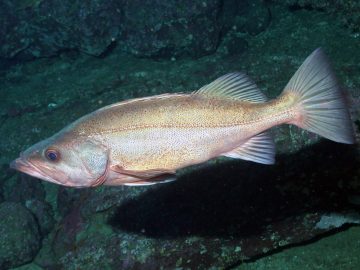
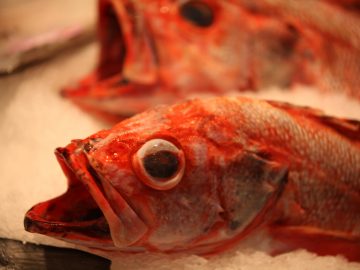
    Nobody likes a big mouth. Well, that’s not completely true. Canada’s Pacific groundfish industry is elated about a long hoped-for recovery of bocaccio rockfish. Bocaccio derive their name from the Italian term ‘bocacho’ meaning big-mouthed. While very few people have heard of this fish species, it has been the most talked about species in British Columbia’s groundfish fishery for the last 18 years.

    Rockfish fisheries are difficult to manage. There are 39 species of rockfish in our waters and they all have an inherent vulnerability to over-harvesting and a highly variable survival rate. The amazing story of bocaccio’s sudden recovery carries lessons that can be applied to most fisheries. It underlines the importance of having patience, managing expectations and building enough resilience to be able to follow nature’s lead.

    Since the 1950s, bocaccio populations from southern California to Alaska experienced a sustained decline throughout their range (Figure 1). In Canada’s Pacific waters, it is estimated that the population has declined to 3.5% of its unfished level. The situation was so severe that in 2002 the Committee on the Status of Endangered Wildlife in Canada (COSEWIC) recognized the species as threatened. Despite drastically lower catches and a prohibition on selling them, the bocaccio population continued to fall. In 2013, COSEWIC reassessed it as endangered – a more severe designation.

    In Canada, the main rebuilding strategy has been to ratchet down the level of allowable bycatch and hope for a period of high recruitment (i.e., larval survival). Lowering the catch limit sounds easy, but the challenge with this species is that they are difficult to avoid while targeting other more abundant species of fish. Even if they are returned to the water right away, rockfish do not survive being caught with commercial fishing gear. The change in pressure affects them too much on their way to the surface.  For 15 years, B.C.’s fishing fleets adapted their gear and methods to be able to stay within increasingly lower catch limits. That is, until 2019, when suddenly vessels were encountering bocaccio everywhere and could no longer avoid them. The hoped for high recruitment finally occurred.

    Independent scientific surveys corroborated the information from fishers and indicated a population recovery. The recently published Science Advisory Report suggests that in 2016, larval survival was 44 times better than average (Figure 1). Three years later, the juveniles of this cohort became large enough to be captured by trawl nets. It’s not surprising that fishers started to exceed the restrictive catch quota.

    For 2020, the quota for bocaccio has been cautiously increased, permitting industry a small level of non-directed catch while the population continues to grow (Figure 1). By 2022, a large portion of the 2016 cohort will become reproductively mature and will further contribute to rebuilding the population. Although marine ecosystems are highly unpredictable, at this point it appears that bocaccio is on a trajectory for recovery.

    This explosive recovery was a result of rebuilding efforts, ocean environmental conditions and patience. And in addition to this being a much-needed good news story in these challenging times, the story of bocaccio illustrates an important lesson: it shows that the year-to-year stability which businesses and regulators prefer can be incompatible with a species’ life history strategy.

    This means that for rockfish – and many other marine species – the only sustainable approach is to take a very small amount of what nature provides and accept that the “surplus” that we can safely harvest will change. We must be sure to leave enough resilience in the population until the next time when the ingredients of the ecosystem soup are favourable. For bocaccio, there was no predictable recovery trajectory, but all species have the capacity for resilience if we give them a chance. While it certainly was challenging, the industry had to accept lower levels of harvest and be patient while they waited for nature to provide the appropriate conditions for recovery.

    Similar to most fished marine species, bocaccio are a product of an exceedingly complex marine ecosystem. Ensuring that all species are managed with conservative catch limits, accurate reporting, and an abundance of precaution are the most important elements of maintaining wild harvests into the future.

    Figure 1: Estimates of spawning biomass (tonnes) from model published in Science Advisory Report. The median biomass trajectory appears as a solid curve surrounded by a 90% credibility envelope (quantiles: 0.05, 0.95) in light blue and delimited by dashed lines for years t=1935-2020; projected biomass appears in light red for years t=2021-2080. Also delimited is the 50% credibility interval (quantiles: 0.25-0.75) delimited by dotted lines. The horizontal dashed lines show the median Limit Reference Point (red: 0.4BMSY) and Upper Stock Reference point (green: 0.8BMSY). Catch and assumed catch policy (200 tonnes/year) are represented as bars along the bottom axis.


  • “Hybrid” salmon farms are no answer for British Columbia

    “Hybrid” salmon farms are no answer for British Columbia

    By Karen Wristen, SeaChoice Steering Committee member for Living Oceans

    The only effective way to protect wild Pacific salmon from salmon farms is to keep farms out of the water – completely.

    The Federal government has committed to doing something about open netpen salmon farms in British Columbia in recognition of the risks they pose to wild salmon populations – although exactly what they’ve committed to, and when, became murky after they were elected.

    Globally, the salmon farming industry has been forced to experiment with new productions systems because of the rapidly rising cost of controlling sea lice and disease in open netpens. As any industry would, it defaulted to the lowest-cost, highest return approach: the so-called ‘hybrid’ system in which salmon are raised to post-smolt stage in land-based facilities before being placed in the ocean.  The theory is that larger fish are less susceptible to dying from diseases and better able to withstand the ravages of sea lice. They spend only one year in the open netpen, rather than 18-24 months, so exposure time to lice and the shared diseases of salmon farms is shorter.

    This is perhaps an answer to production cost control, but it’s no answer to protecting wild salmon.

    Hybrid systems result in a higher biomass in the netpens throughout the ocean-based part of the production cycle, meaning that more pollution of surrounding waters and more fouling of the ocean floor will occur, unless the system is accompanied by extended fallow periods. The fish on the farms remain a breeding ground for the viruses, bacteria and parasites that plague salmon farms and are readily transferred to wild fish.  The farmed fish may withstand the infection and infestation pressure; but the wild salmon, particularly the vulnerable juveniles, continue to be at risk.

    Land-based farming schematic, courtesy of Kuterra

    Some companies are already using the hybrid system, which uses recirculating aquaculture technology (RAS) to raise the smolts to about 1 kg weight before putting them into netpens. While this might look like a positive step in the direction of a land-based industry, in fact it is not. Hatchery/nursery facilities for a hybrid system will be located so as to service the locations of netpens, to reduce stress on the post-smolt fish during transfer to the netpens. A full land-based RAS plant would locate closer to markets and transportation hubs. A RAS system for hybrid culture would be sized to grow the fish only to 1 kg of weight, whereas the full growout of fish in RAS requires much greater tank space and additional equipment/capacity. The industry has a limited pool of capital to draw upon, so deciding how and where to invest in land, bricks and mortar is a critical consideration for the future of salmon farming.

    The British Columbia Salmon Farmers’ Association has made it clear that its members favour the least-cost control measures: “The hybrid system, which involves extending the amount of time young fish spend in land-based hatcheries before being moved to ocean pens, is particularly promising in the near-term, and something we are actively pursuing.”

    The government promised us that it would end open netpen salmon farming in British Columbia by 2025. It would be unwise to wait while salmon farmers invest in new technology that depends on open netpens, before making it abundantly clear that those netpens will be gone within five years. That would be opening up the government to unnecessary claims for compensation. The Minister of Fisheries should be focusing her efforts on creating incentives for fully land-based RAS and making it clear to industry that it invests in alternatives that fail to protect wild salmon at its own peril.

  • Impacts of the global pandemic on Canadian seafood sectors are starting to surface

    Impacts of the global pandemic on Canadian seafood sectors are starting to surface

    We must keep the sustainable seafood industry AND the environment healthy through the COVID-19 era.

    The past few weeks have been incredibly challenging for individuals and companies across the world as the COVID-19 pandemic disrupts our daily routines and business operations. Some segments of the Canadian seafood sector have taken a hard hit. With uncertain support packages, regulatory challenges and new buying patterns, it is imperative that we figure out how to help businesses, fishing communities and the environment survive now and prosper long-term.

    Vendors of fresh products such as oyster, snow crab or lobster and producers who supply restaurants and food service are clearly struggling. Their buyers are on hiatus or have significantly scaled back – leaving many producers, distributors and wholesalers with no one to sell to. Segments geared towards selling to retailers, like the farmed salmon supply chain, seem to be faring better (at least in the short term) due to the increased spending in grocery stores across Canada and the US as people are cooking much more at home and the decreased availability of imported products due to the reduction in air travel.

    The Canadian government has declared seafood production an essential service during the COVID-19 pandemic but the details of how, where, and to whom the government allocates its support will determine whether sustainable fisheries and local food access and security are effectively supported. The Government recently (April 25) announced specific measures aimed at helping the seafood processing industry continue to operate and protect the health of their workers. There are also supports available for fishermen, but there is significant confusion about how the Government will apply them, especially for inshore, independent harvesters. This sector is facing a difficult choice; many operators are considering not fishing this season because they are concerned about the health of their crew and the lack of market for their fish – but then they may not qualify for government support benefits since they have “chosen” not to perform their essential service (fishing). Alternatively, they can fish and receive below-cost prices for their catch, because their buyers have limited reselling options, potentially driving them further into debt. The Fisheries Minister, Bernadette Jordon, has already indicated she will continue to work on more measures aimed at harvesters (update: on May 14th, Prime Minister Justin Trudeau announced a nearly $470 million package to support fish harvesters).

    In addition to making sure that businesses stay afloat until the pandemic subsides, we need to make sure that the environment is also protected. After all, a healthy marine environment also provides essential services to humanity in the form of climate regulation, sustenance, recreation, medicine and inspiration. But there have been mixed reactions from seafood industry to the proposed changes.

    The Canadian Aquaculture Industry Alliance sent a letter to the Fisheries Minister with a suite of asks, including “regulatory flexibility”, and lists as examples the requirement to conduct sea lice counts on farms or compliance with the Aquaculture Activities Regulations. These requirements are designed to minimize and mitigate the impact of salmon farms on the marine environment and wildlife – not to mention the welfare of the farmed fish. Now would be a particularly bad time to release farms from their responsibility to monitor sea lice levels because wild juvenile Pacific salmon are currently migrating past B.C. salmon farms where they are vulnerable to potentially unchecked sea lice loads, viruses and other effluent that could be lethal. In Nova Scotia, the herring, gaspereau (also known as alewife), eel and mackerel runs will also be passing salmon farms and facing similar concerns.

    While some sectors demand fewer environmental requirements, other sectors are concerned about a relaxation of requirements. When DFO announced that fisheries observers wouldn’t be allowed on commercial fishing boats for 45 days due to challenges with physical distancing onboard vessels – the B.C. groundfish trawl fleet expressed alarm for what that could mean for the protection of the stocks they fish. It’s been reported that the Groundfish Trawl Advisory Committee (GTAC) wrote to DFO recommending, among other things, that an electronic monitoring pilot project be expanded to all vessels before they are allowed to fish and that the plan to start retaining 100% of rockfish catches on May 15th be enacted immediately. The industry association and government acted quickly and on April 14th DFO and GTAC announced the implementation of an emergency electronic monitoring project to ensure coverage throughout the duration of the suspension of human observers due to COVID-19. This proactive response is encouraging. While environmental groups welcomed the move to protect observer health and understand the necessity of suspending their work on boats at the moment, they also note it is imperative for DFO to step up monitoring of fishing vessels in fleets that haven’t adopted electronic monitoring and ensure data collection requirements are met by other means during this time.

    In addition to environmental and business concerns, the pandemic is bringing to light the vulnerability of our current seafood market system as a whole. Canada exports over two-thirds of the seafood it produces and the majority of seafood that Canadians eat has been imported. This includes products that were caught or farmed in Canada, exported to another country for processing (usually somewhere far away, like China) and then re-imported. These trends are driven by market dynamics; overseas markets are willing to pay more than Canadians for our seafood and many Canadians want to eat seafood that we don’t produce domestically (like tropical farmed shrimp and prawns). We import seafood products that were harvested in Canada and shipped halfway around the world to be processed in countries with lower wages. The disruptions caused by COVID-19 are showing the weaknesses in these complicated systems, both from a business angle and a domestic food security perspective.

    And speaking of domestic food security, SeaChoice wants to thank everyone in the seafood supply chain for doing what they can to keep Canadians supplied with sustainable seafood – from inshore fishers going out in day boats to land the catch of the day, workers continuing their shifts in processing plants, and businesses that are getting creative with how they get sustainable seafood to people (for example, Organic Ocean in BC’s lower mainland and Afishionado Fishmongers in Halifax, NS). We salute you.

    SeaChoice will continue to monitor the impacts of the pandemic on the Canadian seafood supply chain as we move from the initial stage to longer-term solutions. We hope everyone out there is staying safe and physically distancing as much as possible so that we can all get back to life as usual – or perhaps even slightly improved – before too long.

  • A promise to remove open-net pens is a promise for healthy oceans

    A promise to remove open-net pens is a promise for healthy oceans

    It’s time for responsible salmon farming

    SeaChoice is calling on the Government of Canada to stand by the election pledges made by four of our national parties (see pledges below), to protect wild salmon from the adverse effects of open-net pen salmon farming. For many years we have been engaged in researching the sustainability challenges posed by open-net pen aquaculture, particularly for wild salmon, and advocating for known solutions. We are encouraged by the parties’ shared commitment to this important challenge and to ocean health in Canada.

    Although the Liberal promise — to transition open-net pen fish farms to closed containment by 2025 — is specific to British Columbia, salmon farms on the east coast of Canada are just as problematic as those in B.C. We expect the government to uphold their commitment to wild salmon and healthy aquatic ecosystems on both coasts. Open-net pen fish farming needs to be transitioned out of all waters, particularly given the government’s commitment to protecting and rebuilding wild salmon stocks on both the east and west coasts of Canada. The government mandate to protect wild fish and habitats is the same across the country.

    Significant concerns remain in B.C. and Atlantic Canada regarding sea lice and pathogens and their impacts on wild fish, chemical/drug resistance, and the inability of the industry and Fisheries and Oceans Canada to successfully prevent and manage outbreaks of parasites and pathogens. It is due to these concerns that SeaChoice member groups advocate for the removal of open-net pen farms from wild salmon migration routes. In the interim, we continue to push government, industry and the markets – through collaboration and public accountability – to drive the improvements needed to alleviate the risk to wild salmon. This work, including those of many others, has helped to forward sea lice, pathogen and disease science and initiate investments in land-based Recirculating Aquaculture Systems (RAS) technology in B.C. and further afield.

    The concerns with Canada’s salmon farms were raised by both provincial and federal Ministers prior to the election, with both levels of government questioning the sustainability, environmental and/or social, of open-net pen salmon farming in B.C. The B.C. government is collaborating on a four-year program to transition farms out of the Broughton Archipelago. The federal Fisheries Minister Jonathan Wilkinson expressed, prior to the election promise, that the federal government is keen to help transition B.C. salmon farms to designs and technologies that address environmental concerns. In addition, government oversight bodies, inquiries and committees, inter alia have all called out inadequacies in regulation of the aquaculture industry in Canada (see below for details).

    Even Canadian open-net pen salmon farms eco-certified by the Aquaculture Stewardship Council (ASC) are problematic, because the ASC Salmon Standard criteria are not being applied as written. SeaChoice’s What’s Behind the Label report found that the ASC variance process is overriding the multi-stakeholder agreements that created the standard criteria and that the process lacks any scientific, technical or stakeholder input. Variances represent approved departures or exemptions from the Standard criteria and are the only reason Canadian farms are certified. These variances also mean that certified farms are not a Seafood Watch (SFW) program “Good Alternative” as was communicated in 2017. The SFW review failed to account for the fact that Canadian farms certified by ASC don’t actually meet the criteria reviewed by Seafood Watch (more here).

    SeaChoice and its member groups are supportive of responsible aquaculture. There are many forms of Canadian aquaculture that should be celebrated. When done right, farmed seafood can help feed our growing population by supplementing wild catches and adding to the overall seafood supply (important to note – farmed fish does not replace wild captured fish). However, it shouldn’t come at the expense of our wild salmon and ecosystems.

    The implementation of the Liberal’s promise is necessary to protect Canada’s wild salmon stocks, ensure healthy oceans and to reform the industry to be truly responsible. One worthy of celebrating.

    MORE INFORMATION

    Party promises:

    Liberal promise — In British Columbia, we will work with the province to develop a responsible plan to transition from open net pen salmon farming in coastal waters to closed containment systems by 2025.

    Conservative promise — Support the advancement of technology and practices that reduce contact between wild and farmed salmon.

    NDP promise — In order to protect wild salmon on the Pacific coast, we will fully implement the recommendations of the Cohen Commission and work with the province of British Columbia and First Nations to support the transition to land-based, closed-containment systems.

    Green Party promise — By 2025, move all open-net pen finfish aquaculture facilities into closed containment systems on land. As with land farmers transitioning from conventional production, provide financial and extension support to fish pen workers to make this transition.

    Example government oversight bodies, inquiries and committees that have called out inadequacies in regulation of the aquaculture industry in Canada: 

    1. Commission of the Environment & Sustainable Development (Auditor General) Salmon Farming report:

    “We concluded that Fisheries and Oceans Canada did not adequately manage the risks associated with salmon aquaculture consistent with its mandate to protect wild fish. Although the Department had some measures to control the spread of infectious diseases and parasites to wild fish in British Columbia, it had not made sufficient progress in completing the risk assessments for key diseases that were required to understand the effects of salmon aquaculture on wild fish. It also had not defined how it would manage aquaculture in a precautionary manner in the face of scientific uncertainty. Moreover, the Department did not adequately enforce compliance with aquaculture regulations to protect wild fish.

    The Canadian Food Inspection Agency had measures to prevent the introduction and spread of infectious diseases with respect to aquaculture. However, the Department and the Agency had not clarified roles and responsibilities for managing emerging diseases. This lack of clarification created a risk that potential emerging diseases affecting wild salmon would not be adequately addressed.”

    2. Report of the Independent Expert Panel on Aquaculture Science (Office of the Chief Science Advisor):

    This report makes the recommendation that DFO’s Aquaculture science needs an external, non-government Science Advisor and Review Panel.  It repeats throughout the 28-page report that DFO science on aquaculture must be more transparent, consider localized impact and be inclusive of indigenous knowledge.

    3. B.C. Minister of Agriculture’s Advisory Council on Finfish Aquaculture recommendations included:

    “Strengthen the precautionary approach to regulation salmon farming in B.C. to reduce the potential risk of serious harm to wild salmon”; and

    “Acknowledge and incorporate First Nations’ rights, title and stewardship responsibilities in all aspects of fish farm governance, including tenuring, licensing, management and monitoring in a manner consistent with the United Nations Declaration of  Rights of Indigenous Peoples (UNDRIP)”

    4. Cohen Commission of Inquiry into the Decline of Sockeye Salmon in the Fraser River:

    Found DFO has a conflicted mandate – to protect wild fish and to promote the salmon farming industry. Recommendation 3 is still not fulfilled with no plans to do so: “The Government of Canada should remove from the Department of Fisheries and Oceans’ mandate the promotion of salmon farming as an industry and farmed salmon as a product.”

    Furthermore, the Wild Salmon Policy is yet to be fully implemented (Recommendations 5 -7). DFO’s failure to implement the WSP was demonstrated by the recent voluntary suspension from MSC by the wild B.C. salmon fisheries due to DFO lack of resources to complete necessary functions.


  • Widow rockfish receives long awaited stock assessment

    Widow rockfish receives long awaited stock assessment

    DFO’s assessment suggests stock sustainably fished, but numbers well below unfished levels.

    Two months ago, DFO quietly published a long overdue stock assessment of widow rockfish. Despite having been an important component of the groundfish trawl fishery since at least the mid 1960s and considered BC’s fourth largest rockfish fishery, widow rockfish has never received a proper stock assessment. Lack of an assessment was the main reason why widow rockfish was classified as “red” or “Avoid” under Seafood Watch recommendations and has been one of SeaChoice’s priority species.

    When widow rockfish is re-evaluated by Seafood Watch in the coming years it will likely improve in rank to a “yellow” (Good Alternative) or “green” (Best Choice), thus becoming a “buy” option. The DFO stock assessment indicated that there was a high likelihood that the population was above DFO’s reference point for being in the healthy zone (see report figure below). Widow rockfish is primarily captured through mid-water trawl gear, which incurs no habitat damage and typically less bycatch than a bottom trawl. These characteristics further contribute to its positive sustainability scores.

    Widow rockfish
    Photo: Status of Widow rockfish relative to DFO reference points, from CSAS Science Advisory Report 2019/044.

    All of BC’s large volume rockfish species including Pacific ocean perch, yellowtail, silvergrey, canary, redstripe and yellowmouth are now all being fished at DFO defined sustainable levels with assessments (although some outdated) to back this up. There are still several smaller volume rockfish species without assessments including rougheye, shortraker and darkblotched rockfish.

    This is generally positive news but it does require some additional consideration. The concept of “sustainable”, when it comes to a wild fishery interacting with an ecosystem, is difficult to pin down. A deeper dive into the uncertainties and nuances of all these rockfish assessments indicates a high degree of precaution is required when carrying out rockfish fisheries. All of these fisheries are “sustainably” targeting greatly reduced populations with skewed age structures (older fish are less frequent in the populations). The harvest rate is such that a “sustainable” yield is being maintained but by no means are the populations close to their historical non-fished abundance, carrying out the same pre-fishery ecological roles, and unlikely maintaining their genetic diversity.

    The harvest rate is such that a “sustainable” yield is being maintained but by no means are the populations close to their historical non-fished abundance, carrying out the same pre-fishery ecological roles, and unlikely maintaining their genetic diversity.

    With the exception of redstripe rockfish, all of BC’s rockfish species populations with catch quotas (~15) are far below what is estimated to have been the “unfished” abundance levels. Canary rockfish is only 22% of it’s estimated historical abundance and Pacific ocean perch about 30%. For long lived species, this depletion rate qualifies them as “Endangered” under criteria used by the IUCN or COSEWIC.

    The opposing scientific perspective where a fish that qualifies as an endangered species can also be the target of a sustainable fishery has been enabled by the tightly held fisheries management concept of maximum sustained yield (MSY). This concept stems from a time when fisheries scientists believed that the trajectory of a fished population was predictable and that the population would be more productive per unit of fish when their numbers were intentionally lowered through catching them. However, even DFO’s stock assessment scientists have agreed that MSY targets may not be appropriate for long lived low productivity species – such as rockfish. Unfortunately, there are no broadly accepted alternative approaches.

    Increasingly the use of marine protected areas and refugia are gaining recognition as a means of mitigating the uncertainty associated with traditional fisheries management. There is currently an MPA network being developed for Canada’s Pacific waters. If properly designed this network can provide additional insurance for fisheries managers responsible for these populations. MPAs in combination with fisheries science, good monitoring and enforcement, and ongoing research surveys can collectively safeguard these populations and maintain a healthy fishery in an ever-uncertain ocean.

    DFO and industry deserve credit for moving this challenging fishery toward sustainability but no one should think these fisheries are being undertaken without a persistent risk to biodiversity.

  • Strong recovery actions for British Columbia Chinook salmon

    Strong recovery actions for British Columbia Chinook salmon

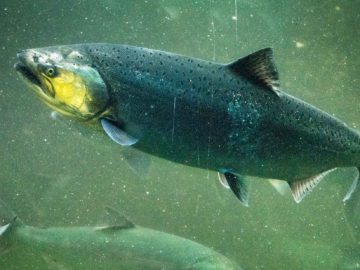
    June 2019 marks the half way point in the International Year of the Salmon. On Canada’s Pacific coast this is an opportunity to bring attention to long-standing conservation issues facing Chinook salmon. Some of these concerns are starting to be addressed with recent unprecedented action by Fisheries and Oceans Canada (DFO) to restrict Chinook harvest on populations returning to southern BC rivers to spawn. Changes in management include both seasonal and area closures designed to minimize the impact to depleted Chinook populations.

    Several unique Chinook populations in Southern BC have been in decline for nearly two decades. In November 2018, the Committee on the Status of Endangered Wildlife in Canada (COSEWIC) released a report that found the majority of 16 south coast and Fraser River Chinook populations assessed were either endangered or threatened. This information was consistent with DFO’s own assessments and validated the need for the strong actions announced last month. Because COSEWIC assessments are part of the Species at Risk Act as opposed to the Fisheries Act, there was further impetus for implementing stronger management measures.

    Most people consider Chinook salmon as a single species, and while that is true, in British Columbia they are comprised of 68 different populations which collectively contribute to their overall abundance. Each population has unique attributes, such as when and where they spawn and amount of time spent in rivers versus in the ocean. These differences result in a unique genetic composition. Protecting the biodiversity of wild Chinook salmon across the entire landscape of British Columbia is the conservation goal. Because most Chinook fisheries access salmon while at sea, there is no practical way of only targeting the healthy populations and consequently this mixed stock approach incurs a high risk to endangered populations. The announced management measures are in effect until mid July and are designed to allow the most at risk populations to swim through the fishing grounds without being caught.

    Chinook salmon is the most valuable recreational fish species in the province supporting an enormous industry. Strong recovery actions are necessary to ensure these fisheries exist in the future. In addition to their importance to fisheries these same populations of Chinook are heavily relied upon as a prey source for the endangered Southern Resident Killer Whale considered to be at imminent risk of extinction.

  • Critically depleted small fish will have big consequences in Atlantic Canada

    Critically depleted small fish will have big consequences in Atlantic Canada

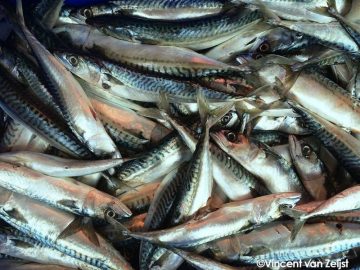
    Atlantic mackerel has plunged into a critical state after more than a decade of overfishing has been allowed to continue.

    Scientists say the Atlantic mackerel spawning population is hugely depleted and the number of fish surviving to breed is at an all-time low. The decline will have dire consequences for the oceans and for people. Atlantic mackerel may be a little fish but they play a big role in the Atlantic Ocean ecosystem and Canada’s east coast fisheries.

    Many marine animals, including the endangered porbeagle and shortfin mako sharks, marlins, seabirds, porpoises and whales, hunt the energy rich mackerel. Commercially important and iconic bluefin tuna chase spawning schools of mackerel into Atlantic Canadian bays during summer and autumn months.

    Humans also target mackerel. They are landed in a sizeable commercial fishery and subsequently used as bait for the lobster trap fishery, one of the most important East Coast fisheries. Every summer, thousands of Atlantic Canadians fish for mackerel off wharfs and shores. It remains one of the last marine fish that everyone can access for food and recreation – a strong Maritime tradition and also a favourite pastime of newcomers. Mackerel connects everyday people to marine ecosystems.

    In turn, mackerel eat all manner of small floating prey including fish and zooplankton (e.g. copepods, larval squid, crab and lobster), which together form the base of the Atlantic Ocean food web. As food and ocean conditions shift, so too does the mackerel, the animals that feed on mackerel, and the people and fishing sectors that rely on them.

    The Atlantic mackerel population has been declining for some time, but the new 2019 science assessment done in March was more alarming than anticipated. The population is down 86% from where it was in the 1980s and the number of young fish making it to adulthood is the lowest ever. Also worrying, the age range of fish across the population is extremely diminished. There was only one age 1 fish found in 20,000 samples and no fish over 10 years old have been found for years, even though mackerel can live up to 20 years. The current population is almost entirely made up of fish hatched in 2015.

    The Atlantic mackerel population has been overfished since 2008 and overfishing continues to this day. The population is being further stressed by rapidly changing ocean temperatures, currents and food availability off Atlantic Canada. The bottom line presented by science is clear – a drastic decrease in the amount of mackerel being fished is required to allow the population to increase to healthy levels. On the other hand, maintaining the status quo threatens to reduce the stock to a level from which it may not ever recover.

    SeaChoice partner, The Ecology Action Centre, sits on the Atlantic Mackerel Advisory Committee and the Rebuilding Working Group that are grappling with the outcome of the science assessment and what it means for the mackerel fishery. The EAC has urged Canada’s fisheries minister to make the difficult decision to seriously reduce catches or even close the fishery. While no one wants to see a fishery seriously curtailed, the majority of the fishing fleets at the table understand the gravity of the situation and have also suggested measures that will require them to sacrifice their fleets.

    SeaChoice understands the serious impacts on income that a closed or severely reduced fishery has for producers. There comes a point, however, when socio-economic considerations cannot override ecological realities. While difficult for fisheries now, bold action for the next few years to ensure the mackerel population increases is preferable to small steps that are more politically palatable but are not enough to halt the species decline, thus prolonging the sacrifice of the fleets. If the necessary bold action is taken, the government should consider supporting smaller fleets and producers whose margins are too slim to absorb the loss of the mackerel portion of their income.