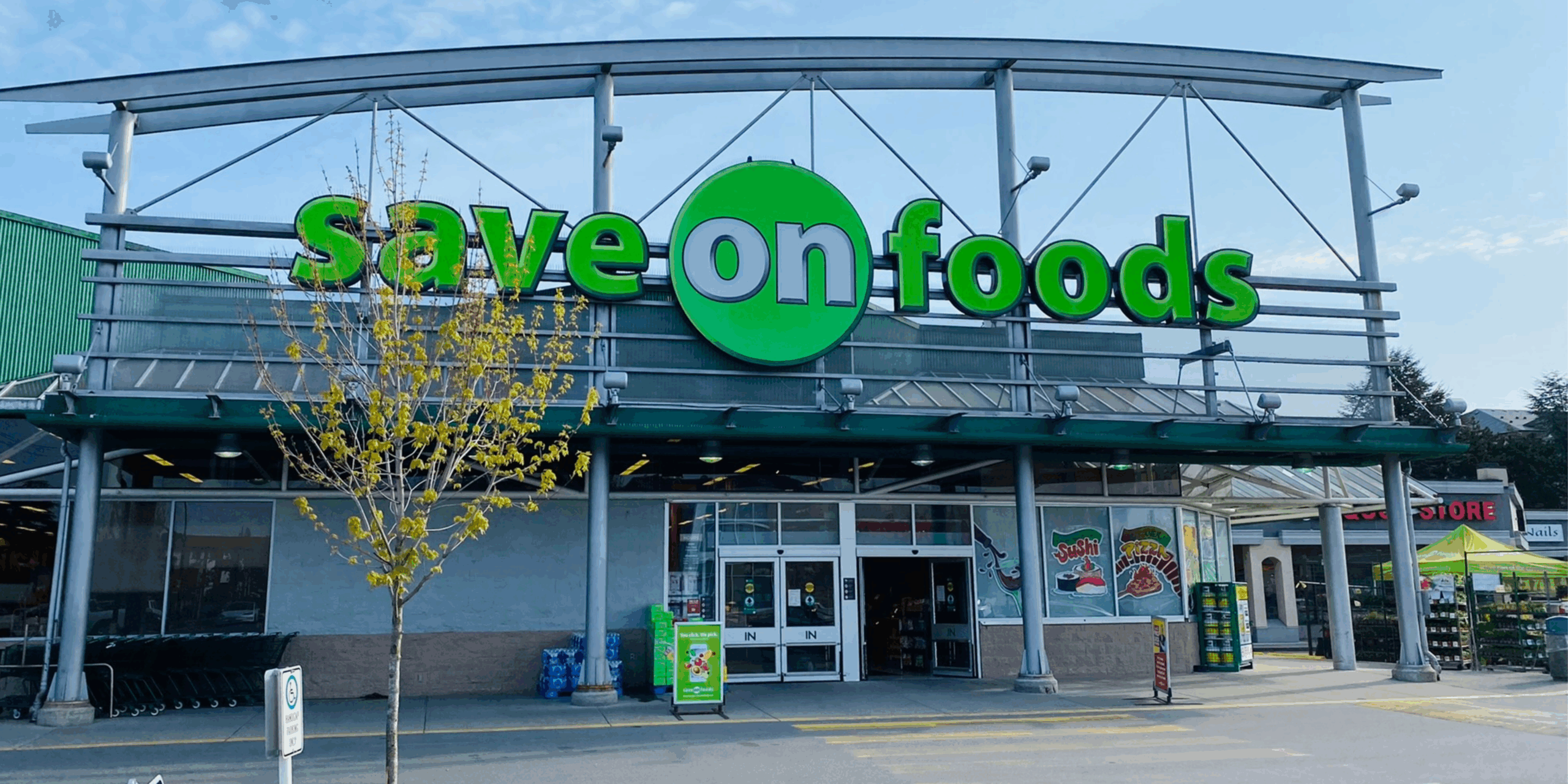
In a new Seafood Progress report, Pattison Food Group (PFG) scores in last place across all retailers at 14%, indicating the major retailer is nowhere near taking accountability for the seafood it sells amid mounting evidence of environmental and human rights crimes in seafood supply chains.
SeaChoice’s 7th Edition of Seafood Progress takes a closer look at which seafood products and stores retailers’ ethical sourcing policies cover, as well as the strategy behind these policies and how they are being applied in practice.
The overall scores are as follows:
From 2018 to 2023, Save-On-Foods and Buy-Low Foods were profiled separately and annually on Seafood Progress. In 2021, The Jim Pattison Group announced in a press release that the two retailers – plus 11 other store chains – had merged under The Pattison Food Group umbrella as part of a restructuring that would allow its businesses to “increase efficiencies with lower operating and product costs.” To allow ample time for the amalgamation of its responsible sourcing policies, SeaChoice continued to profile Save-On-Foods and Buy-Low Foods separately in 2022 and 2023.
For the first time, SeaChoice profiles Pattison Food Group (PFG) against its seafood sourcing practices, strategies and plans for improvement. The results indicate PFG’s operations are decentralized and efforts on responsible seafood sourcing are seriously lacking.
Key findings include:
- Sustainable Seafood Policy is extremely outdated.
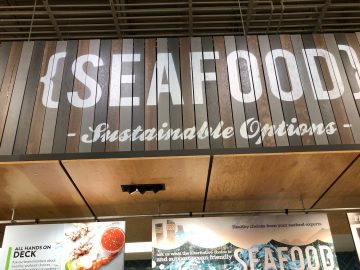
PFG’s Sustainable Seafood Policy is that of Save-On-Foods, which has not been updated in nearly a decade and contains goals set to be achieved in 2016 and 2018. The Policy is far from ambitious with the goal of just 50% of its fresh and frozen private label and unbranded seafood being Ocean Wise Recommended. While Save-On exceeded this goal in 2023 having reported that 78% of its private and unbranded seafood had met its policy that year, the retailer has never increased its target beyond 50%.
- Sustainable Seafood Policy is very narrow in scope.
In past Seafood Progress assessments we have explored the nature and supporting elements of retailer policies (do they have timebound goals, full chain traceability, etc). However, we have found that even the most robust policies are limited in scope. This is often not well communicated as retailers market their policies in a way that suggests they apply to everything and downplay which stores and products are excluded. To shine a spotlight on this issue, SeaChoice’s latest report takes a closer look at which seafood products and stores retailers’ ethical sourcing policies actually apply to, and which they avoid responsibility for.
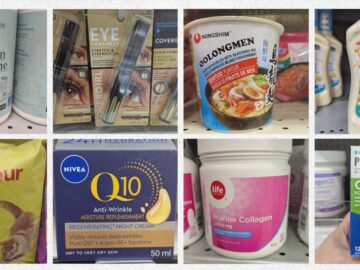
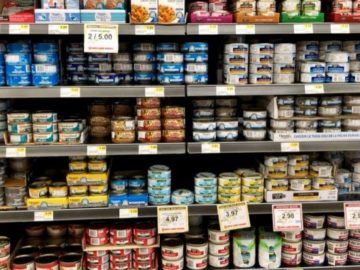
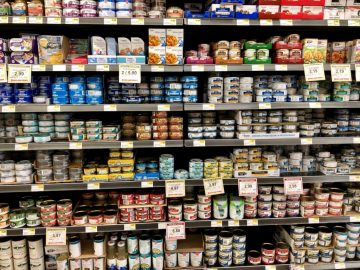
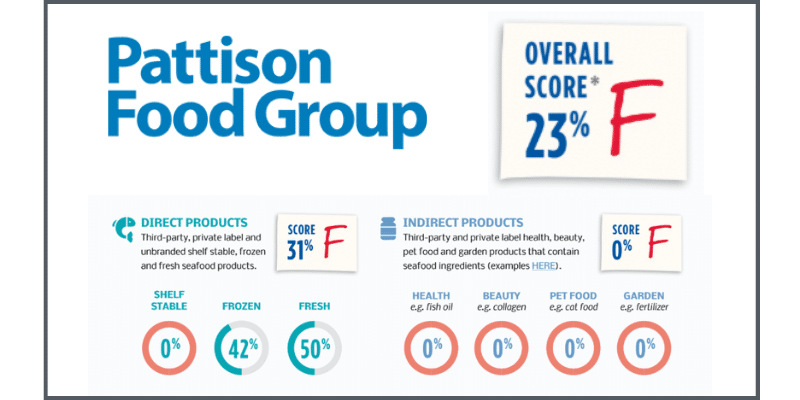
PFG received the lowest score across all retailers as its Policy excludes all shelf stable, pet food, beauty, health and garden products that contain seafood as an ingredient. Additionally, its Policy appears to only apply to Save-On, which is just one of PFG’s thirteen store chains. The image below demonstrates that approximately 23% of PFG’s seafood products are covered by its Sustainable Seafood Policy. For information on how retailers were scored on the scope of their commitments, see our scoring methodology.
- Silence in the wake of major seafood investigations.
PFG did not respond to SeaChoice’s inquiry about whether the company plans to strengthen its efforts to ensure that its seafood suppliers comply with its Supplier Code of Conduct, amid growing evidence of abuse in global seafood supply chains. While none of PFG’s stores were directly implicated in The Outlaw Ocean Project’s China series where egregious human rights and environmental abuses were connected back to seafood products sold by North American retailers, a supplier of Save-On-Foods’ private label seafood — Premier Marine Canada — was. Correspondence between Outlaw Ocean and Premier Marine can be found here. Various third-party seafood brands that are commonly sold in PFG’s stores were also implicated (e.g., Aqua Star, High Liner and Toppits).
- Still does not trace seafood from the vessel or farm to its store shelves.
Save-On has reported annually to SeaChoice since 2018 that it is working on obtaining full chain traceability of its seafood products. Seven years later, the retailer has yet to report meaningful efforts in this area. PFG must demonstrate traceability in its own operations as well as demand the same from its suppliers so that the retailer is in a position to identify risks and investigate issues behind its seafood products.
- Lack of strategy or plans to ensure ethical seafood sourcing.
PFG did not report any plans to include the many products and stores currently out of scope of its Sustainable Seafood Policy, and traceability remains a stale goal. On the human rights side, PFG is far behind its competitors as, according to its 2023 Forced Labour Report, the retailer just created its first Supplier Code of Conduct (SCoC) in 2023. What’s more, PFG is the only retailer not to publish its SCoC and does not take any measures to verify that suppliers are upholding it. Finally, PFG did not report plans to incorporate worker perspectives into its HRDD process in relation to seafood, which is a critical component to effective HRDD.
- Seafood policies are not well embedded in operations.
This report indicates PFG’s seafood policies are very decentralized across its store chains. PFG informed SeaChoice that responsibility and accountability for the implementation of its Sustainable Seafood Policy currently varies by banner, as some banners are fully integrated in the larger PFG supply chain, and others are not yet (personal communication, PFG, 18/02/2025). Furthermore, PFG’s 2023 Forced Labour Report states: “We are at the relative beginning of creating formalized processes and policies to address forced labour and child labour in the supply chains of the products we procure.” FishWise’s Human Rights Due Diligence (HRDD) Fundamentals report states that a company’s HRDD implementation must be seen not as a side project, but as a core part of doing business.
On the upside, SeaChoice would like to acknowledge that PFG was quite transparent when asked questions about its Sustainable Seafood Policy. Furthermore, we are encouraged to learn that Buy-Low has upheld its historic commitment to not sell any farmed salmon through the merger. PFG also reported that it “has been looking into how to execute and integrate supply chain mapping and risk assessment for some time, and that it has been able to further resource this area over the past year to make gains in its capacity. The growing awareness of human rights issues in extended supply chains further emphasizes this need. PFG is currently evaluating the most feasible and effective means to verify working conditions related to seafood” (personal communication, PFG, 20/02/2025).
While this update is encouraging, it is critical that retailers stop kicking the can down the road and start walking the talk on environmental and human rights due diligence. Considering Save-On-Foods is one of the fastest growing grocers in Western Canada and the merger was a move intended to increase operational efficiencies and therefore profits, it’s high time PFG’s responsible seafood sourcing efforts caught up.
Send a letter to retailers demanding they stop selling unethical seafood and take accountability for their products.