Category: Policy

  • Statement from SeaChoice on USTR Findings Regarding Forced Labour Import Enforcement 

    Statement from SeaChoice on USTR Findings Regarding Forced Labour Import Enforcement 

    On June 3rd, 2026 the United States Trade Representative (USTR) released findings from investigations into 60 countries regarding their efforts to prohibit the importation of goods made with forced labour. The findings revealed Canada is failing to effectively enforce its existing import ban. The U.S. is proposing a 10 percent tariff for goods other than those covered under the Canada-US-Mexico Agreement.  

    While SeaChoice does not support the proposed tariff, the findings highlight the critical role of traceability in enforcing Canada’s existing ban on imports made with forced labour. The investigation revealed that Canadian Border Services Agency had checked a mere 50 shipments between 2020 and 2026, prohibiting only two (one of which was seafood). By contrast, between 2022 and 2026, the U.S. detained 41,850 shipments, prohibiting roughly half. While the U.S. volume of trade is substantially higher than Canada’s, they are clearly tracing far more suspect shipments than the Canadian Border Services Agency has done.  

    In the seafood sector, traceability is particularly significant. Seafood supply chains are recognized internationally as vulnerable to labour abuses, including forced labour, human trafficking, and other forms of worker exploitation. At the same time, seafood products often pass through multiple vessels, processors, traders, and countries before reaching consumers, making supply-chain transparency essential for effective oversight.  

    SeaChoice has long campaigned and continues to push for stronger laws and policies that would allow the government to identify and trace products through complex global supply chains. When products cannot be traced through the supply chain, authorities have limited ability to verify production conditions or determine whether forced labour was involved. Strengthening seafood traceability and import controls would provide regulators with better tools to assess supply-chain risks, support responsible businesses, improve consumer confidence, and enhance the implementation of existing laws intended to prevent products linked to forced labour from entering the Canadian market. 

    Following the release of the findings, the Canadian government responded and noted there would be upcoming amendments to the forced labour-related legislation. SeaChoice looks forward to engaging with these proposals when tabled.  

  • Discovery Islands stay Salmon Farm Free: Federal Court of Appeal

    Discovery Islands stay Salmon Farm Free: Federal Court of Appeal

    *Reposted – Original Press Release here.*

    February 2, 2026

    MOWI loses appeal.

    VANCOUVER / UNCEDED xʷməθkʷəy̓əm (MUSQUEAM), Sḵwx̱wú7mesh (SQUAMISH), AND səlilwətaɬ (TSLEIL-WAUTUTH) TERRITORIES — The Federal Court of Appeal today issued a decision on an appeal by MOWI against then Fisheries Minister Joyce Murray’s decision to keep salmon farms in the Discovery Islands shuttered. Farms have been closed there since early 2021, when licence extensions were first denied. Minister Murray made an express finding that science required that she make a precautionary decision about the licences and today’s decision confirms that choice.

    The Federal Court decision under appeal also confirmed the Minister’s ability to refuse aquaculture licenses based on conservation concerns. Ecojustice represented Living Oceans Society and colleagues the David Suzuki Foundation, Georgia Strait Alliance, Watershed Watch Salmon Society, and independent biologist Alexandra Morton in the case.

    The Discovery Islands are a critical migration route for Fraser River sockeye and other salmon populations. Research shows that fish farms in these waters expose wild salmon to parasites and diseases, which was a contributing factor to steep population declines. Since farms have been removed from Sechelt, the Discovery Islands and the Broughton Archipelago, the Salmon Coast Field Station has reported healthier-looking juvenile salmon with fewer salmon lice each year. Returns of adult salmon have increased as well, with this year’s Fraser River sockeye returns outperforming the forecast by over 400 per cent.

    “We all owe a debt of gratitude to these Ministers who stood firm in showing the Department of Fisheries what precautionary decision-making looks like,” said Karen Wristen, Executive Director at Living Oceans Society. “Departmental advice was to re-issue the Discovery Islands licences but both Ministers took the time to hear from independent scientists who have published extensively on the harm caused by salmon farms.”

    The government has promised to end open-net fish farming across B.C. by 2029, but has yet to deliver the long-awaited Salmon Aquaculture Transition Plan or to define what technology will be permitted for use after the ban takes effect.

    Take Action!

    Contact Information

    Contact: Karen Wristen kwristen@livingoceans.org, 604-696-5044

  • SeaChoice calls for Canada to include misleading certification claims in greenwashing rules

    SeaChoice calls for Canada to include misleading certification claims in greenwashing rules

    Greenwashing – misleading and unsubstantiated environmental claims – is a serious problem that can undermine true sustainability efforts and consumer confidence. That’s why Canada needs rigorous rules and robust guidance for businesses that encompasses all actors that may engage in greenwashing.

    Last June, new greenwashing amendments to Canada’s Competition Act were adopted that would require companies to use an “adequate and proper test” or “internationally recognized methodology” to back up their environmental claims. Since then, the Bureau has been working on guidelines for businesses to help explain what these requirements actually mean.

    Following an initial consultation, where SeaChoice urged the Bureau to establish rigorous greenwashing guidelines that encompassed all claim types, draft guidelines for businesses were recently published for feedback. 

    These proposed guidelines lack, well, guidance. 

    In our latest SeaChoice submission we highlight that the ambiguity built within the proposed guidelines is problematic. In particular, the Competition Bureau’s proposed guidelines for environmental claims, as drafted, provides an extraordinary amount of leeway regarding what may qualify as “adequate and proper test” and “internationally recognized methodology”. Such ambiguity and leeway opens the door for certifications to evade scrutiny by the Bureau and could result in greenwashing associated with certification claims to continue unmitigated in the Canadian marketplace.

    Concerningly, but not surprisingly, during the initial consultation, certification schemes advocated to the Competition Bureau that certifications should qualify as “internationally recognized methodology” (and thereby evade scrutiny by the Bureau). 

    While certifications are often viewed as validating sustainability claims and preventing greenwashing, research also suggests that they can inadvertently contribute to and even incentivise greenwashing. Researchers also point out that all too often government regulations, designed to hold actors accountable for greenwashing, do not require certifications to substantiate their environmental claims. 

    Environmental and social organisations have been increasingly vocal on concerns about certifications. SeaChoice and allies have long called out the Marine Stewardship Council (MSC) for awarding certification to unsustainable fisheries. We have also called out farmed seafood certifications, Aquaculture Stewardship Council (ASC), Best Aquaculture Practices (BAP), and GlobalG.A.P. numerous times. Investigative journalism and whistleblower testimonies have uncovered breaches of certification standards and auditing practices. 

    And it’s not just seafood certifications. The issue is systemic across commodities and certifications – including forestry, palm oil, cotton, soy, cocoa, coffee, and more. 

    For example, civil society investigations into the Forest Stewardship Council (FSC) and the Programme for the Endorsement of Forest Certification (PEFC) certificates which have also found the trafficking of illegal timber. A study found the Roundtable on Sustainable Palm Oil certification to be “meaningless” as 75 percent of certified plantations had been deforested or located in areas with endangered species.  The authors emphasized “certification does not ensure environmental sustainability “.  The Better Cotton Initiative certification has been linked to land grabbing, illegal deforestation, corruption, and human rights abuses. Other certifications that have been criticized include soya, cocoa, and coffee certification schemes.

    While the above examples don’t mean that all certified products or businesses are greenwash, it does highlight that greenwashing by certifications can and does occur.  

    This is why SeaChoice has strongly advised that the Bureau does not simply defer to certification schemes as “adequate and proper” tests or automatically qualifying as “internationally recognized methodology”.  

    SeaChoice urges the Competition Bureau to make the expectation to all businesses that all  potentially misleading environmental claims, including certifications, will be investigated for greenwashing. 

  • Seafood retailers, companies and experts call on the federal government to improve traceability requirements

    Seafood retailers, companies and experts call on the federal government to improve traceability requirements

    Stronger traceability will help curtail unsustainable practices, fraud, human rights abuses and illegal fishing.

    In December, SeaChoice along with 25 seafood companies, grocery store chains and experts called on the Federal government to bring Canada’s seafood traceability standards into the 21st century. 

    The letter, delivered to the Canadian Food Inspection Agency as part of its recent boat-to-plate seafood traceability consultation, argues that the minimum standards for traceability be expanded so that all seafood products sold in Canada are fully traceable from the point of final sale back to the point of harvest, including key information about the who, what, where, when and how of fishing or farming, processing and distribution. The signatories, including the large grocery store chains Buy-Low Foods and Save-On-Foods, and large seafood supplier, Ocean Brands, also emphasized their concern that no timeline or plan is in place for the implementation of a better traceability system.

    Government action on this promise is long-awaited, as the commitment was made initially in 2019 when the Federal government instructed the Canadian Food Inspection Agency to work with the Minister of Fisheries, Oceans and the Canadian Coast Guard and the Minister of Agriculture and Agri-Food, to develop a boat-to-plate traceability program to help Canadian fishers to “better market their high-quality products”.

    However, the instruction to deliver this program is missing from the new mandate letters published in December 2021, meaning continued support for improved seafood traceability from industry, experts, and the public is critical to ensure progress at the Federal level. 

    With jurisdictions worldwide increasingly requiring electronic data to follow seafood products through the supply chain to safeguard their true identity and point of origin and to ensure legality, Canada needs to step up and implement a boat-to-plate traceability system, for all seafood sold in Canada.

    What’s next?

    On December 11th, 2021 the Canadian Food Inspection Agency closed its 120-day consultation period on the boat-to-plate traceability program. The Agency will be reviewing the feedback received and publishing a “What We Heard” report summarizing the submissions and feedback this spring/summer. 

    The House of Commons Standing Committee on Fisheries and Oceans is currently studying seafood traceability in Canada as a way to support the sustainability and long-term viability of Canada’s seafood supply chains and will present their recommendations to the government. 

    SeaChoice will continue to engage with the government and industry to ensure the implementation of a modern, full-chain seafood traceability system that is long overdue in Canada. Sign up for our newsletter to be kept informed of developments and opportunities for you to show your support for seafood traceability and labelling.

  • U.S. Court Hits ‘Pause’ on Genetic Modification of Farmed Atlantic Salmon

    U.S. Court Hits ‘Pause’ on Genetic Modification of Farmed Atlantic Salmon

    Now tell Canada to step up and better regulate GM salmon to protect both wild fish and consumers

    The farmed salmon in your grocer’s seafood case is most likely from an open net-pen located in Canada, Norway, Iceland or Chile. That’s because only a small amount of more responsibly farmed salmon from land-based closed containment facilities currently enters the Canadian marketplace. The situation is about to change, with nearly one million metric tonnes of land-based production scheduled to enter the marketplace over the next few years and we welcome that change – for the most part. But some of that land-based salmon will be genetically modified; and it won’t be labelled as such.

    AquaBounty™ farmed salmon is now being produced in both Canada and the US and is approved for human consumption in both places. Despite the efforts of Canadian civil society groups, our courts declined to overturn the approval of GM salmon on environmental grounds. However, courts in the US recently adopted a different approach.

    In response to a petition filed by SeaChoice partner organization, Ecology Action Centre, and others, a California court recently ruled that the Food and Drug Administration (FDA) ignored the serious environmental consequences of approving GM salmon and the full extent of plans to grow and commercialize the salmon in the U.S. and around the world, violating the National Environmental Policy Act. The Court also ruled that FDA’s unilateral decision that GM salmon could have no possible effect on highly endangered wild Atlantic salmon was wrong, violating the Endangered Species Act.

    This decision will ensure that U.S. legislation and policy for environmental and species protection is followed when future applications come forward for genetically modified food animals and in that sense, it is a huge victory. However, the FDA can address these procedural errors by conducting the appropriate environmental review – something it is sure to do now that AquaBounty has set up shop in the US, as well as Canada.

    Both Canadian and U.S. regulators identified the potential high risk to wild Atlantic salmon should the GM salmon escape to the wild. Competition for food and habitat, predation and transmission of disease represent clear threats to severely depleted stocks of wild salmon; and a small proportion of the GM stock will also be capable of interbreeding, polluting the genetic integrity of wild Atlantic salmon. Nevertheless, both regulators decided that closed containment facilities were a whole answer to this risk, failing to assess the implications of accidental releases due to human or mechanical error.

    The approval of GM salmon is a classic example of permitting what is possible, without any public dialogue on what is wise or desirable.  The fact remains that the farming of salmon represents a net loss of fish suitable for human consumption: it does not relieve world hunger or contribute to food security. It doesn’t even reduce fishing pressure on wild fish, because the market for salmon is growing so rapidly worldwide, driven largely by the massive production of farmed salmon. The genetic modification of the fish to grow faster only exacerbates the pressure on the forage fisheries that supply the fish meal and fish oil required to produce carnivorous fish.

    Industry might argue that the marketplace determines what is wise or desirable, but this particular product is being passed off as the same as any other salmon:  it doesn’t have to be labelled as genetically modified. The marketplace has nothing to say about GM salmon because they’re invisible to all but the most determined and discerning consumers, who demand to know the source of the fish they buy.

    In Canada, we need to take further action to ensure that we and wild salmon are safeguarded from the GM salmon being produced here. In October, a petition was launched in the House of Commons to enhance regulations for the production of GM food animals, improve consumer protection (so you can know when you’re eating GM salmon!) and harmonize legislation with the United Nations Declaration on the Rights of Indigenous Peoples. Take action today: this petition closes January 13, 2021!

  • What is a bocaccio and what can it teach us about patience and resilience?

    What is a bocaccio and what can it teach us about patience and resilience?

    By Scott Wallace, Senior Research Scientist at the David Suzuki Foundation and SeaChoice Steering Committee member

    After years of careful management and industry efforts, bocaccio rockfish are rebounding

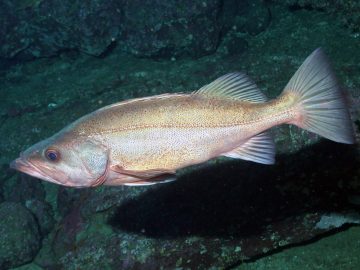
    Nobody likes a big mouth. Well, that’s not completely true. Canada’s Pacific groundfish industry is elated about a long hoped-for recovery of bocaccio rockfish. Bocaccio derive their name from the Italian term ‘bocacho’ meaning big-mouthed. While very few people have heard of this fish species, it has been the most talked about species in British Columbia’s groundfish fishery for the last 18 years.

    Rockfish fisheries are difficult to manage. There are 39 species of rockfish in our waters and they all have an inherent vulnerability to over-harvesting and a highly variable survival rate. The amazing story of bocaccio’s sudden recovery carries lessons that can be applied to most fisheries. It underlines the importance of having patience, managing expectations and building enough resilience to be able to follow nature’s lead.

    Since the 1950s, bocaccio populations from southern California to Alaska experienced a sustained decline throughout their range (Figure 1). In Canada’s Pacific waters, it is estimated that the population has declined to 3.5% of its unfished level. The situation was so severe that in 2002 the Committee on the Status of Endangered Wildlife in Canada (COSEWIC) recognized the species as threatened. Despite drastically lower catches and a prohibition on selling them, the bocaccio population continued to fall. In 2013, COSEWIC reassessed it as endangered – a more severe designation.

    In Canada, the main rebuilding strategy has been to ratchet down the level of allowable bycatch and hope for a period of high recruitment (i.e., larval survival). Lowering the catch limit sounds easy, but the challenge with this species is that they are difficult to avoid while targeting other more abundant species of fish. Even if they are returned to the water right away, rockfish do not survive being caught with commercial fishing gear. The change in pressure affects them too much on their way to the surface.  For 15 years, B.C.’s fishing fleets adapted their gear and methods to be able to stay within increasingly lower catch limits. That is, until 2019, when suddenly vessels were encountering bocaccio everywhere and could no longer avoid them. The hoped for high recruitment finally occurred.

    Independent scientific surveys corroborated the information from fishers and indicated a population recovery. The recently published Science Advisory Report suggests that in 2016, larval survival was 44 times better than average (Figure 1). Three years later, the juveniles of this cohort became large enough to be captured by trawl nets. It’s not surprising that fishers started to exceed the restrictive catch quota.

    For 2020, the quota for bocaccio has been cautiously increased, permitting industry a small level of non-directed catch while the population continues to grow (Figure 1). By 2022, a large portion of the 2016 cohort will become reproductively mature and will further contribute to rebuilding the population. Although marine ecosystems are highly unpredictable, at this point it appears that bocaccio is on a trajectory for recovery.

    This explosive recovery was a result of rebuilding efforts, ocean environmental conditions and patience. And in addition to this being a much-needed good news story in these challenging times, the story of bocaccio illustrates an important lesson: it shows that the year-to-year stability which businesses and regulators prefer can be incompatible with a species’ life history strategy.

    This means that for rockfish – and many other marine species – the only sustainable approach is to take a very small amount of what nature provides and accept that the “surplus” that we can safely harvest will change. We must be sure to leave enough resilience in the population until the next time when the ingredients of the ecosystem soup are favourable. For bocaccio, there was no predictable recovery trajectory, but all species have the capacity for resilience if we give them a chance. While it certainly was challenging, the industry had to accept lower levels of harvest and be patient while they waited for nature to provide the appropriate conditions for recovery.

    Similar to most fished marine species, bocaccio are a product of an exceedingly complex marine ecosystem. Ensuring that all species are managed with conservative catch limits, accurate reporting, and an abundance of precaution are the most important elements of maintaining wild harvests into the future.

    Figure 1: Estimates of spawning biomass (tonnes) from model published in Science Advisory Report. The median biomass trajectory appears as a solid curve surrounded by a 90% credibility envelope (quantiles: 0.05, 0.95) in light blue and delimited by dashed lines for years t=1935-2020; projected biomass appears in light red for years t=2021-2080. Also delimited is the 50% credibility interval (quantiles: 0.25-0.75) delimited by dotted lines. The horizontal dashed lines show the median Limit Reference Point (red: 0.4BMSY) and Upper Stock Reference point (green: 0.8BMSY). Catch and assumed catch policy (200 tonnes/year) are represented as bars along the bottom axis.


  • “Hybrid” salmon farms are no answer for British Columbia

    “Hybrid” salmon farms are no answer for British Columbia

    By Karen Wristen, SeaChoice Steering Committee member for Living Oceans

    The only effective way to protect wild Pacific salmon from salmon farms is to keep farms out of the water – completely.

    The Federal government has committed to doing something about open netpen salmon farms in British Columbia in recognition of the risks they pose to wild salmon populations – although exactly what they’ve committed to, and when, became murky after they were elected.

    Globally, the salmon farming industry has been forced to experiment with new productions systems because of the rapidly rising cost of controlling sea lice and disease in open netpens. As any industry would, it defaulted to the lowest-cost, highest return approach: the so-called ‘hybrid’ system in which salmon are raised to post-smolt stage in land-based facilities before being placed in the ocean.  The theory is that larger fish are less susceptible to dying from diseases and better able to withstand the ravages of sea lice. They spend only one year in the open netpen, rather than 18-24 months, so exposure time to lice and the shared diseases of salmon farms is shorter.

    This is perhaps an answer to production cost control, but it’s no answer to protecting wild salmon.

    Hybrid systems result in a higher biomass in the netpens throughout the ocean-based part of the production cycle, meaning that more pollution of surrounding waters and more fouling of the ocean floor will occur, unless the system is accompanied by extended fallow periods. The fish on the farms remain a breeding ground for the viruses, bacteria and parasites that plague salmon farms and are readily transferred to wild fish.  The farmed fish may withstand the infection and infestation pressure; but the wild salmon, particularly the vulnerable juveniles, continue to be at risk.

    Land-based farming schematic, courtesy of Kuterra

    Some companies are already using the hybrid system, which uses recirculating aquaculture technology (RAS) to raise the smolts to about 1 kg weight before putting them into netpens. While this might look like a positive step in the direction of a land-based industry, in fact it is not. Hatchery/nursery facilities for a hybrid system will be located so as to service the locations of netpens, to reduce stress on the post-smolt fish during transfer to the netpens. A full land-based RAS plant would locate closer to markets and transportation hubs. A RAS system for hybrid culture would be sized to grow the fish only to 1 kg of weight, whereas the full growout of fish in RAS requires much greater tank space and additional equipment/capacity. The industry has a limited pool of capital to draw upon, so deciding how and where to invest in land, bricks and mortar is a critical consideration for the future of salmon farming.

    The British Columbia Salmon Farmers’ Association has made it clear that its members favour the least-cost control measures: “The hybrid system, which involves extending the amount of time young fish spend in land-based hatcheries before being moved to ocean pens, is particularly promising in the near-term, and something we are actively pursuing.”

    The government promised us that it would end open netpen salmon farming in British Columbia by 2025. It would be unwise to wait while salmon farmers invest in new technology that depends on open netpens, before making it abundantly clear that those netpens will be gone within five years. That would be opening up the government to unnecessary claims for compensation. The Minister of Fisheries should be focusing her efforts on creating incentives for fully land-based RAS and making it clear to industry that it invests in alternatives that fail to protect wild salmon at its own peril.

  • Turning commitments into action – a personal reflection at a time of change

    Turning commitments into action – a personal reflection at a time of change

    Sustainability is more than a promise, it requires showing up and doing the hard work.

    I can’t believe we are in the final weeks of 2019. As the world gets ready to start a new decade (where did 2020 come from anyway?), I am getting ready to start a new chapter in my professional life. I have made the very difficult decision to step down as SeaChoice National Manager effective January 1. Difficult because it has been an absolute pleasure to manage the SeaChoice team for the last three years. The end of the year, the decade, and this chapter in my life have all been cause for reflection. And when I think about what has defined SeaChoice’s work – and so mine in turn – during our time together, it comes down to holding people accountable to their commitments. This has been true for SeaChoice, but also for the environmental movement writ large.

    Commitments to sustainable practices are being made at every turn. Globally we have seen 187 governments committing to the Paris Agreement, which in turn commits them to limiting the global average temperature rise to well below 2°C. The 193 United Nations member states have adopted the 17 Sustainable Development Goals (SDGs) that together provide “a blueprint for peace and prosperity for people and the planet, now and into the future”. And 196 Parties to the Convention on Biological Diversity have adopted a Strategic Plan for Biodiversity that includes 20 time-bound, measurable Aichi Biodiversity Targets to be met by the year 2020 (yup, next year!). If all those promises were turned into reality, what a wonderful world it would be! Unfortunately promises do not necessarily equate to action, which is why the world needs groups like SeaChoice.

    If all those promises were turned into reality, what a wonderful world it would be! Unfortunately promises do not necessarily equate to action, which is why the world needs groups like SeaChoice.

    Holding the seafood supply chain accountable to their sustainability commitments has been a key SeaChoice focus since we transitioned (in 2016) from a consumer facing program to become Canada’s sustainable seafood watchdog. Whether it be holding retailers accountable to their commitments to procure sustainable seafood through Seafood Progress, holding eco-certifications accountable to the sustainability promises they make through their standards, and/or holding the government accountable to its promise to ensure truthful and not misleading labelling of Canada’s seafood. The challenge in these examples is not whether industry, certifiers or government are talking the talk – but whether they follow through to walk the walk. Indeed, supply chain and regulator commitments to sustainability have become increasingly status quo. The challenge lies in making sure they follow through, a challenge SeaChoice has risen to meet very well.

    SeaChoice will continue to meet this challenge into the next decade. For just two examples, we are very pleased to see our campaigns reflected in the Prime Minister’s mandate letter to the Minister of Fisheries and Oceans, that she “work with the province of British Columbia and Indigenous communities to create a responsible plan to transition from open net-pen salmon farming in coastal British Columbia waters by 2025” and “support the Minister of Health who is the Minister responsible for the Canadian Food Inspection Agency in developing a boat-to-plate traceability program…”. You can count on the SeaChoice team to make sure these paper promises lead to real action on behalf of Canada’s wild salmon in the case of the farms, and transparency in Canada’s seafood supply chain in the case of traceability.

    Managing a team whose mandate is to hold people accountable to their commitments has prepared me well for my next role. I am returning to The University of British Columbia in order to pursue my efforts to advance seahorse conservation. Seahorses are extraordinary fishes – they are the only animal we know of where the male gets pregnant, for just one example. And they are beautiful. But they are also overfished by the world’s most damaging fishing gears and traded internationally in huge numbers for use as traditional medicines. Because of this they are listed on Appendix II of The Convention on International Trade in Endangered Species (CITES). The listing means that all CITES Parties (member countries, now 182 plus the EU) are obliged to ensure that their seahorse exports are sustainable, legal and monitored. But for the listing to be effective in addressing the threats seahorses face, it needs to be more than a paper promise – it needs to be implemented. This summer I facilitated the Parties to adopt an action plan to move seahorse trade toward sustainability. This created a time-sensitive opportunity to hold CITES Parties accountable to the promises they have made for seahorses.

    At the end of the day, having a gym membership doesn’t automatically make you fit. You need to show up and do the hard work.

    At the end of the day, having a gym membership doesn’t automatically make you fit. You need to show up and do the hard work. It is promising to see more and more actors across the seafood supply chain taking out “sustainability memberships”. It’s a very important first step. But without showing up the membership will mean nothing at all. That’s why SeaChoice will continue to do the hard work of holding all actors accountable to their commitments. I’m proud of the progress my team has made so far, and can’t wait to see what they do next.

    That’s me signing off. So long SeaChoice, and thanks for all the fishes!

  • A promise to remove open-net pens is a promise for healthy oceans

    A promise to remove open-net pens is a promise for healthy oceans

    It’s time for responsible salmon farming

    SeaChoice is calling on the Government of Canada to stand by the election pledges made by four of our national parties (see pledges below), to protect wild salmon from the adverse effects of open-net pen salmon farming. For many years we have been engaged in researching the sustainability challenges posed by open-net pen aquaculture, particularly for wild salmon, and advocating for known solutions. We are encouraged by the parties’ shared commitment to this important challenge and to ocean health in Canada.

    Although the Liberal promise — to transition open-net pen fish farms to closed containment by 2025 — is specific to British Columbia, salmon farms on the east coast of Canada are just as problematic as those in B.C. We expect the government to uphold their commitment to wild salmon and healthy aquatic ecosystems on both coasts. Open-net pen fish farming needs to be transitioned out of all waters, particularly given the government’s commitment to protecting and rebuilding wild salmon stocks on both the east and west coasts of Canada. The government mandate to protect wild fish and habitats is the same across the country.

    Significant concerns remain in B.C. and Atlantic Canada regarding sea lice and pathogens and their impacts on wild fish, chemical/drug resistance, and the inability of the industry and Fisheries and Oceans Canada to successfully prevent and manage outbreaks of parasites and pathogens. It is due to these concerns that SeaChoice member groups advocate for the removal of open-net pen farms from wild salmon migration routes. In the interim, we continue to push government, industry and the markets – through collaboration and public accountability – to drive the improvements needed to alleviate the risk to wild salmon. This work, including those of many others, has helped to forward sea lice, pathogen and disease science and initiate investments in land-based Recirculating Aquaculture Systems (RAS) technology in B.C. and further afield.

    The concerns with Canada’s salmon farms were raised by both provincial and federal Ministers prior to the election, with both levels of government questioning the sustainability, environmental and/or social, of open-net pen salmon farming in B.C. The B.C. government is collaborating on a four-year program to transition farms out of the Broughton Archipelago. The federal Fisheries Minister Jonathan Wilkinson expressed, prior to the election promise, that the federal government is keen to help transition B.C. salmon farms to designs and technologies that address environmental concerns. In addition, government oversight bodies, inquiries and committees, inter alia have all called out inadequacies in regulation of the aquaculture industry in Canada (see below for details).

    Even Canadian open-net pen salmon farms eco-certified by the Aquaculture Stewardship Council (ASC) are problematic, because the ASC Salmon Standard criteria are not being applied as written. SeaChoice’s What’s Behind the Label report found that the ASC variance process is overriding the multi-stakeholder agreements that created the standard criteria and that the process lacks any scientific, technical or stakeholder input. Variances represent approved departures or exemptions from the Standard criteria and are the only reason Canadian farms are certified. These variances also mean that certified farms are not a Seafood Watch (SFW) program “Good Alternative” as was communicated in 2017. The SFW review failed to account for the fact that Canadian farms certified by ASC don’t actually meet the criteria reviewed by Seafood Watch (more here).

    SeaChoice and its member groups are supportive of responsible aquaculture. There are many forms of Canadian aquaculture that should be celebrated. When done right, farmed seafood can help feed our growing population by supplementing wild catches and adding to the overall seafood supply (important to note – farmed fish does not replace wild captured fish). However, it shouldn’t come at the expense of our wild salmon and ecosystems.

    The implementation of the Liberal’s promise is necessary to protect Canada’s wild salmon stocks, ensure healthy oceans and to reform the industry to be truly responsible. One worthy of celebrating.

    MORE INFORMATION

    Party promises:

    Liberal promise — In British Columbia, we will work with the province to develop a responsible plan to transition from open net pen salmon farming in coastal waters to closed containment systems by 2025.

    Conservative promise — Support the advancement of technology and practices that reduce contact between wild and farmed salmon.

    NDP promise — In order to protect wild salmon on the Pacific coast, we will fully implement the recommendations of the Cohen Commission and work with the province of British Columbia and First Nations to support the transition to land-based, closed-containment systems.

    Green Party promise — By 2025, move all open-net pen finfish aquaculture facilities into closed containment systems on land. As with land farmers transitioning from conventional production, provide financial and extension support to fish pen workers to make this transition.

    Example government oversight bodies, inquiries and committees that have called out inadequacies in regulation of the aquaculture industry in Canada: 

    1. Commission of the Environment & Sustainable Development (Auditor General) Salmon Farming report:

    “We concluded that Fisheries and Oceans Canada did not adequately manage the risks associated with salmon aquaculture consistent with its mandate to protect wild fish. Although the Department had some measures to control the spread of infectious diseases and parasites to wild fish in British Columbia, it had not made sufficient progress in completing the risk assessments for key diseases that were required to understand the effects of salmon aquaculture on wild fish. It also had not defined how it would manage aquaculture in a precautionary manner in the face of scientific uncertainty. Moreover, the Department did not adequately enforce compliance with aquaculture regulations to protect wild fish.

    The Canadian Food Inspection Agency had measures to prevent the introduction and spread of infectious diseases with respect to aquaculture. However, the Department and the Agency had not clarified roles and responsibilities for managing emerging diseases. This lack of clarification created a risk that potential emerging diseases affecting wild salmon would not be adequately addressed.”

    2. Report of the Independent Expert Panel on Aquaculture Science (Office of the Chief Science Advisor):

    This report makes the recommendation that DFO’s Aquaculture science needs an external, non-government Science Advisor and Review Panel.  It repeats throughout the 28-page report that DFO science on aquaculture must be more transparent, consider localized impact and be inclusive of indigenous knowledge.

    3. B.C. Minister of Agriculture’s Advisory Council on Finfish Aquaculture recommendations included:

    “Strengthen the precautionary approach to regulation salmon farming in B.C. to reduce the potential risk of serious harm to wild salmon”; and

    “Acknowledge and incorporate First Nations’ rights, title and stewardship responsibilities in all aspects of fish farm governance, including tenuring, licensing, management and monitoring in a manner consistent with the United Nations Declaration of  Rights of Indigenous Peoples (UNDRIP)”

    4. Cohen Commission of Inquiry into the Decline of Sockeye Salmon in the Fraser River:

    Found DFO has a conflicted mandate – to protect wild fish and to promote the salmon farming industry. Recommendation 3 is still not fulfilled with no plans to do so: “The Government of Canada should remove from the Department of Fisheries and Oceans’ mandate the promotion of salmon farming as an industry and farmed salmon as a product.”

    Furthermore, the Wild Salmon Policy is yet to be fully implemented (Recommendations 5 -7). DFO’s failure to implement the WSP was demonstrated by the recent voluntary suspension from MSC by the wild B.C. salmon fisheries due to DFO lack of resources to complete necessary functions.