Category: Seafood Progress

  • Loblaw excludes major seafood seller from sustainable seafood policy

    Loblaw excludes major seafood seller from sustainable seafood policy

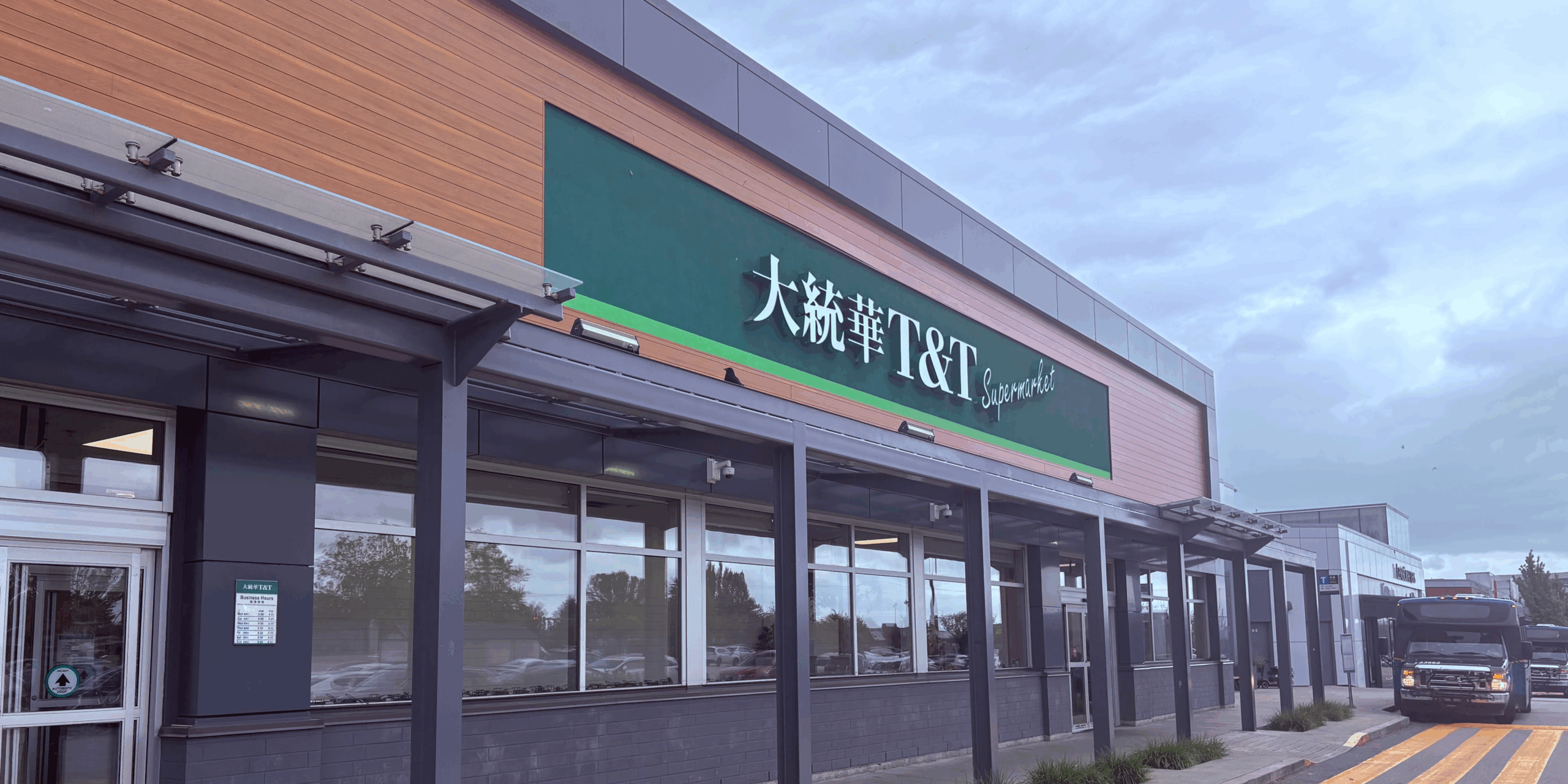
    New report finds major seafood seller T&T Supermarket is not covered by Loblaw’s Sustainable Sourcing Guide for Seafood, despite mounting evidence of abuse in global seafood supply chains. 

    SeaChoice has profiled Loblaw annually against its seafood policies and practices since 2018 on Seafood Progress alongside other major Canadian retailers. Disappointingly, Loblaw relayed again to SeaChoice in this year’s report that it has no plans to include T&T under its Sustainable Sourcing Guide for Seafood.

    In past Seafood Progress assessments we have explored the nature and supporting elements of retailer policies (do they have timebound goals, full chain traceability, etc). However, we have found that even the most robust policies are limited in scope. This is often not well communicated as retailers market their policies in a way that suggests they apply to everything and downplay which stores and products are excluded. What’s more, retailers remain quiet as investigations tying unethical seafood to their shelves pile up. To shine a spotlight on this issue, SeaChoice’s latest report takes a closer look at which seafood products and stores retailers’ ethical sourcing policies actually apply to, and which they avoid responsibility for. 

    Following a global theme, our report shows Canadian retailers’ exclude nearly half their seafood products and store chains from their ethical sourcing policies. 

    T&T Supermarket (T&T) is a growing North American chain where seafood is a major offering. T&T was acquired by Loblaw Co in 2009 for $225 million, and in the same year, the chain’s annual revenue exceeded $500 million. There are currently 37 T&T stores across Canada, and the first store opened in the United States in the fourth quarter of 2024. Loblaw recently announced plans to open 80 new stores in Canada in 2025 under various store banners, including T&T.

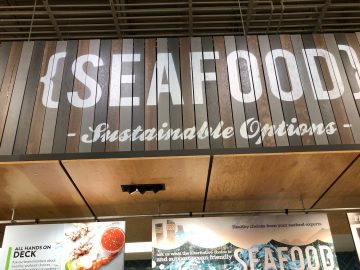
    To shed light on the significance of Loblaw excluding T&T from its Sustainable Seafood Guide, SeaChoice conducted an in-store audit. 

    Photo of T&T Supermarket Langley’s seafood counter. Caption reads: ‘Langley’s Seafood Destination: Live, Fresh, Frozen’

    Our analysis found: there’s plenty of fish in the T&T sea. 

    The store more than lives up to its promise of being ‘Langley’s Seafood Destination.’ We photographed around 250 seafood products – the majority of which are imported – across various categories including shelf stable, fresh, frozen, beauty and health products. 

    The store has significant infrastructure to house its seafood, including:

    • 1 x dedicated seafood counter (approximately 500 square feet) containing fresh and live seafood. 
    • 5 x approximately 300 square foot freezer cases full of frozen seafood. 
    • 6 x stand-up cases (approximately) full of fresh and frozen seafood. 
    • 1 x  dedicated sushi counter (approximately 20-feet long).
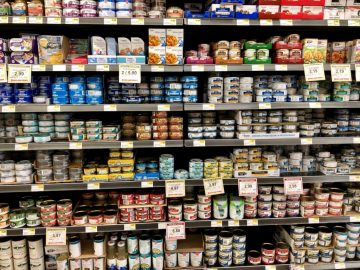
    • 4 x approximately 40-foot aisles full of shelf stable seafood products (cans, bags, jars, bottles, pouches, jugs, etc). 
    • 1 x dedicated display case for fish oil capsules in the health section.

    In this year’s Seafood Progress report, Loblaw did not respond when asked if it plans to strengthen efforts to ensure that its seafood suppliers comply with its ethical sourcing policies, amid growing evidence of forced labour, illegal fishing, etc. in global seafood supply chains. For instance, Loblaw was directly implicated in The Outlaw Ocean Project’s China series where egregious human rights and environmental abuses were connected back to seafood products sold by North American retailers. As evidence of its global significance, China’s seafood industry accounts for a fifth of international seafood trade, is worth over thirty-five billion dollars and is responsible for catching approximately 5 billion pounds of seafood annually.  

    Beyond Loblaw’s initial correspondence with Outlaw Ocean (published here), the retailer has not reported on its efforts to remediate based on the findings of that investigation. 

    A supplier of Loblaw’s private label seafood, Premier Marine Canada, was also implicated in the China series (correspondence here), as were various third-party seafood brands that are commonly sold by Loblaw (e.g., Aqua Star, High Liner and Toppits). 

    Since Canada requires little controls for sustainability or human rights on imports, the more imported seafood retailers sell the higher the risk of unethical products making their way to store shelves. Therefore, it is even more important for Loblaw to apply its ethical sourcing policies to T&T as a chain that offers significant volumes of imported seafood. With due diligence legislation gaining momentum, and voluntary certifications and social audits failing to detect abuse, it’s time retailers – including Loblaw – proactively implement a due diligence approach to sourcing all seafood products. 

    Send a letter to Loblaw and other major Canadian retailers demanding they stop selling unethical seafood and take accountability for their products. 

  • Seafood Progress raises the bar on social responsibility indicator

    Seafood Progress raises the bar on social responsibility indicator

    In 2022, following expert guidance from FishWise, SeaChoice updated a Key Performance Indicator (KPI) of the Seafood Progress Scoring Methodology for grocers and brands to include tracing data on the existence of an independent trade union or representative worker organization. This change in the scoring methodology prompted engagement from brands and grocers – raising awareness and educating about the importance of supporting freedom of association and collective bargaining all the way up the supply chain.

    Traceability and the collection of Key Data Elements (KDEs) in the context of social responsibility is an evolving topic. While traceability and KDEs have been used extensively in assessing environmental and food safety issues, industry is only just beginning to utilize these tools to address human and labor rights issues in supply chains. But determining how to effectively leverage traceability to promote decent work in the seafood sector is tricky. 

    KDEs such as wages, rest hours, grievance mechanisms, and recruitment agency fees can help inform an assessment of the level of risk in a given supply chain. However, verifying the accuracy of this information is challenging; the only way to validate it is to ask workers directly, which can be difficult for end-buyers to do, especially in a way that protects worker confidentiality and safety. 

    Research led by the Seafood Alliance for Legality and Traceability (SALT) found that, given the challenges around verification and validating information with workers, two labor-specific KDEs are essential to understanding risk to workers. These KDEs are:

    (1) Existence of an independent trade union or representative worker organization

    (2) Name of the union or worker organization. 

    As companies design and implement traceability policies, it is essential that they include these KDEs to inform their understanding of human and labor rights risks in their supply chains. 

    The seafood industry at large is leaning farther into worker-led and worker-driven approaches to social responsibility. One of the best examples of the seafood industry moving towards incorporating worker-driven models of social responsibility in supply chains is that of the International Transport Workers’ Federation (ITF) and the Fair Food Program (FFP). The two announced collaboration to explore implementation of the Worker-driven Social Responsibility (WSR) model in the UK fishing industry

    Brands and retailers have a role to play in meaningfully elevating and incorporating worker voice by exerting pressure to support freedom of association and collective bargaining all the way up the supply chain. The industry needs transparency and traceability in support of these positive changes. By relying on thoughtful and measurable indicators, SeaChoice is moving the industry forward into more socially responsible practices.  

    Check out FishWise’s case study on SeaChoice for more details.

  • Consumers tell grocers and brands to TAKE ACTION

    SeaChoice activated consumers to send over 2,000 emails to grocers and seafood brands in just three months, demanding they do more on sustainable and socially responsible seafood. 

    Seafood Progress — an initiative introduced by SeaChoice five years ago to help drive accountability and transparency in seafood supply chains — has evolved significantly over the past year. Last year, SeafoodProgress.org expanded beyond grocers to include major seafood brands. SeaChoice shared the first-year results for brands with the public in May, followed by the fifth-year results for grocers in June. 

    In tandem with this release, SeaChoice introduced a feature that allowed viewers to send custom emails directly from their profile pages to retailers and brands.

    Unsurprisingly, 67 per cent of the messages sent called on major seafood brands and grocers to disclose more information on their product labels. 

    This outcome indicates that consumers are increasingly frustrated by haphazard labelling of seafood products due to Canada’s weak regulatory requirements. This finding is consistent with SeaChoice’s polling results from November 2021, which found Canadians want stronger requirements and more information. However, SeaChoice’s 2022 Seafood Progress results reveal that, across the board, grocers are applying just over half the information they should to their seafood labels, and brands apply less than one-third. 

    In other words….

    Most of the seafood consumers buy is not being labelled with critical information, such as whether it is wild or farmed and where it was actually caught or farmed!

    On a positive note, SeaChoice commends METRO for being the only grocer to receive a perfect score for its best practice labelling every year since 2018, and Rio Mare for being the only brand to have published a time-bound commitment to achieve best practice labelling by 2024. 

    Consumers also advocated for more action to protect the people in seafood supply chains.

    Over a quarter of the messages sent to grocers and seafood brands called out their weak commitments to protect the people in their seafood supply chains, as well as their lack of progress against commitments. The average score across all grocers in this area actually declined from 61 per cent in 2018 to 58 per cent in 2022. Additionally, the average score for brands in 2022 was disappointingly low at 35 per cent. 

    SeaChoice expects brands and grocers to pay close attention to the messages sent to them by consumers, and hopes to see their reactions reflected in 2023 profile scores. Human rights abuses and poor practices at sea, on aquaculture farms and in processing plants continue to be reported. Grocers and brands have a responsibility to actively investigate their supply chains for such atrocities and remediate them to drive improvements upstream. 

    If you didn’t get a chance to send your grocer or brand a message, you still can! Visit SeafoodProgress.org, select a brand or grocer, and click the orange “TAKE ACTION” button on their profile page. 

    SeaChoice intends to run these email campaigns again in 2023 to encourage continued progress among brands and retailers and to raise awareness among consumers.

  • Retailers making little progress when it comes to seafood sustainability

    Retailers making little progress when it comes to seafood sustainability

    When a company makes a commitment, customers expect them to follow through

    This year’s global pandemic has highlighted the importance that grocery stores play in our lives. As we start to look towards recovery, focusing on sustainable and responsible business practices is essential to protect vulnerable people, ecosystems, and consumer trust. But when it comes to seafood sustainability, Seafood Progress shows that most Canadian retailers have made limited progress in the past year.

    This is the third year that SeaChoice has worked with Canada’s eight largest retailers to assess their sustainable seafood commitments and their actions against those commitments. From July 2019 to now, we have no evidence of any improvements by Costco Canada or Save-On-Foods.

    Figure 1: Retailers’ scores on Key Performance Indicator 3.2 (each line represents one retailer’s score)

    However, there are some bright spots – two more retailers are now being transparent about the progress they are making against their sustainable seafood commitment. In the past year, both Sobeys and Walmart Canada announced how much of their fresh and frozen seafood sold in the past year met their commitment (see Figure 1). This is a big step forward because a retailer’s impact on sustainable seafood production is only as good as its actual practices. As the saying goes, actions speak louder than words. Now all of Canada’s major retailers, except Costco, are actively participating in Seafood Progress and disclosing performance against their commitment.

    Other notable improvements include Federated Cooperatives Limited’s (“Co-op”) decision to start labelling all of its fresh and frozen seafood products with scientific name, geographic origin, method of production and whether it’s farmed or wild – information that is essential for consumers who want to know what they’re eating and where it came from. METRO, which already has the traceability and labelling in place to support that level of detail for its fresh, frozen and shelf stable products (like canned tuna, tins of anchovies or jars of clams), recently expanded its traceability requirements to all of its sushi suppliers.

    For the first time this year, SeaChoice examined how much of a retailer’s seafood is covered by its sustainable seafood commitment. For some retailers, it’s much less than you might think.

    Figure 2: How many retailers include which segments under the scope of their seafood commitment or policy.

    We found that most retailers’ commitments focus on fresh and frozen products from their own grocery store brands, leaving out large volumes of shelf stable seafood and products from well-known seafood company brands such as Birds Eye, High Liner or Clover Leaf. So, if you’re one of the many people who stocked up on canned tuna during the past few months, there’s a good chance this wasn’t sourced in line with the retailers’ seafood commitment since only two out of eight retailers’ commitments include all shelf stable seafood products.

    SeaChoice is encouraging retailers to increase the scope of their commitments so that all of the seafood products they sell, in all of their stores, are being sourced responsibly – not just those that are easiest or most convenient. Because seafood harvested by way of unsustainable fishing practices and potential human rights abuses has no place in Canadian grocery stores.

    You can help make that happen by visiting SeafoodProgress.org to see what your retailer is doing to support sustainable seafood. Tweeting your retailer or speaking with a store associate or customer service representative is another good way to show that you care about what they’re doing – or not doing.


  • How much seafood is actually covered by retailers’ sustainable seafood policies?

    How much seafood is actually covered by retailers’ sustainable seafood policies?

    It may be less than you think.

    What if we told you that most Canadian retailers don’t include all of the seafood products sold in their stores in their sustainability commitments? It all comes down to the scope of their commitment.

    Whether or not a certain seafood product falls under the retailer’s sustainability policy depends on three factors: the seafood’s brand type, the store department managing the product, and the “banner” of the store selling it. Using these factors, retailers will decide which products fall within the scope of their sustainability policies, and which ones are not covered. Let us explain.

    Scope factor 1: Type of product brands

    We’ll start by looking at the product brand types.

    There are three types of product brands that retailers sell:

    1. Grocery store brands, or “private label” brands, which are owned by the retailer they are sold by (e.g. Loblaw’s President’s Choice, Sobeys’ Compliments, Costco’s Kirkland Signature);
    2. Seafood company brands, or “national brands”, which are companies that sell products across a range of businesses (e.g. Birds Eye, High Liner, Clover Leaf);
    3. Products with no brand are typically fresh, and sometimes frozen, products sold without any branding on the packaging (except perhaps for the logo of the store on the price label). Examples of “no brand” or “unbranded” products would be seafood you buy from your retailer’s fresh counter, such as fillets to order wrapped by a sales associate, or plastic-wrapped fillets on a Styrofoam or plastic tray.

    Retailers have different levels of control over products of different brand types. They have a lot more control and decision-making power when it comes to their grocery store brands and the unbranded products because they work directly with suppliers or distributors to purchase these products. For important or high risk store-branded products, retailer’s involvement in the supply chain may start at the landing dock or fish farm.

    Seafood companies, on the other hand, manage their brand’s supply chains and their agreements with suppliers. Although retailers have less direct control over where company-branded products come from or how they were produced, as major buyers of these products they have a lot of leverage to influence seafood companies’ practices. They just aren’t using it yet. One of the first steps in that direction is for retailers to include seafood company branded products in their seafood commitments, ensuring a level playing field across all of their products. Save-On-Foods’ and Walmart’s sustainable seafood commitments do not apply to the seafood company branded products, and Costco’s and Sobeys’ commitments do not apply to seafood company branded products or products with no brand.

    Scope factor 2: Store department

    A summary of which retailer’s commitments or policies apply to which seafood segment.

    The department where you find seafood also matters. There are specific terms for the different categories of seafood that retailers sell, depending on how they are presented to the consumer and by which department. Fresh or frozen seafood is usually managed by a retailer’s meat (or sometimes “meat and seafood”) department. Canned, jarred, or pouched seafood that is stored at ambient room temperature is often referred to as “shelf stable”. These products don’t need to be refrigerated or frozen, and they are often managed by a retailer’s “grocery” department.

    It’s important to know the difference between these types of products because retailers often use this language when describing their commitment. Sometimes only the “meat and seafood” department manages and follows the retailer’s commitments to sustainable seafood, while the “grocery” department of the same retailer does not. In these instances, the “meat and seafood” department will source fresh and frozen products (sometimes unbranded and private label only) in line with their commitments, but shelf-stable products, managed by “grocery”, may not be acquired in the same way. This is the case with Buy-Low Foods, Costco, Save-On-Foods and Sobeys.

    Scope factor 3: Store brands (“banners”)

    The store’s “banner” is one more dimension of the scope of a retailer’s commitment that determines which products are sourced according to the retailer’s seafood policy. Retailers frequently own multiple supermarket brands, called banners. For example, the retailer Loblaw owns the banners Atlantic Superstore, Extra Foods, Loblaws, Provigo, Real Canadian Superstore and Zehrs (among others). This can get very confusing, as sometimes multiple retailers have the rights to operate under the same banner, like with IGA. Only three IGAs in B.C. are owned by Sobeys – the rest of B.C.’s IGAs are owned by Georgia Main Food Group. To add further confusion, IGA stores in Quebec are managed by Sobeys Quebec, which operates independently from the national Sobeys. Alternatively, some retailers only operate banners under their name, such as Costco and Walmart. The following retailers do not require all of the banners they operate to adhere to their sustainable seafood policy: Buy-Low Foods (Budget Foods, Choices Market, Meinhardt Fine Foods, Quality Foods and Shop n’Save do not), Loblaw (Arz, Real Canadian Wholesale Club and T&T Supermarket do not), METRO (Marché Adonis does not) and Save-On-Foods (Bulkley Valley Wholesale, PriceSmart Foods and Urban Fare do not).

    So, how can shoppers tell what is covered by their retailer? 

    Some retailers have information about the scope and limits of their sustainable seafood policy stated publicly and transparently – others are less clear. SeaChoice thinks that consumers should know whether the seafood they’re buying was sourced in accordance with a retailer’s commitment or not. We’ve developed an infographic that sums this up (see above) and scope information is included at the bottom of each retailers’ Seafood Progress profile overview page.

    If you want your retailer to increase the scope of its seafood policy or commitment, please let them know by talking to an associate in-store, contacting their customer services department or using the Tweet buttons that are on each retailer’s profile page.

  • Turning commitments into action – a personal reflection at a time of change

    Turning commitments into action – a personal reflection at a time of change

    Sustainability is more than a promise, it requires showing up and doing the hard work.

    I can’t believe we are in the final weeks of 2019. As the world gets ready to start a new decade (where did 2020 come from anyway?), I am getting ready to start a new chapter in my professional life. I have made the very difficult decision to step down as SeaChoice National Manager effective January 1. Difficult because it has been an absolute pleasure to manage the SeaChoice team for the last three years. The end of the year, the decade, and this chapter in my life have all been cause for reflection. And when I think about what has defined SeaChoice’s work – and so mine in turn – during our time together, it comes down to holding people accountable to their commitments. This has been true for SeaChoice, but also for the environmental movement writ large.

    Commitments to sustainable practices are being made at every turn. Globally we have seen 187 governments committing to the Paris Agreement, which in turn commits them to limiting the global average temperature rise to well below 2°C. The 193 United Nations member states have adopted the 17 Sustainable Development Goals (SDGs) that together provide “a blueprint for peace and prosperity for people and the planet, now and into the future”. And 196 Parties to the Convention on Biological Diversity have adopted a Strategic Plan for Biodiversity that includes 20 time-bound, measurable Aichi Biodiversity Targets to be met by the year 2020 (yup, next year!). If all those promises were turned into reality, what a wonderful world it would be! Unfortunately promises do not necessarily equate to action, which is why the world needs groups like SeaChoice.

    If all those promises were turned into reality, what a wonderful world it would be! Unfortunately promises do not necessarily equate to action, which is why the world needs groups like SeaChoice.

    Holding the seafood supply chain accountable to their sustainability commitments has been a key SeaChoice focus since we transitioned (in 2016) from a consumer facing program to become Canada’s sustainable seafood watchdog. Whether it be holding retailers accountable to their commitments to procure sustainable seafood through Seafood Progress, holding eco-certifications accountable to the sustainability promises they make through their standards, and/or holding the government accountable to its promise to ensure truthful and not misleading labelling of Canada’s seafood. The challenge in these examples is not whether industry, certifiers or government are talking the talk – but whether they follow through to walk the walk. Indeed, supply chain and regulator commitments to sustainability have become increasingly status quo. The challenge lies in making sure they follow through, a challenge SeaChoice has risen to meet very well.

    SeaChoice will continue to meet this challenge into the next decade. For just two examples, we are very pleased to see our campaigns reflected in the Prime Minister’s mandate letter to the Minister of Fisheries and Oceans, that she “work with the province of British Columbia and Indigenous communities to create a responsible plan to transition from open net-pen salmon farming in coastal British Columbia waters by 2025” and “support the Minister of Health who is the Minister responsible for the Canadian Food Inspection Agency in developing a boat-to-plate traceability program…”. You can count on the SeaChoice team to make sure these paper promises lead to real action on behalf of Canada’s wild salmon in the case of the farms, and transparency in Canada’s seafood supply chain in the case of traceability.

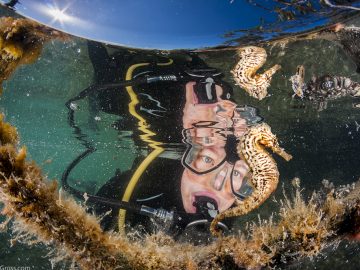
    Managing a team whose mandate is to hold people accountable to their commitments has prepared me well for my next role. I am returning to The University of British Columbia in order to pursue my efforts to advance seahorse conservation. Seahorses are extraordinary fishes – they are the only animal we know of where the male gets pregnant, for just one example. And they are beautiful. But they are also overfished by the world’s most damaging fishing gears and traded internationally in huge numbers for use as traditional medicines. Because of this they are listed on Appendix II of The Convention on International Trade in Endangered Species (CITES). The listing means that all CITES Parties (member countries, now 182 plus the EU) are obliged to ensure that their seahorse exports are sustainable, legal and monitored. But for the listing to be effective in addressing the threats seahorses face, it needs to be more than a paper promise – it needs to be implemented. This summer I facilitated the Parties to adopt an action plan to move seahorse trade toward sustainability. This created a time-sensitive opportunity to hold CITES Parties accountable to the promises they have made for seahorses.

    At the end of the day, having a gym membership doesn’t automatically make you fit. You need to show up and do the hard work.

    At the end of the day, having a gym membership doesn’t automatically make you fit. You need to show up and do the hard work. It is promising to see more and more actors across the seafood supply chain taking out “sustainability memberships”. It’s a very important first step. But without showing up the membership will mean nothing at all. That’s why SeaChoice will continue to do the hard work of holding all actors accountable to their commitments. I’m proud of the progress my team has made so far, and can’t wait to see what they do next.

    That’s me signing off. So long SeaChoice, and thanks for all the fishes!

  • Fishing for change – are the world’s most influential seafood companies doing enough?

    Fishing for change – are the world’s most influential seafood companies doing enough?

    New assessment shows companies need to move from talk to action, and fast.

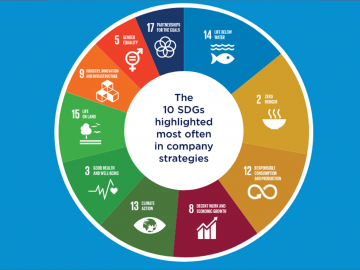
    After a long process of research, consultation, and iterative development, the World Benchmarking Alliance recently released the results of the Seafood Stewardship Index (SSI), which ranks the world’s 30 largest and most influential seafood companies against seafood-relevant commitments in the United Nations’ Sustainable Development Goals (SDGs). Specifically, the SSI assessed what contribution these companies were making towards the achievement of SDG 1 (no poverty), SDG 2 (zero hunger), SDG 5 (gender equality), SDG 8 (decent work and economic growth), SDG 12 (responsible consumption and production), SDG 14 (life below water) and SDG 15 (life on land).

    The SSI is designed to show us what companies have committed to doing to advance sustainable seafood, how transparent they are about their activities and how well they are meeting their targets. The supporting framework consists of 60 indicators across five measurement areas: governance and management of stewardship practices, stewardship of the supply chain, ecosystems, human rights and working conditions and local communities. Each indicator measures commitment, transparency or performance within these five areas.

    The approach taken with the SSI is similar to the methodology SeaChoice followed for Seafood Progress – companies’ profiles were first completed using publicly available information, and then companies were invited to submit further information to address any gaps. Interestingly, the exact same proportion of companies decided to engage in both initiatives from the get-go – two-thirds submitted additional information, while one-third chose not to.

    Of the 30 companies profiled in the SSI, there are three Canadian companies or companies with direct (as in, not run by subsidiary companies) and significant activities in Canada:

    • Cooke, ranked 25th out of 30, has salmon farming at its core but is also involved in fishing and aquaculture feed production. The SSI summarizes that “compared to its peers [Cooke] underperforms, primarily due to the general lack of information surrounding its activities. Cooke discloses few details about its operations and policies with respect to most measurement areas.”
    • High Liner Foods, ranked 21st, processes and sells value-added frozen seafood products (such as battered or breaded fish fillets or bites) to retailers, restaurants, institutions and foodservice providers. High Liner Foods scored well on the design of its environmental and social commitments, but less well on performance indicators due to the lack of information available for how it is addressing potential adverse human rights impacts.
    • Mowi (formerly known as Marine Harvest), ranked 2nd, is the world’s largest producer of farmed salmon, both in terms of volume and in terms of revenue. The company’s headquarters is in Norway, but it operates large-scale open-net pen salmon farms on Canada’s Atlantic and Pacific coasts. Mowi ranked 2nd in the benchmark, scoring well on indicators related to transparency and its commitment, but distinctly less well on indicators related to its performance against those commitments. Mowi’s profile summary ends with “although Mowi’s overall performance is good, there remain sustainability issues the company faces, such as the high quantities of fish escapes from its farms and its environmental footprint.”

    The companies profiled are so large that it must have been difficult for SSI researchers to decide on their scores, particularly when the performance of multinational companies vary across geographies or subsidiaries. For example, Mitsubishi Corporation (ranked 8th) owns over 1,400 subsidiary companies in 90 countries. One of their subsidiaries, Cermaq, runs large-scale open-net pen salmon farms on B.C.’s coast. Mitsubishi’s SSI profile summary states that “to support local communities, Mitsubishi recognises the rights of indigenous peoples. Its subsidiary Cermaq is also active in local community engagement and development programs. Moreover, Cermaq has a strong commitment to area-based management for fish farming to limit its impacts on the ecosystem.” SeaChoice can’t speak to Cermaq’s operations in other jurisdictions, but there is currently no area-based management salmon farming in Canada, and the rights of indigenous people in some areas where Cermaq operates in BC have only just started to be considered after years of formal opposition and protest.

    As with all commitment tracking and reporting platforms, the results will only be as good as the information that was fed into the analysis. To help increase the accountability of information submitted by companies, the scoring guidelines for the analysis are designed to encourage companies to make information publicly available (although the SSI methodology does allow for confidential information to be provided under non-disclosure agreements).

    In any case, the SSI very clearly shows that businesses need to be taking much more action to contribute to the achievement of the Sustainable Development Goals. And while retailers weren’t included in the scope of the SSI, as major purchasers of seafood produced around the globe, they also have a role to play in demanding and supporting truly sustainable seafood.

  • Seafood Progress Year 2 results – Step 6: Supports Improvements

    Seafood Progress Year 2 results – Step 6: Supports Improvements

    Retailers are doing more to improve the sustainability of the worst offenders in the Canadian marketplace, but it’s not enough.

    At the start of July, SeaChoice released our first annual update to Seafood Progress – an online resource that assesses and compares major Canadian food retailers’ sustainable seafood commitments and what they are doing to achieve them. Seafood Progress has six steps that follow the framework produced by the Conservation Alliance for Seafood Solutions in their Common Vision for Sustainable Seafood. This post is the last in a series that looks at each of the six steps in detail, highlighting trends, shortcomings and leaders in action.

    The previous five posts reviewed how retailers scored on their Commitments, Data Collection policies, Responsible Sourcing practices, Transparency and Education. This post looks at what actions retailers are taking to support improvements in fisheries and aquaculture production, with a focus on the high-volume commodities with big environmental and social risks.

    In Step 6, retailers are awarded points if they are engaging in actions to improve the production of Atlantic salmon that is farmed in Atlantic Canada, Western Canada, or internationally; farmed, imported shrimps and prawns; and/or skipjack tuna. Seafood Progress narrows in on these commodities because each is sold in high volumes in Canadian retail stores and the majority of production is Not Recommended by the Ocean Wise Seafood Program.

    Examples of actions that have the potential to directly affect the supply chain include outreach to policy or decision-makers, pre-competitive collaboration with other seafood companies, and working directly with suppliers or producers. Actions retailers can take that send indirect market signals include not advertising unsustainable versions of a commodity, preferentially sourcing eco-certified or eco-labelled products, and preferentially sourcing products with high levels of social responsibility and traceability.

    Most retailers are doing one or two actions per commodity, but some are doing many more – for example Loblaw, which is engaged in five different types of action to support improvement in farmed Atlantic salmon. These include working with the Aquaculture Stewardship Council (ASC) and Best Aquaculture Practices (BAP) certification programs on standard development and supply chain expansion, aiming to source farmed salmon from closed containment or organic certified open-water net pens, preferentially sourcing ASC certified salmon for its private label products, and only sourcing from suppliers that meet Loblaw’s Ethical Sourcing Policy and traceability requirements.

    Alternatively, retailers can get full points if all the products sold in that commodity category are sustainably produced. SeaChoice considers products sustainably produced if they are eco-certified by the Marine Stewardship Council (MSC) or ASC (or, for shrimps and prawns, BAP 2-star or more), Recommended by Ocean Wise and/or ranked Best Choice by Seafood Watch. So, for example, Save-On-Foods scored 100 for KPI 6.1 because all its farmed salmon products are ASC certified. Retailers can also get full points if they refrain from selling the commodity altogether, for example, Buy-Low Foods scored 100 for KPI 6.1 because it doesn’t sell any farmed Atlantic salmon.

    Retailers are doing the least to support improvements in the production of skipjack tuna (possibly because so few of their commitments include canned seafood in their policies). For example, three retailers are not engaged in any actions to support improvement of skipjack tuna and three are doing only one action. But some retailers are showing leadership on this issue. SeaChoice commends Walmart Canada for engaging in pre-competitive collaboration through the Retailer Canned Tuna Forum and the Seafood Task Force Tuna Sub-group, working directly with suppliers to switch to pole-and-line gear or free-school seining, and preferentially sourcing MSC certified tuna as part of its 2025 sustainable seafood commitment.

    This step is about encouraging retailers to be part of the solution – to be active in improving the sustainability of the seafood they sell, beyond the more usual top-down pressure on their suppliers (although communicating their expectations and desires is important). And while the national average for this step increased by 13 points this year, despite two additional potential actions being added to the KPI scoring which meant that each individual action was worth fewer points, Step 6 continued to be the lowest scoring step in Seafood Progress. SeaChoice strongly encourages retailers – especially the eight profiled that scored under 50 on this step – to look at their workplans for the next year and see what else they could do.

    Many of the actions in this step aim to increase the volume of sustainable seafood in Canada, which will be great for Canadian consumers. But some of the actions, like supporting producers to undertake improvements or advocating for better governmental regulation of the industry, also aim to ensure the costs and benefits of sustainable seafood are shared equitably across all actors in the supply chain. Producers need to be adequately rewarded, or at least compensated, if they are going to invest in practices that are more sustainable and responsible.

    Producing seafood that is environmentally sustainable and socially responsible is clearly the right thing to do, but we need to make sure that all actors are justly compensated and that businesses are profitable over the long term. Otherwise, there’s very little incentive to make that extra effort to truly protect the natural resources that underpin seafood production, or the well-being of the people who get seafood from net or farm to plate. In other words, environmentally and socially sustainable seafood needs to be financially sustainable, as well.

    We hope that you have enjoyed our series on the latest results from Seafood Progress. Please let your retailer know what they are doing right and where they can do better. You can take to social media, using the twitter buttons on their main profile page. Alternatively, next time you are in store, you can ask to speak to their seafood or customer service staff. At the end of the day your retailer wants to do right by you – so let them know sustainable seafood matters to you and it will continue to matter to them!

    Others in this series:

  • Seafood Progress Year 2 results – Step 5: Education

    Seafood Progress Year 2 results – Step 5: Education

    Education doesn’t stop when we leave school – retailers need to do their part to educate customers and suppliers about their sustainability policies.

    At the start of July, SeaChoice released our first annual update to Seafood Progress – an online resource that assesses and compares major Canadian food retailers’ sustainable seafood commitments and what they are doing to achieve them. Seafood Progress has six steps that follow the framework produced by the Conservation Alliance for Seafood Solutions in their Common Vision for Sustainable Seafood. This post is the fifth in a series that looks at each of the six steps in detail, highlighting trends, shortcomings and leaders in action.

    The previous four posts reviewed how retailers scored on their Commitments, Data Collection policies, Responsible Sourcing practices and on Transparency. This post looks at Education (Step 5), including what retailers’ policies are for training their seafood staff, providing information in store about their sustainable seafood, and for working with their suppliers to help meet their commitments.

    Step 5 saw the biggest year-to-year improvement in the national mean, or average, scores of any steps in Seafood Progress, jumping from 50 to 68 out of 100. Part of the reason for this increase is that two additional retailers (Sobeys and Canada Safeway) engaged with SeaChoice in the development of their profiles and shared new information with us that justified increases in their scores compared to last year. SeaChoice recognizes METRO, Buy-Low Foods and Save-On-Foods as the highest scoring retailers for this step and commends them on their education-related activities. One retailer – Costco Canada – scored zero across all indicators in this step because there was no publicly available information with which to score its education-related policies and activities.

    Five of the retailers profiled are conducting training programs for all their seafood staff regularly (at least every two years), while three also conduct training for all staff but less frequently. It is important that seafood staff understand basic seafood sustainability issues and the principles of the retailer’s seafood policy or commitment so they can accurately answer customers’ questions and help them choose seafood that meets their needs. For example, Buy-Low Foods updates its seafood counter staff regularly on which products are Recommended by the Ocean Wise Seafood Program so that they can help customers choose more sustainable options. METRO, which uses fewer eco-labels in store, ensures its staff are knowledgeable about its sustainable seafood policy, seafood eco-certifications, and the environmental impacts of fisheries such as overfishing and bycatch through training programs, in-person workshops, and an online resource library.

    However, retail staff are not always around or available to chat with customers about seafood options, which is why it is important that retailers also provide written information on their seafood policies – such as posters, pamphlets, or screens – in their seafood aisles. Currently only one retailer, METRO, provides detailed information on its seafood policy in stores. All METRO fresh seafood counters have screens with information on METRO’s seafood commitment displayed, and its Quebec stores also have pamphlets that explain its Fraîcheur traçable campaign (“Freshness you can trace”). Four retailers profiled include some information on their sustainable seafood policy at their seafood counters, for example highlighting that they are an Ocean Wise partner and directing people to visit the Ocean Wise website for more information on the program. SeaChoice encourages the retailers that have no information on their seafood policy available where their seafood products are displayed to consider developing some communications that will help their customers understand their policies.

    Finally, it is important that retailers communicate their policies and expectations in the other direction – to their suppliers. Four retailers reported to SeaChoice that they regularly speak to their suppliers about their sustainable seafood commitment to help ensure the products they supply exceed the retailer’s expectation, and two (Loblaw and Buy-Low Foods) reported regular engagement plus providing direct support, as needed, to help ensure all seafood products are procured in line with their policies. For example, Loblaw reports helping its suppliers find eco-certified fisheries and farms that meet its commitment for private label products, and Buy-Low reports helping its suppliers identify more sustainable sources for some products.

    Thanks to the efforts of seafood advocacy organizations and forward-thinking seafood businesses, there is already a much greater awareness of seafood sustainability issues than there was ten or fifteen years ago – but it could be better. Many people still find choosing seafood to stressful and confusing, so the more that retailers do to help, for example by clearly explaining their sustainability policy in store or labelling products that meet robust sustainability thresholds, the better. And since the sustainability of retailers’ products will depend on the sustainability of the products they get from their suppliers, it’s important that suppliers understand retailer’s expectations and aspirations.

    Others in this series: