Category: Sustainability

  • SeaChoice launches labelmyseafood.ca

    SeaChoice launches labelmyseafood.ca

    SeaChoice has launched its new website on seafood labelling the Canadian marketplace.

    Visit labelmyseafood.ca to find out more about the inadequacy of Canadians seafood regulations, why it matters, SeaChoice’s recommended labelling action plan for Canada, and what you can do to help!

  • Canada scores an F in regulatory report

    Canada scores an F in regulatory report

    Canada’s seafood labelling regulations are insufficient. Businesses and consumers deserve to know more about the fish they buy.

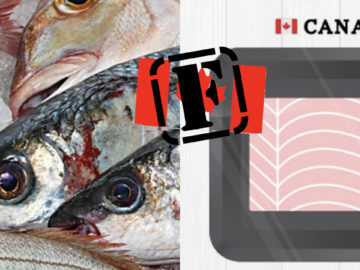
    Our latest report found that Canada’s seafood labelling lags behind its primary trading partners (the EU and US) we gave gave Canada an “F” for its failing seafood labelling regulations.

    Read the SeaChoice seafood labelling report.

    The full report can be downloaded at www.labelmyseafood.ca

    Learn more about labelling and traceability.


  • Canadians want better labelling for their seafood

    Canadians want better labelling for their seafood

    We collected 12,705 signatures from Canadians who want better labelling for their seafood

    Thank you so much to everyone for lending their voice to demand better seafood labelling and traceability in Canada!

    Canadians clearly want the power to choose seafood that is good for the oceans and the people that depend on them. We are thrilled to have exceeded our goal of 10,000 signatures!

    While we wait to see if our recommendations are accepted into Canadian regulations, don’t forget to ask these questions when you buy seafood with insufficient labelling:

    • What species is this?
    • Is it wild or farmed?
    • Where is it from?
    • How was it caught or farmed?

    Then check the to see if it’s a sustainable choice!

    Click here for more information about traceability and labelling.

  • Are you eating seafood in the dark?

    Are you eating seafood in the dark?

    You may not be eating the seafood you think you are. And as a result you may be contributing to environmental degradation in the marine environment, modern slavery or even eating seafood that’s not as healthy as you think it is. This is why SeaChoice launched a petition — asking the federal government to improve labelling for seafood in Canada.

    Canadians want to know what seafood they are eating and whether it comes from environmentally and socially sustainable sources — or if it doesn’t. But Canadian consumers are currently “in the dark”. How can we know when the information available on seafood packaging only requires a “common” name?

    According to Canadian guidelines, a package labeled with the common name “rockfish” could be one of more than 100 possible species, some of which are endangered and others which are sustainably caught. A recent study by Oceana in the United States estimated that nearly half of sampled seafood was mislabelled.

    A 2016 study by SeaChoice identified many uncertainties and inconsistencies in official Canadian data – making it likely that Canadians are also subject to seafood fraud. The risk is high – more than half of the seafood in Canadian markets is imported, however current import data does not trace that product back to its source, indicating to consumers only the country where it was last processed, not even its true origin.

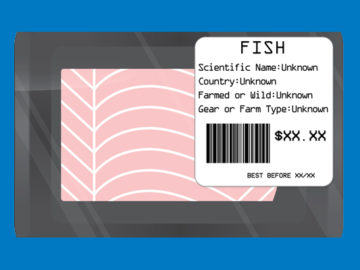
    In Canada, consumers cannot currently choose to preferentially purchase seafood that comes from legal, regulated fisheries that do not involve human rights abuses, or even that meet our health requirements. This is why SeaChoice asked for public support in petitioning the federal government to ensure that all seafood sold in Canada bears a label indicating the following:

    • Scientific (Latin) species name,
    • whether is it wild or farmed,
    • the location of the fishery in which it was caught (or farm where it was cultivated), and
    • the gear type or farming method.

    Legislating access to this information would allow you to choose seafood that makes a positive contribution to the environmental, economic, social and cultural fabric of the community it comes from. It would also put us on more of a level playing field with some of our largest seafood markets – the US and the European Union.

    Knowledge is power – and SeaChoice’s newest campaign aims to ensure that all Canadian’s have the power to choose seafood that is good for the oceans and the people that depend on them.

    Click here for more information about traceability and labelling.