Category: Sustainability

  • Berezan Shrimp Company: Bringing sustainability to shrimp farming

    Berezan Shrimp Company: Bringing sustainability to shrimp farming

    Admit it. You’ve probably bought — or at least eaten — unsustainable farmed shrimp that comes from ponds in Asia or Latin America, destroys ecosystems and hurts workers. You’re not alone. Unsustainable farmed tropical shrimp are one of Canada’s top three unsustainable seafood imports.

    Most shrimp consumed in Canada is farmed using a system of small ponds, which are a leading cause of mangrove deforestation. These farms typically release waste and chemical effluent directly into surrounding coastal areas and groundwater. They tend to rely heavily on wild fish for feed. Imported farmed shrimp have also been linked to social sustainability issues, including slavery and other human rights abuses. As a result, the Ocean Wise Seafood Program does not recommend imported conventionally farmed shrimp and Seafood Watch ranks it as “avoid” (red).

    Companies like Berezan Shrimp Farm in Langley, British Columbia, are working hard to change that. The company, whose farm is nicknamed the “shrimp spa” because of the perfect water conditions engineered for the facility, has big plans to become a world class operation in closed-containment, land-based shrimp production.

    In its current pilot stage, which is expected to last about two years, Berezan produces about 100 tonnes of shrimp a year, or 1,800 to 2,300 kilograms a week. That means about 4.2 million shrimp are onsite at any time. The company’s goal is to produce up to 20,000 tonnes per year by 2024. Compare that to about 50,000 tonnes of farmed shrimp imported into Canada in 2017 and about 92,000 tonnes of open net-cage salmon produced in B.C. in 2016.

    Warren Douglas, who led us through the operations, is proud of the operation’s sustainability. The company provides full traceability, allowing customers to know exactly where their shrimp comes from, something more and more consumers are demanding. Berezan plans to make operations even more environmentally sound by making its own feed, starting a hatchery, improving heat recapture, producing fertilizer and lowering water consumption from its current level of 11 litres per minute.

    The farm brings in baby shrimp from a certified hatchery in Florida when they are about 20 days old and smaller than the nib of a pen. More than 100 tanks are stacked vertically, replicating practices used in vertical farming. The shrimp currently take about four months to mature under computer-controlled conditions. As improvements are made, it’s hoped that will drop to two months. It’s a system of indoor aquaculture that generates far more shrimp per cubic metre of water than open pond farming or other aquaculture techniques. Twenty-five kilograms of shrimp can be grown using just one cubic metre of water.

    Small pulses of tiny feed particles are sent to the tanks continuously through an automated system. Feed includes mostly vegetable-based ingredients and only small amounts of fishmeal and oils.

    Shrimp are raised using recirculating aquaculture systems (referred to as RAS), a popular technique for closed-containment, land-based farming. Water exchange is limited and biofiltration is used to reduce ammonia toxicity, followed by degassing and oxygenation. RAS reduces the need for fresh, clean water through recycling and maintains a healthy growing environment for shrimp.

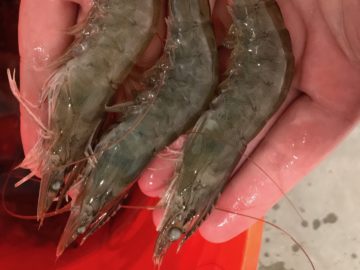
    Photo: Cooked shrimp from Berezan shrimp farm, Langley, B.C.
    Photo: Cooked shrimp from Berezan shrimp farm, Langley, B.C.

    Douglas acknowledges that there are challenges associated with this kind of operation. The first few growing cycles required experimentation with water temperature and salination, nutrition, operation intensity and general trouble-shooting and adjustments. But the enthusiasm of the 11-member team at Berezan farm is contagious and no problem appears to be without a solution. Chefs and retailers from around Metro Vancouver are expressing interest. The large shrimp are delicious and firm as confirmed by a post-tour office cooking session.

    Closed-containment shrimp farms offer a climate-friendly protein alternative to animal agriculture, which produces huge amounts of greenhouse gas emissions, consumes massive volumes of water and causes a lot of pollution. The environment benefits substantially when more people cut down on meat and other carbon-intense animal products. Feeding as many as nine billion people by 2050 will mean turning to sustainable protein innovations. The Berezan Shrimp Company is poised to be one of those innovators.

    Post by Theresa Beer, Senior Communications Specialist, David Suzuki Foundation. It also appears here.

  • Making Stewardship Count in Brussels

    Making Stewardship Count in Brussels

    Last week SeaChoice attended The Brussels Seafood Show – the largest annual fishing industry trade event with producers, processors, buyers, and national agencies represented from all over the world. We were there to host and participate in discussions and workshops around credible eco-certifications for fisheries.

    SeaChoice is a leading stakeholder in Canadian seafood certifications by the Marine Stewardship Council (MSC), the most prominent global certification program for wild fisheries. In September 2017, SeaChoice released the first review of all Canadian MSC certifications – and found that certifications have led to little change to fishery practices on the water to directly improve their impacts on habitat, non-target species and ecosystem function. We have taken our concerns into a global conversation among organizations and marine experts to ensure the credibility of the certification scheme remains high. We are among over 75 organizations and experts that are part of Make Stewardship Count – a coalition working for significant and swift improvements to MSC, an important tool in the work to ensure global fishery impacts are limited and sustainable into the future.

    It was our participation in Make Stewardship Count that brought us to Brussels, at which we participated in a forum focused on improving MSC implementation of “Principle 2” of the MSC Certification Standard and Certification Requirements – bycatch and retained species, habitat, and ecological impact. NGOs and academics with years of marine conservation and seafood certification expertise in addition to years of stakeholder participation in the MSC program have identified a set of clear asks of MSC – designed to ensure MSC fisheries properly protect habitats and marine species not considered as “target species.

    As stakeholders in MSC certification processes, SeaChoice member organizations will continue to engage and encourage these improvements, both at a fishery level and with the standards themselves.

  • Declaration in Defence of Wild Salmon

    Declaration in Defence of Wild Salmon

    Declaration asks British Columbians to support removal of open net-pen fish farms to shield wild salmon from the spread of farm-related pollution and diseases.

    Today in Vancouver, a diverse group of B.C. community, Indigenous, and business leaders announced the launch of the “Declaration in Defence of Wild Salmon”.  The declaration seeks to draw together the growing number of voices calling on the B.C. government to take action on salmon farming by refusing to renew fish farm leases when they expire this June.

    The declaration describes B.C. wild salmon stocks as a “public treasure”, and points to disease and pollution from open-net fish farms as a reversible threat to their survival. The declaration’s proponents are calling for its immediate implementation in the Broughton Archipelago, where leases are expiring in the traditional territories of First Nations who have resisted salmon farming for decades.

    The group is calling on more British Columbians from all walks of life to sign the declaration today. Time is running out to show the Provincial government the strength of support for transitioning open net-pen salmon farms to land. The declaration is found at www.safesalmon.ca, a website hosted by SeaChoice partner organization Living Oceans Society, Watershed Watch Salmon Society and Georgia Strait Alliance. SeaChoice partner organization David Suzuki Foundation is among the 27 groups and prominent individuals that have launched the declaration.

    Visit our priority species profile to learn more about the sustainability challenges and solutions with open-net pen salmon farming in B.C.

  • Protecting the endangered North Atlantic right whale

    Protecting the endangered North Atlantic right whale

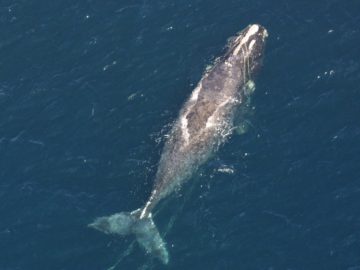
    The Government has taken unprecedented measures aimed at preventing further deaths of the endangered North Atlantic right whale in the Gulf of St Lawrence.

    These include early opening and closing of the snow crab fishing season, shipping lane closures and mandatory speed limits, and funding for surveillance and whale response teams. Significantly, fixed area closures as well as dynamic closed areas to fishing and shipping when whales are present were also announced.

    A 2017 major mortality event with 15 North Atlantic right whale deaths finally spurred these mandatory changes to fishing and shipping in the Gulf of St Lawrence. With a declining population of only about 450 individuals left and no new calves born this season, researchers in the North Atlantic Right Whale Consortium announced at the annual meeting that all breeding females could be dead in about 20 years leaving the population functionally extinct. Deaths from entanglement in fishing gear has been rising since the 1990s, while shipping impact deaths have been declining, and now 83% of the population bears scars from entanglements.

    Last week, the Marine Stewardship Council (MSC) eco-certification of the Gulf of St Lawrence crab fishery was suspended due to the rising number of right whale deaths caused by the fishery. SeaChoice member organization, Ecology Action Centre (EAC), is the only Canadian stakeholder in eco-certification process. The EAC has been working with the Gulf of St. Lawrence snow crab fleet to assess their ideas for testing ropeless fishing gear, electronic tagging of traps, and immediate changes to fishing practice, as well as long term action plans.

    The Gulf fleet has been proactive, stepping up to find solutions – and the government is concerned about the trade implications if they do not succeed in reducing entanglements and deaths. SeaChoice is applauds the measures announced and is calling for similar investments and changes to be implemented in all the other fleets that pose risk of entanglement along the whale’s migratory path and in their critical habitat in the Bay of Fundy and Roseway Basin.

    Read more in the press release issued by SeaChoice partner organization the Ecology Action Centre.

  • Washington State to end Atlantic salmon farming

    Washington State to end Atlantic salmon farming

    Washington State has taken a precautionary approach to protecting wild salmon.

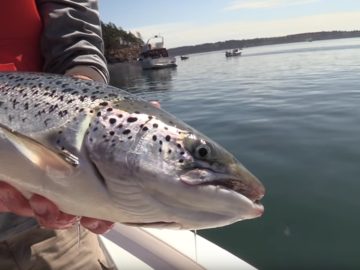
    Governor Inslee has signed into law a bill to phase out Atlantic salmon farming from Washington State waters. Farms will cease operations at the conclusion of their current leases. The phase out will be complete by 2022.

    The potential risk farmed Atlantic salmon pose to declining wild salmon populations was the key reason for the historic move. It also follows after a major fish farm collapse last year, which saw around 250,000 fish escape into the Salish Sea.

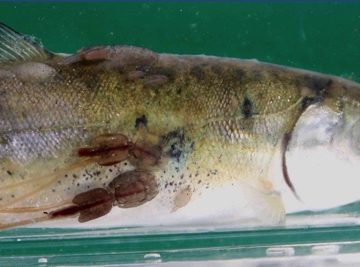
    Open-net pen salmon farms situated along wild salmon migration routes can pose threats such as sea lice and disease transfer. Thirteen Pacific wild salmon populations are currently listed by COSEWIC as Endangered or Threatened. A number of these migrate in both Washington and B.C waters.

    It remains to be seen whether the B.C. government will follow Washington State’s precautionary lead. Numerous B.C. salmon farm tenures are up for renewal this June – many of which are in unceded First Nations territories that have actively opposed open-net salmon farming for decades.

    Read more in the press release issued by SeaChoice partner organization Living Oceans Society and their allies.

    For more information on open-net pen aquaculture and the accompanying challenges, you can visit our information centre, as well as our priority species profiles for Atlantic salmon farmed on the east and west coasts of Canada.

  • Canada’s federal budget is good news for the oceans

    Canada’s federal budget is good news for the oceans

    Canada’s federal budget was released yesterday, marking the largest investment in nature conservation in Canadian history.

    A historic investment of $1.3 billion over five years in today’s federal budget to protect and restore nature will help Canada meet its international commitment to protect a minimum of 10 per cent of its oceans and 17 per cent of its land and freshwater by 2020. This is urgently needed to address Canada’s biodiversity crisis.

    As active members of the Green Budget Coalition, SeaChoice partner organizations the David Suzuki Foundation and the Ecology Action Centre were directly involved in crafting and submitting recommendations for the federal budget that relate to environmental issues and program funding.

    While much of the detail of where this funding will be spent has yet to be determined and it will be spent out over five years, conservationists see good news for species at risk, natural parks and protected area networks – all key components to ensuring the sustainability of Canada’s seafood.

    Read more in the press releases issued by our partners:
    David Suzuki Foundation
    Ecology Action Centre

  • DNA testing reveals limited seafood fraud, but poor labelling, by retailers

    DNA testing reveals limited seafood fraud, but poor labelling, by retailers

    Of the 7% mislabelled seafood, just 1% represented species substitutions, or fraud

    A countrywide SeaChoice research project found seafood fraud in Canada is minimal, but on-package seafood labels generally lack critical information that would allow consumers to make informed purchases.

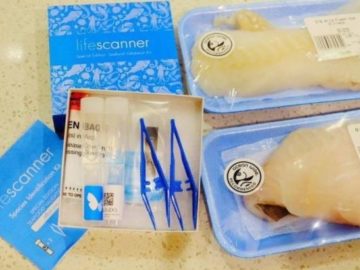
    In spring 2017, SeaChoice partnered with the University of Guelph Centre for Biodiversity Genomics’ Life Scanner program to engage 300 volunteer “citizen scientists” across Canada. Each was provided with two DNA ID kits to sample seafood in their local grocery stores. The results are now public on the LifeScanner website.

    The results show that just one per cent of the seafood tested across Canada was not what the label said it was, and seven per cent of tested seafood was mislabelled – sold under a name that was not compliant with the Canadian Food Inspection Agency’s labelling regulations.


    For more information:

    Press release
    LifeScanner portal for full results
    LabelMySeafood.ca
    Labelling and traceability – on SeaChoice website

  • SeaChoice transitions to hold seafood supply chain more accountable

    SeaChoice transitions to hold seafood supply chain more accountable

    SeaChoice is in the process of pivoting into our next decade of work to continue to improve the sustainability of seafood produced in, and imported into, Canada. After achieving significant progress in the retail landscape between 2006 and 2016, with many of our retail partners reaching their sustainable seafood commitments, SeaChoice is setting a new and ambitious goal of increasing sustainability throughout the entire seafood supply chain – from water to table.

    Since it’s founding in 2006, SeaChoice’s focus has been to provide informative resources on seafood sustainability at various levels of the seafood supply chain – from harvesters to consumers. Based on scientific assessments, SeaChoice has created easy-to-use tools that help Canadians make the best seafood choices. SeaChoice has provided advice on seafood purchasing based on environmental sustainability, which is communicated as “red”(Avoid), “yellow” (Some Concerns) and “green” (Best Choice).

    One of SeaChoice’s main initiatives has been working directly with Canadian retailers to establish sustainable seafood purchasing policies and to implement market-facing sustainable seafood programs. SeaChoice has always provided this service free of charge, and links this work to its member organizations that have extensive expertise in sustainable fisheries and aquaculture.

    Over the past decade, SeaChoice’s retailer partnerships have been successful in shifting seafood procurement away from unsustainable sources, and in developing consumer awareness of sustainable seafood options in Canada. As of December 2016, SeaChoice is proud to say that our retail partners have either met or almost met their commitments. SeaChoice values and congratulates our retail partners for their important efforts and ongoing commitment to sustainable seafood procurement and consumer education.

    The success of our retailer commitments means we have reached a limit relating to our ability to help them further influence change on the water, as the majority of “red-ranked” seafood products have already been replaced with more sustainable alternatives. In order to ensure that sustainable seafood demand and supply continue to increase in Canada, SeaChoice recognizes that it is necessary to increase pressure at different places along the seafood supply chain, instead of primarily focusing at the retailer level.

    In the shift away from holding direct retail partnerships, SeaChoice is taking several paths to continue improving the sustainability of seafood available in Canada. Moving forward, SeaChoice will be directing more effort and resources into:

    • Transparency and traceability, seeking improvements in seafood labelling regulations.
    • Verifying seafood labelling through DNA testing in Canadian markets.
    • Using market leverage to improve some of the least sustainable fisheries and aquaculture production.
    • Providing retailers the tools and incentives necessary to improve their sustainable seafood commitments and create their own policies in-house.

    This work will be supported by SeaChoice member organization engagement in fisheries and aquaculture management, policy improvements and incentives for improved fishing and farming practices.

    To this end, SeaChoice has already marked many significant accomplishments over the past year, including the following:

    Seafood labelling and traceability:

    • SeaChoice has been focused on improving seafood labelling across Canada. Improved seafood labelling in Canada means that consumers can get all of the information they need at the point of sale – allowing them to make purchasing decisions based on their values.
    • We released our report card on how Canadian seafood labelling legislation compares with the US and EU, and launched an associated website at labelmyseafood.ca.
    • We contributed to the Canadian government request for input on improved food labelling and supply chain traceability (available here and here).
    • We launched a nationwide citizen science project focused on testing the DNA of seafood sold by major retailers across Canada, with an aim of evaluating the adequacy of current labelling practices.

    Continuing market leverage to achieve on the water change:

    • Canada continues to produce and import seafood that is considered “red-ranked”. In some cases the market is not the right lever for making change in these fisheries or aquaculture operations. SeaChoice has instead focused efforts for these species on other areas in the supply chain, such as fisher behaviour, fisheries management, and tracking conditions of eco-certifications to ensure that these fisheries and aquaculture operations improve over time.

    Sustainable seafood commitments:

    • SeaChoice has been working with retailers across Canada to internalize their seafood commitments, building in long-term capacity on tracking, reporting and improving their sustainable seafood options.
    • In order to ensure retailers continue to improve their supply chains, we are developing a tool to track how Canadian retailers progress against a suite of measures, referred to as the Common Vision for Seafood Solutions. The Common Vision has been agreed by ENGOs across North America to be the key elements of sustainable seafood procurement.

    SeaChoice is excited about the next steps in the evolution of the seafood movement in Canada, and encouraged by our success over the past decade. Over the coming months there will be changes in stores as SeaChoice moves away from point-of-sale labelling with retailers. There will also be changes to the SeaChoice website and iPhone App as we transition away from ranking the sustainability of seafood. Indeed SeaChoice will be launching a whole new website this fall that profiles our new initiatives.

    With our retailers reaching their seafood commitments, it is now time to dig even deeper into improving the sustainability of Canada’s seafood supply, and to focus our efforts where the greatest leverage can be found. SeaChoice and its member organizations look forward to continued improvements in the sustainability of seafood available to all Canadians. The future of our coastal communities, national food security and the health of our vast marine ecosystems is at stake in all of the work that we do.

    You can find a press release about the SeaChoice transition here.

  • ASC certified salmon isn’t really a “Good Alternative” seafood

    ASC certified salmon isn’t really a “Good Alternative” seafood

    SeaChoice disagrees with the decision by the Monterey Bay Aquarium’s Seafood Watch program to consider farmed salmon certified by the Aquaculture Stewardship Council (ASC) as a “Good Alternative”. Seafood Watch published its new recommendation on June 5th, following a benchmarking review of the ASC’s Salmon Standard.

    The Seafood Watch benchmarking suggests that salmon farmed on ASC-certified Canadian farms merits the “Good Alternative” ranking—except that Canadian farms certified by ASC don’t actually meet the criteria benchmarked by Seafood Watch.

    The benchmarking exercise looked exclusively at the Salmon Standard as written and did not review its practical application. In Canada and elsewhere in the world, ASC has approved Variance Requests that substantially alter the Salmon Standard in practice.

    SeaChoice calls on the ASC to take immediate action to repeal its variance request processes, in order to legitimately benchmark to a Seafood Watch “Good Alternative” recommendation.

    More information:

    SeaChoice media release

    Benchmarking & Eco-Certifications

    Aquaculture Stewardship Council (ASC): Variances and Process