Category: Sustainability

  • The world’s governments have failed to protect threatened tunas and sharks

    The world’s governments have failed to protect threatened tunas and sharks

    Fifty-two Atlantic fishing nations, including Canada, gathered last month in Dubrovnik, Croatia for the annual meeting of the International Commission for the Conservation of Atlantic Tunas (ICCAT). This international fishery management body is responsible for managing Atlantic migratory species such as tuna and swordfish, along with the impacts the fisheries have on other species including sharks, sea turtles, marine mammals and seabirds.

    The 2018 talks were difficult and contentious and ended up stalled on most topics. Countries secured just one major agreement, a management plan for Eastern Atlantic bluefin tuna. They even walked away from the meeting without agreed measures for threatened species including shortfin mako sharks, sea turtles and marine mammals. Species specific decision details can be found below.

    The meeting was attended by Shannon Arnold, SeaChoice representative and marine program senior coordinator for the Ecology Action Centre (EAC). She called the meeting disastrous. “The inability of countries to come together on fishing management and strong conservation measures has serious implications for the health of our ecosystem, food security and fishing livelihoods,” Arnold said.

    So where do we go from here? This year’s meeting was incredibly challenging, but the failure of the world’s governments to take action against the overfishing of tunas and sharks highlights why SeaChoice and its partner organisations must continue to engage.

    SeaChoice partner organization EAC has been the only Canadian civil society group to attend ICCAT, and has has been an official ENGO observer at the meetings for almost a decade. The EAC attends to help ensure transparency and conservation consideration in decision making about the world’s shared marine resources. EAC stands ready to continue to advocate for the Western bluefin tuna, North Atlantic swordfish, bigeye tuna, shortfin mako shark, blue shark, loggerhead and leatherback sea turtles – all of which are fished or caught as bycatch in significant numbers by Canada’s ICCAT fleets.

    Species specific decisions

    Bluefin tuna:
    The only new fishery management agreement reached at ICCAT 2018 was on Eastern bluefin tuna, a plan met with much criticism from conservation groups for the sheer number of loopholes built in. It allows an increase in fishing and ranching capacity for most countries without reinforced monitoring and enforcement measures. This is the opposite of the proposal that was tabled at the beginning of the week. Ongoing illegal trade, and data showing increasing evidence of mixing between Western and Eastern bluefin populations, mean such risky management decisions will undermine efforts to rebuild the population our Canadian fisheries rely on.

    Bigeye tuna:
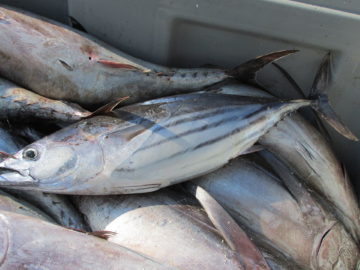
    The main focus of this year’s meeting was attempting to reach an agreement to halt overfishing of bigeye tuna. Scientists advise populations will collapse by 2033 without an immediate cut to allowed quota and the huge number of juvenile bigeye being caught in skipjack tuna fisheries. Bigeye tuna are the backbone of a billion dollar global industry and are also caught in Canada’s longline and rod and reel fisheries.

    The commission ended with the collapse of talks and no new agreement to manage the fishery. Arnold observed that, ultimately, it was a deadlock between developed and developing countries due to the inequities underpinning global fishing agreements. “Developed countries responsible for past overfishing are insisting on keeping their access to fish anywhere in the ocean,” said Arnold, “while, developing countries are now asserting their internationally recognized rights to fish and develop their economy.”

    Sharks:
    ICCAT failed to address continued overfishing of mako sharks or strengthen the regional ban on shark finning. The shortfin mako is one of the world’s most economically valuable sharks, sought for meat, fins, and sport. This oceanic species is fished by many nations around the globe but is not subject to international fishing quotas. The fisheries body – after learning their previous management measure had not stopped North Atlantic mako overfishing – took no action to protect the population from future collapse, ignoring scientists’ recommended ban on North Atlantic mako retention to rebuild the population. To add insult to injury, Japan, China and Korea blocked a proposal from 26 ICCAT Parties to strengthen the existing ban on finning (slicing off a shark’s fins and discarding the body at sea).

  • Planning the future of aquaculture in Canada

    Planning the future of aquaculture in Canada

    Aquaculture has a future in Canada, but it must be properly and transparently regulated to ensure a future for wild salmon and reconciliation with First Nations.

    Fisheries Minister Wilkinson announced this week that his Department will begin to engage stakeholders on a “renewed approach” to ensure that Canada’s aquaculture sector is economically successful and environmentally sustainable. SeaChoice welcomes this announcement, which has the potential to ensure future developments are carried out in a responsible and transparent manner. But we caution that there is substantial work to be done to create the “certainty” that the Minister indicates he is seeking to enable the industry to grow. Not the least of the items to be addressed are ensuring the safety of wild salmon populations and reconciling the concerns of First Nations about operations in their territories.

    The following are key considerations against the four initiatives that make up the “renewed approach”.

    1. A study on the alternative technologies for aquaculture, including land and sea-based closed containment technology.

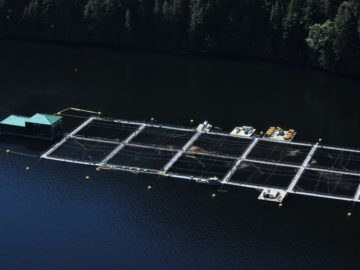
    We welcome the news that the federal and provincial governments will co-operate to study the closed containment industry, but it should be noted that that there have been dozens of studies done over the years; and that industry itself has moved on to building fully integrated, egg-to-market facilities on land in China, Denmark, Dubai, France, Norway, Poland, Scotland, South Africa, Sweden, Switzerland and the US—to mention only the facilities that have been publicly announced. At last count, 294,000 MT of land-based production is under way. By comparison, Canada currently produces a total 120,000 MT from the open-net pens on both coasts.

    2. Moving towards an area-based approach to aquaculture management – to ensure that environmental, social and economic factors are taken into consideration when identifying potential areas for aquaculture development – including considerations relating to migration pathways for wild salmon.

    Consideration of wild salmon must be central to an area-based approach for aquaculture in Canada. Any new legislative scheme must place the welfare of wild fish first in the consideration of fisheries managers, and ensure that monitoring and evaluation of impacts on wild fish act as effective triggers for management action on the farms. This is particularly important for wild fish species list by COSEWIC as Special Concern, Threatened or Endangered – such as wild Atlantic salmon populations in the east – 10/14 populations meet these criteria, and B.C.’s Chinook salmon populations – nearly half of which are in decline.

    Also critical is the industry’s respect of First Nations’ rights and title, and meaningful opportunities for Nations to participate in the design of regulations, management, monitoring and enforcement. In particular, siting criteria should incorporate UNDRIP principles, including the need to obtain free, prior and informed consent for fish farms on First Nation territories.

    3. Developing a framework for aquaculture risk management, based on the precautionary approach, which will ensure the sustainable management of aquaculture, and will be the overarching framework for future policies.

    SeaChoice partner organizations have been calling on the Department of Fisheries and Oceans to fully implement the precautionary principle and to provide greater transparency about the use of public waters by this industry for at least two decades. We would welcome a regulatory regime that is geared to managing salmon farming with the objective of preserving healthy wild populations of fish and shellfish. This will, however, require a sea-change on the part of the regulators and the science advisors who assist them. Key to managing to prevent impacts is admitting that impacts are occurring and that they are significant.

    The organizations also call for greater data transparency from industry, especially on fish health, yet much of the data related to disease and lice outbreaks remain unavailable to the general public – as does information on management of the same. This should be a minimum requirement for the industry to operate in Canadian public waters (as has been stated by the federal senate standing committee on Aquaculture) and is something that has been promised by both the BC Provincial and the federal government.

    4. Creating a single comprehensive set of regulations, the General Aquaculture Regulations.

    It may not be an easy task, given the various jurisdictions in different provinces, to create a single set of comprehensive regulations. It may not be as valuable as it sounds, either: the ecosystems of each coast are unique and may well require differing treatment. Certainly the concerns for impacts on wild species and other fisheries differ greatly between east and west coasts.

    There are some things that could be uniformly expressed across the country, nonetheless. A new General Aquaculture Regulation should properly price the ecosystem services that open-net pen aquaculture takes from the ocean. While this is an area of shared responsibility with the provinces, it is clear that issues such as degradation of water and sea-floor, mortality of juvenile wild fish, bycatch and consumption of wild fish by farmed fish aren’t factored in to the cost of aquaculture operational licensing or provincial tenures. Appropriate and escalating licensing fees can be used to spur investment in cleaner technology.

    Furthermore, the Act or Regulation should provide the means by which to implement Mr. Justice Cohen’s recommendation that DFO not have responsibility for the dual mandate of promoting the aquaculture industry and the protection and conservation of wild fish. Appointing a federal agency other than DFO with the responsibility to promote the aquaculture industry would leave DFO to regulate the industry as it does for others that could have impacts on the marine environment, fish and fish habitat – such as oil and gas, mining, shipping, etc.

  • Holding eco-certifications ‘responsible’ to their claims

    Holding eco-certifications ‘responsible’ to their claims

    Over the last decade or so, you’ve likely noticed an increasing abundance of eco-labels at your local seafood counter. There are now over 30 different seafood eco-labels globally; many of which are for farmed seafood. But what do they mean? Are they really a guarantee of sustainability?

    Recently we discussed the notion that all farmed seafood is bad. Spoiler alert, it’s not. However, for some sectors of the aquaculture industry, exponential growth has led to environmental and social challenges. In response to these challenges, eco-labels for farmed seafood have proliferated – to the tune of $3.6 billion U.S. in 2015.

    Eco-certifications, when done right, can help drive important sustainability gains. This is why SeaChoice advocates for consumers and retailers to use credible eco-certifications to guide their seafood purchasing decisions. In addition to being able to demonstrate improved environmental performance of eco-certified producers, credible eco-certifications’ practices must be transparent and inclusive, with procedures that are fair, and criteria that are rigorous and upheld.

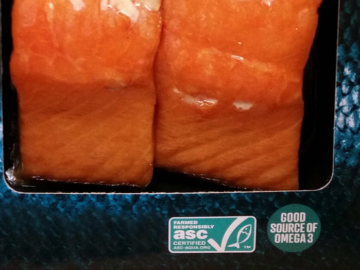
    One of the most prominent farmed seafood eco-certifications is the Aquaculture Stewardship Council’s (ASC) “responsibly farmed” eco-label. Established following a series of multi-stakeholder dialogues, which two SeaChoice member groups were a part of, the ASC Salmon Standard claims to define global best practices for managing environmental and social impacts. Today, 27 per cent of the salmon farming industry by volume and about 11 per cent of the total number of salmon farms certified feature the ASC eco-label.

    On a quest to understand how ASC certified salmon farms stack up, SeaChoice conducted a comprehensive global review of all audits (i.e. compliance assessments) filed for each of the 257 certified salmon farms – from the first farm certified in 2014 through to March 15, 2018. Our analysis included all major Atlantic salmon farming regions, including Australia, Canada, Chile, Norway and Scotland.

    Our review highlighted some good news. We found that most ASC certified farms were successful at meeting several key environmental indicators of the Salmon Standard such as fish feed ratios, chemical treatments, escapes and lethal incidents involving marine mammals.

    But it also uncovered some worrying trends, including that changes to the auditing processes and the Standard are eroding the best practices codified in the Standard. This means that consumers and retailers can’t tell exactly how ‘responsible’ the products with the ASC logo really are.

    For example, the Salmon Standard asserts that farms “must meet 100 per cent of the [Standard] requirements” in order to be certified. This is an impressive claim that instills trust in consumers interested in making environmentally and socially responsible food choices.  However, we found this claim to be misleading given the majority of ASC certified farms don’t actually follow the Standard as written. Take a deeper dive into the report analysis here.

    Where eco-certifications are seen as rewarding ‘business as usual’, the opportunity for potential and much needed sustainability gains within the industry are lost. This is why SeaChoice embarked on this global review – to determine if the ASC certification equals ‘best practice’ salmon farms. If not, what improvements should be made to ensure the rigour and credibility of the scheme are upheld?

    SeaChoice values the role that eco-certifications can play in improving the sustainability of fisheries and aquaculture. Our intent in carrying out this review, as well as our engagement with other eco-labels such as the MSC, is to recommend actions that eco-labels can take to address deficiencies, maintain the scheme’s credibility and, ultimately, have a positive impact ‘on the water’. In the end, we want to ensure that consumers and retailers buying seafood with these eco-labels are truly supporting industry best practices for sustainability.

  • Traceability and labelling: two pre-conditions for supporting sustainable seafood

    Traceability and labelling: two pre-conditions for supporting sustainable seafood

    Canadian seafood needs better traceability and labelling so consumers can tell what it is, where it was produced, which method of fishing or farming produced it, and where it was processed.

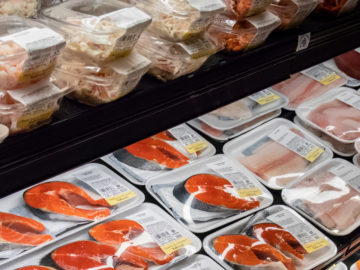
    How do you decide what kind of seafood to buy? Do you go to the supermarket looking for something specific, or do you just go and see what looks good? Regardless of your approach, some supermarkets make it much easier than others to know what you’re actually buying, where it came from, and how it was produced. These pieces of information are essential if you’re trying to support sustainable fisheries and aquaculture. Unfortunately, Canada’s lax labelling regulations mean retailers are only required to include a common name (which can be the same across many different species such as “sole”) and, if the product was imported, the country of “last major transformation”(for example where the fish was filleted, not where it was actually caught or farmed). Common name and country of processing are not enough to determine the sustainability of your seafood.


    In most cases, retailers do not have a system for collecting and displaying the more detailed information that would allow consumers to vote with their dollar and buy seafood that is in line with their ethics and values. In order to label products with this information, it must travel with the fish or seafood product from the point of harvest all along the supply chain to the point of sale. This traceability is essential for verifying the sustainability of products. Without robust traceability and honest labelling, consumers are vulnerable to buying seafood sold under false pretenses.

    This is why SeaChoice has been analyzing the quality of Canadian retailers’ seafood labels through our citizen science DNA testing projects. Our 2017 testing found that while the level of seafood mislabelling (using an incorrect or improper common name) in supermarkets was relatively low (7%), 26% of labels were unsatisfactory and 57% were poor in terms of providing information above the legal minimum. SeaChoice is running this project again in 2018 and the results should be in soon.

    SeaChoice has also been looking at Canadian retailers’ current use of traceability systems through Seafood Progress. Seafood Progress evaluated the traceability, labelling and data collection policies of every major retailer in Canada. Some retailers are star performers regarding data collection and labelling, and others had no information publicly available (and did not provide it upon request) to answer these questions. On average, retailers scored 36 out of a possible 100 on their seafood labelling policy, 44 out of 100 on traceability commitments, and 62 out of 100 for data collection. You can find out how your retailer did by visiting www.SeafoodProgress.org and clicking on their logo (see KPI 4.1, KPI 1.3 and Step 4, respectively).

    SeaChoice is working to improve these scores across the board by supporting innovative traceability initiatives (such as Know Your Fish) raising consumers’ awareness of seafood labelling through our citizen science projects and by mobilizing the public to “join the shift” and call on retailers to voluntarily improve their traceability and labelling practices.

    You can give your support to Canadian seafood businesses to implement better traceability and labelling by signing this open letter to retailers. You can also let your retailers know directly that you care about seafood sustainability by asking questions about the seafood in their stores – for example, by asking which species it is, where it was caught, or how it was farmed.

  • A deeper dive into our ASC global report

    A deeper dive into our ASC global report

    In light of recent criticism, SeaChoice provides further information on our report , “Global Review of Aquaculture Stewardship Council’s Salmon Standard”.  The report provides the rationale and options for immediate and medium-term actions the ASC can take to reform key deficiencies and maintain or enhance the scheme’s credibility and its positive environmental and social impact. Our findings raise significant concerns for which, in turn, SeaChoice offers key recommendations.

    The Salmon Standard v.1.1 explicitly states, “Farms must meet 100 percent of the requirements in this document to achieve certification” 1.

    In order to assess whether ASC certified farms were in fact meeting this statement, we analyzed every audit from the first in 2014 to March 2018. We were able to review farm conformance and performance as certification progressed: from a farm’s initial audit to surveillance to recertification. In doing so, we were able to identify whether auditor reporting of farm-level metrics had improved (it has, mostly2), and whether farm conformance improved over time (it varied3). We additionally reviewed whether performance on Standard key indicators has changed over time. For example, SeaChoice examined farm’s forage fish dependency ratios – comparing Salmon Standard versions 1.0 and 1.1 feed requirements. We found certified farms have improved their fishmeal dependency ratios over time and that 95% of farms can easily meet version 1.1 Standard requirements, leading us to recommend that the ASC consider further reductions to reflect current best practices4.

    It is important to note that the Salmon Standard (and the other ASC standards) is supplemented with an auditor guidance document, known as the Certification Accreditation Requirements (CAR). SeaChoice’s review analyzed the CAR, as written and as operated, through the 456 audit reports. Our report found deficiencies with the CAR. For example certified farms in major non-conformance with the Standard have sold and are able to sell their product with the ASC logo5. This demonstrates the CAR’s suspension and withdrawal rules need strengthening.

    In addition, the ASC deploys a number of processes which affect the way in which the Standard and/or auditing processes (i.e. the CAR) operate. These include, variances (alterations to the Standard requirements at the request of auditors) and interpretations (ASC guidance to auditors). While these processes are deemed necessities for certification scheme operations, these processes in practice amend the Standard and/or CAR as written.  Some amendments were found to be undermining the organisation’s theory of change by eroding the best practices codified in the Standard.

    Critically, the variance request (VR) approval process lacks stakeholder engagement, as well as independent technical and scientific advice6. As International Social and Environmental Accreditation and Labeling (ISEAL) members, ASC follows defined codes of practices.  Section 6.4 of ISEAL’s Standard Setting Code states, “The standard is relevant in the local contexts where it is applied, based in part on input from local stakeholders”. To date, aside from the farm client (industry) themselves, no local stakeholders have been included in the VR process. We will continue to advocate for an inclusive and transparent VR process until such time as ASC has publicly moved toward stakeholder and technical inclusion.

    SeaChoice’s review also found some variances can enable farms that would otherwise be in major non-conformance with the Standard to be certified7.  ASC’s own accreditation body Accreditation Services International (ASI) warned ASC that such VRs substantially alter the intent of the Standard and are “probably putting at risk the program integrity”. They further recommended, “In case a VR changes the original intent of the Standard it is recommended that this should not be possible without public consultation and stakeholders review”.

    Our report also found ASC’s interpretations to be problematic. For example, an ASC interpretation allows auditors to omit intermediary stages from compliance8. Consequently, an ASC label does not guarantee the fish was “farmed responsibly” from egg to harvest. It also means an ASC-certified salmon in Australia or Canada (where interim farms are common) is not held to the same level of scrutiny as an ASC-certified salmon farmed in Chile or Norway.

    Furthermore, the ASC’s proposal for their Parasitcide Treatment Index (PTI)  operational review takes an approach that is more aligned with an aquaculture improvement project (AIP) model and not that of a ‘best practices’ certification9. The ASC PTI review proposes increasing the number of allowable sea lice treatments by up to 450 % in some countries (e.g. 11 sea lice treatments for Chilean farms) on the “condition” these farms eventually meet the ‘global target’ metric (i.e. 4 sea lice treatments). Yet our report found that 96% of farms can easily meet the current PTI threshold (2-3 sea lice treatments). To clarify, the ASC PTI proposal is not linked in any way to the ASC’s recently announced Improver Programme. However, on reflection, perhaps the PTI proposal would be more ideally suited for the Improver Programme.

    Eco-certifications, when done right, can help drive important sustainability gains. This is why SeaChoice advocates for consumers and retailers to use credible eco-certifications to guide their seafood purchasing decisions. In addition to being able to demonstrate improved environmental performance of eco-certified producers, credible eco-certifications’ practices must be transparent and inclusive, with procedures that are fair, and criteria that are rigorous and upheld. It is with that vision we provided ASC with recommendations that have the potential to strengthen the certification scheme in the long-term10. This in turn could help drive sustainability gains in the industry. Many of our recommendations are easily applicable to all ASC Standards as many stem from concerns systemic across the ASC scheme.

    SeaChoice member groups have been active stakeholders in the ASC and Salmon Aquaculture Dialogue for more than a decade. This has included steering committee representation during the original Aquaculture Dialogues, core participation in numerous ASC advisory and working groups, and active stakeholder engagement on ASC audits and projects. We will continue to work with the ASC, through various mechanisms, to ensure the intent of the Salmon Standard is upheld.

  • Let’s have an honest discussion about aquaculture

    Let’s have an honest discussion about aquaculture

    I recently attended an Aquaculture 101 event in Vancouver hosted by chef and aquaculture advocate Ned Bell. It brought together B.C. chefs and others to dispel the idea that all farmed seafood is bad. Bell is concerned that when it comes to aquaculture and Vancouver’s higher-end restaurants “farm” has become a four-letter word.

    Open net-pen farmed Atlantic salmon aquaculture in B.C. operating in First Nations territories without consent has been getting bad press lately. Chefs have been vocal in their opposition to the industry, with more than 50 signing an open letter against farms operating in unceded First Nations territories in the Broughton Archipelago. The Chefs’ Table Society of B.C. is also on record as voicing its disapproval, and the Union of B.C. Municipalities passed a resolution urging the province to shift the industry to closed systems.

    Speakers at the event pointed to the benefits of farmed seafood and the many sustainable options available. Sustainably farmed seafood, it was proposed, was in danger of drowning in the wake of the open net-pen fish farm debate.

    B.C. prides itself for its wide range of sustainable and local farmed products. Operators who attended the meeting included Berezan Shrimp Company (closed-containment white shrimp), Gindara Sablefish (open-net pen sablefish), Kuterra (closed-containment Atlantic salmon), Northern Divine (closed-containment sturgeon, caviar), Road 17 Arctic Char (closed-containment arctic char) and West Creek (closed-containment coho salmon). Locally and globally farmed shellfish (mussels, clams and oysters) are almost always a sustainable option.

    With half of global seafood coming from aquaculture, limited options for extracting more seafood from the wild and increasing consumer demand, aquaculture must be part of a constructive discussion on how to move the seafood industry forward. It’s time to move beyond the idea that all farmed seafood is bad. It’s not – something that SeaChoice groups have long advocated for. That doesn’t mean it’s all good, especially if, as in B.C.’s open net-pen operations, it risks the health of migrating wild salmon.

    Aquaculture, like wild fisheries, can be assessed as good, bad or in between. It depends on where you set the bar, and different groups have different bars. In Canada, we can choose among the Ocean Wise Seafood Program, Seafood Watch, Aquaculture Stewardship Council and Best Aquaculture Practices. Each bar considers varying combinations of environmental impacts and social sustainability. Some bars are higher, some lower.

    SeaChoice has a bar for B.C. open net-pen farmed salmon: we do not support them based on documented environmental impacts, the absence of First Nations’ consent and failure to apply the precautionary principle on issues for which the jury is still out, such as disease transmission. Industry should have the burden of proving an absence of environmental impact, not wild salmon. Wild salmon are under a myriad of pressures and all measures should be taken to help them, including but not limited to reducing the threat of open net-pen fish farms. We’ve brought forward our evidence for disagreeing with Seafood Watch on its bar with respect to open net-pen farmed salmon and our concerns that the Aquaculture Stewardship Council’s bar is being lowered from “best practice” to rewarding business as usual.

    But that is our bar. If chefs want to support good aquaculture practices they must decide on their own standards and source seafood accordingly. This will involve homework to choose credible sustainable seafood options and understand standards, which can be complicated and technical and not always rigorously and consistently applied. SeaChoice proactively engages with eco-label initiatives to improve labelling standards and ensure certifications remain credible to make the work a bit easier. Some sustainably raised farmed seafood remains unranked, and high costs involved with certification processes become barriers for small-scale operators. Research is needed to seek them out.

    On a side note, this is not a debate about how we can improve food security at home or abroad. Farmed salmon and the other high-end examples mentioned above come at too high a cost for the average consumer, let alone the world’s poor looking for affordable protein choices. The nuances of sourcing and price better fit the upscale markets chefs cater to.

    This conversation is about whether B.C. chefs should serve farmed seafood. If chefs choose to serve it, they must advertise it honestly. Better yet, they should tell the story of how that seafood got to their customers’ plates.

  • How Federated Co-op is growing its sustainable seafood program

    How Federated Co-op is growing its sustainable seafood program

    A former SeaChoice partner, Federated Co-op has continued to make improvements by taking their commitment to sustainable seafood seriously.

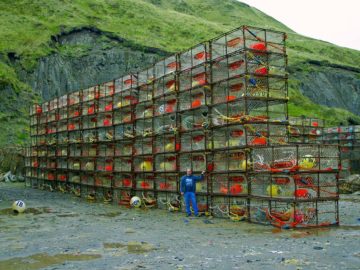
    Federated Co-operatives Limited (FCL) provides procurement and distribution of products to member co-operatives (“Co-op” stores) across Western Canada. SeaChoice partnered with FCL in 2010 and saw them make great gains in terms of increasing the sustainability of their seafood procurement. For example, FCL reduced the proportion of “Avoid” red-ranked seafood from 45% in 2013 to just 17% by the end of 2016. FCL achieved this by removing all red-ranked Canadian Atlantic Cod, shifting almost all uncertified shrimp to certified sustainable sources, swapping red-ranked Russian caught King Crab for green-ranked Alaskan sources (pictured above), and introducing green-ranked, land-based West Creek farmed Coho salmon. FCL have also worked to improve their seafood labeling by including more information on packaging and working with suppliers to develop better traceability for some types of seafood (such as rockfish) to make sure their products are coming from well-managed stocks.

    When SeaChoice announced it would be pivoting from direct retailer partnerships to a Canada-wide sustainable seafood watchdog role, we were delighted that FCL showed its clear commitment to seafood sustainability by investing in the internal resources necessary to keep collecting sustainability data and continuing to improve its seafood procurement practices.

    FCL’s Sustainable Seafood Policy is structured around the six steps of the Common Vision for Sustainable Seafood, a guiding document developed by leading environmental organizations across North America that outlines the steps businesses should take to develop robust sustainable seafood commitments. This helps ensure the commitment is well rounded and up-to-date with salient and emerging issues.

    The Common Vision is also the basis for the assessment framework within Seafood Progress.  FCL was very collaborative and provided useful feedback on the application of the principles in the Common Vision when SeaChoice was developing Seafood Progress.

    FCL’s Seafood Progress profile shows that it is currently performing above average on Steps 1, 2 and 3, and at or slightly below average on Steps 4, 5, and 6. This profile can help FCL identify where to focus its attention next as it continues to strive for improvement and as the seafood industry as a whole develops a better understanding of the environmental and social responsibility aspects of the global seafood trade.

    SeaChoice will be developing recommendations for all of the retailers profiled in Seafood Progress for how that retailer could utilize their market leverage to drive sustainability improvements down the seafood supply chain. We hope that when we update the Seafood Progress assessments next year, we will see further improvements by the industry as a whole towards best practices.

  • Seafood Progress across Canadian supermarkets

    Seafood Progress across Canadian supermarkets

    From direct retail partnerships to Canada’s seafood watchdog

    It has been one year since SeaChoice announced we would be moving away from direct retail partnerships and pivoting to hold more of a ‘watchdog’ role with regard to sustainable seafood in Canada. In the year since, we have worked hard on behalf of Canadians to find solutions to the challenges facing our Priority Species, to ensure eco-certifications remain credible, and to improve seafood labelling and traceability. Notably, we also launched Seafood Progress, an online resource that assesses and reports on Canada’s nine largest retailers’ sustainable seafood commitments and their procurement against those commitments. This initiative was born from our recognition that continuing to increase the sustainability of seafood in Canada requires the aggregation of retailer leverage across Canada.

    Seafood Progress is taking a unique approach to improving transparency and accountability of seafood businesses in Canada. Although there are many initiatives right now that aim to increase transparency and improve business practices, Seafood Progress is the only one (that we know about) that looks at all aspects of a retailers’ seafood sustainability policy. This really stood out for the SeaChoice team when we presented Seafood Progress at the SeaWeb Seafood Summit in Barcelona this past June.

    Seafood Progress assesses each retailer’s seafood policy and procurement against 22 key performance indicators derived from the Conservation Alliance for Seafood Solutions’ Common Vision for Sustainable Seafood. Both consumers and retailers can use Seafood Progress to influence sustainable seafood consumption in Canada.

    Consumers can use Seafood Progress to find useful information about the stores where they buy their seafood. For example, you can easily find out what environmental aims a retailer is committed to, what it is doing to tackle the risk of human rights violations in its supply chain, which eco-labels or rankings it uses in its procurement decisions, and what actions it is taking to improve its seafood sourcing. Some of this information will already have been publicly available somewhere online, but Seafood Progress makes it easier to find by bringing it all together in one place. However, the majority of retailers also provided SeaChoice with additional information that had not been publicly released.

    Retailers can use the resource to see where they are performing above the national average and where they should improve to meet or beat the current “best practices”. Ultimately, Seafood Progress is trying to bring about positive changes and improvements. SeaChoice will use the profiles to develop tailored recommendations for how each retailer can improve its policies, focusing on resources that are already out there and ready to be used, as well as identifying areas where retailers may benefit from coordination and collaboration.

    For example, many of the retailers that SeaChoice met with to discuss their profiles mentioned they struggled to find consistent sources of certified sustainable products because they lack the market leverage to drive change at the global level.  From this we consider there could be mutual benefits for retailers to engage in some pre-competitive collaboration; initiatives that would pool their market share to help bring about the changes that they all want to see.

    So help us celebrate our anniversary of change! Go to your retailer’s profile now and see what it is doing – and what it isn’t doing – to support sustainable seafood.

  • The B.C. Government’s fish farm announcement

    The B.C. Government’s fish farm announcement

    The B.C. Government has taken a significant step forward in defending wild salmon against open-net pen salmon farms, but the four-year timeline is too long.

    Last week’s policy announcement by the B.C. Government is a significant step forward in defending wild salmon against the array of threats posed by open net-pen salmon farms. The policy also represents a positive step towards reconciliation with First Nations, requiring as it does the consent of First Nations to farms within their territories.

    More troubling is the timeline associated with the policy: it does not take effect until 2022, and then only for new and renewing tenures—meaning it applies to less than half of the current farm tenures. The remaining tenures extend from 2023-2046. The four-year timeline is too long: B.C.’s wild stocks are in crisis, with severe run failures and unprecedented fishery closures. Another four years means virtually every  salmon run south of the central coast will be subjected to more parasitic lice, disease and predation from farms.

    Some farms may be removed earlier than 2022. Government-to-government negotiations are continuing between the Province and Broughton-area First Nations about 17 farms in their territories that are now operating on month-to-month tenures, pending the outcome of those negotiations. These Nations have been clear in their opposition to open net-pen fish farms. We commend all parties for engaging in this important process and look forward to the outcomes.

    It will be up to the federal government to determine how many farms are actually removed from the water by 2022. By that date, about 95 of the federal operating licences will be up for renewal and the Department of Fisheries and Oceans should make a determination as to the potential for harm to wild salmon when they consider renewal. To date, DFO and the federal government have shown no leadership on protecting wild salmon from viruses, parasites, predation, and other threats posed by the fish farms. Concerns raised by the Auditor General and the Cohen Commission of Inquiry, about DFO’s management of the industry, have not been addressed.

    The Provincial government’s announcement is a significant step forward for British Columbia and the wild salmon that are the heart and soul of our province. But urgent action is still required from the provincial and federal governments to protect wild salmon and all who depend on them.

    For more information:
    Living Oceans Society (SeaChoice partner organization), Georgia Strait Alliance and Watershed Watch respond to Province’s fish farm announcement
    The David Suzuki Foundation (SeaChoice partner organization) responds to Province’s fish farm announcement
    SeaChoice priority species profile for B.C. farmed Atlantic salmon