Category: Sustainability

  • Made in Canada, eh?

    Made in Canada, eh?

    Have your say on proposed “Made in Canada” labelling guidelines.

    Do you care about the transparency of food labels and where your seafood comes from? Have your say on CFIA’s proposed changes to the “Made in Canada” and “Product of Canada” food labelling claims. The consultation is open until June 23rd.

    Made in Canada

    The CFIA is proposing to remove necessary information to the “Made in Canada” claim guidance. Many of you have concerns regarding the health and safety, environmental sustainability and social responsibility of the seafood products you purchase – and the origin of seafood is a contributing factor to these risks. The proposed changes reduce the transparency of seafood products and eliminate information you need to understand where your food comes from. This impedes your ability to make informed purchasing decisions.

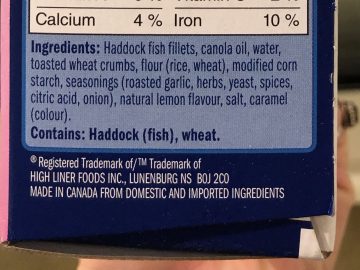
    Right now, products “Made in Canada” have to state if any ingredients were imported. For example, the seafood brand High Liner Foods has the qualifying statement “made from domestic and imported ingredients” on their “Made in Canada” frozen fish products when their product was processed and packaged in Canada, but some or all of the fish was caught or farmed in another country. The CFIA proposal is to get rid of the qualifying statement, so that products can be labelled as “Made in Canada” with no comment as to whether the ingredients were imported.

    The CFIA proposal is to get rid of the qualifying statement, so that products can be labelled as “Made in Canada” with no comment as to whether the ingredients were imported.

    SeaChoice has let CFIA know we do not agree with their proposal. If you agree with our concerns, we encourage you to do the same. You can submit your concerns here. Below is some text we have prepared to support the rationale for your submission, which we invite you to use as is or edit as you see fit.

    Suggested content for rationale box:

    I do not support the proposed guidelines for “Made in Canada” claims. The proposal to remove the qualifying statement accompanying the “Made in Canada” claim creates the opportunity for a food label to be misrepresentative and misleading. As a seafood consumer, I look for information such as the origin of a product’s content to understand where my food comes from. I do this because the origin is a risk factor to the health and safety, environmental sustainability and social responsibility of the seafood product and/or because I want to support Canada’s seafood industry. The qualifying statement at least tells me if the ingredients are fished, harvested or grown in Canada or internationally. This basic information is crucial in the absence of more detailed seafood labelling, as is often the case under Canada’s current seafood labelling laws.

    Product of Canada

    We are also concerned with the proposed change to the “Product of” claim, and have let CFIA know we do not support it.

    Under the current definition of “Product of Canada,” all or virtually all major ingredients, processing, and labour used to make the food product are Canadian. “All or virtually all” has been interpreted to mean greater than 98% – but CFIA is proposing to reduce this threshold to 85%. Under the 85% guidelines, seafood caught in Canada and processed overseas would not meet the “Product of” threshold. Ironically, imported raw seafood that receives further processing in Canada could be a “Product of Canada” if most of the other ingredients, processing and labour were Canadian. We think this is opposite to what Canadians are looking for in their seafood labelling, for the reasons identified in our “Made in Canada” rationale above, and consider the proposed guidance to be misleading and not truthful. If you agree with our concerns, we encourage you to tell CFIA here.

  • Strong recovery actions for British Columbia Chinook salmon

    Strong recovery actions for British Columbia Chinook salmon

    June 2019 marks the half way point in the International Year of the Salmon. On Canada’s Pacific coast this is an opportunity to bring attention to long-standing conservation issues facing Chinook salmon. Some of these concerns are starting to be addressed with recent unprecedented action by Fisheries and Oceans Canada (DFO) to restrict Chinook harvest on populations returning to southern BC rivers to spawn. Changes in management include both seasonal and area closures designed to minimize the impact to depleted Chinook populations.

    Several unique Chinook populations in Southern BC have been in decline for nearly two decades. In November 2018, the Committee on the Status of Endangered Wildlife in Canada (COSEWIC) released a report that found the majority of 16 south coast and Fraser River Chinook populations assessed were either endangered or threatened. This information was consistent with DFO’s own assessments and validated the need for the strong actions announced last month. Because COSEWIC assessments are part of the Species at Risk Act as opposed to the Fisheries Act, there was further impetus for implementing stronger management measures.

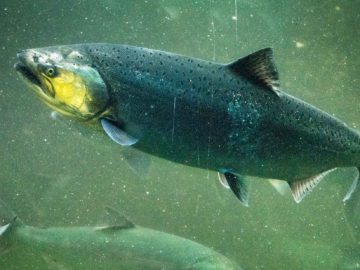
    Most people consider Chinook salmon as a single species, and while that is true, in British Columbia they are comprised of 68 different populations which collectively contribute to their overall abundance. Each population has unique attributes, such as when and where they spawn and amount of time spent in rivers versus in the ocean. These differences result in a unique genetic composition. Protecting the biodiversity of wild Chinook salmon across the entire landscape of British Columbia is the conservation goal. Because most Chinook fisheries access salmon while at sea, there is no practical way of only targeting the healthy populations and consequently this mixed stock approach incurs a high risk to endangered populations. The announced management measures are in effect until mid July and are designed to allow the most at risk populations to swim through the fishing grounds without being caught.

    Chinook salmon is the most valuable recreational fish species in the province supporting an enormous industry. Strong recovery actions are necessary to ensure these fisheries exist in the future. In addition to their importance to fisheries these same populations of Chinook are heavily relied upon as a prey source for the endangered Southern Resident Killer Whale considered to be at imminent risk of extinction.

  • SeaChoice calls for end to harmful fisheries subsidies

    SeaChoice calls for end to harmful fisheries subsidies

    SeaChoice has joined 59 organizations from around the world in calling for the World Trade Organization to end harmful fisheries subsidies by December 2019, and ensure a sustainable future for our ocean and the livelihoods that depend on it. Harmful subsidies are a major factor in the worldwide declines in fish stocks. Our call was delivered in a letter to the WTO ambassadors. The text is as follows:

    April 30, 2019

    Re: World Trade Organization Fisheries Subsidies Negotiations

    Excellency:

    This year will be pivotal for the world’s ocean.

    We urge you to fulfil the December 2017 ministerial mandate for WTO members to agree to “comprehensive and effective disciplines that prohibit certain forms of fisheries subsidies that contribute to overcapacity and overfishing, and eliminate subsidies that contribute to illegal, unreported, and unregulated fishing” by the end of 2019. The months ahead will be critical to realizing this commitment and achieving UN Sustainable Development Goal target 14.6 by 2020, universally agreed to in 2015.

    Though not all subsidies are harmful, comprehensive estimates of global fisheries subsidies show that as much as $20 billion1 is spent by governments globally on capacity-enhancing subsidies – harmful payments that offset fishing costs such as fuel, gear, and vessel construction, and allow fishers to travel farther for longer— which risk leading to fishing above sustainable biological limits. Applying economic theory to the fisheries sector reveals that in an open-access fishery, a revenue-enhancing or cost-reducing subsidy increases marginal profits at each level of fishing effort, and therefore leads to an increased overall fishing effort2.

    In 2018, the United Nations Food and Agriculture Organization (FAO) State of World Fisheries and Aquaculture estimated that a third of all fish stocks are exploited at unsustainable levels and another 60% have no room for increased fishing without jeopardizing sustainability3. Decades of overfishing have taken a significant toll on ocean health, contributing to poverty, food insecurity, ecosystem imbalances, distorted markets, and unemployment. This is compounded by harmful subsidies, leading to serious social, environmental and economic impacts for the more than 1 billion people who depend on seafood as a main source of protein, and the more than 40 million people who rely directly on fishing for their income4.

    There is now a brief window in which WTO members can achieve transformative change for the world’s ocean and the livelihoods of many coastal communities by addressing one of the drivers of global overfishing. If negotiations reach a successful conclusion, members will reignite confidence that multilateral cooperation can achieve global outcomes. In the wake of many rounds of fisheries subsidies negotiations dating back to the Doha Ministerial Conference in 2001, there is now an opportunity to not only demonstrate the vitality and effectiveness of the WTO, but to serve as leaders for an issue of shared global importance.

    We, the 59 undersigned organizations, support members’ efforts to reach an ambitious agreement to end harmful fisheries subsidies by December 2019, and ensure a sustainable future for our ocean and the livelihoods that depend on it.

    Download the letter and list of signatories here.

  • How to spot seafood you can feel good about

    How to spot seafood you can feel good about

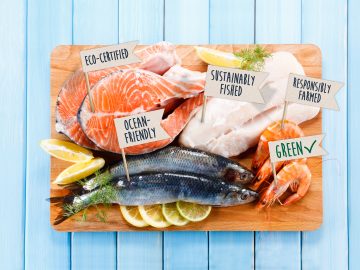
    Seafood eco-labels can help you buy products that are environmentally sustainable and socially responsible.

    A few weeks ago, SeaChoice hosted representatives from Canada’s major retailers to an online webinar on the differences between seafood eco-labels. The aim was to alleviate any confusion caused by the ever-increasing array of seafood eco-labels in the market. Our webinar was directed at large-volume seafood buyers, but there are some key differences among types of eco-labels that smaller-volume buyers, like you and me, should be aware of too.

    There are three main categories of seafood eco-labels: eco-certifications, rankings and recommendations, and self-claims. This article will only discuss the environmental aspects of seafood eco-labels, but as my colleague highlighted in a recent article, an increasing number of organizations are developing methods to assess social responsibility and reflect it in eco-labels.

    Eco-certifications

    The primary distinguishing characteristic of eco-certifications, compared to other types of eco-labels, is that they assess fisheries or farms against a published standard or set of requirements, and assessments are carried out by independent, third-party companies hired by the fishery/farm. The assessments are peer-reviewed and also made available for stakeholder input. Some certification schemes, like the Marine Stewardship Council (MSC) and Aquaculture Stewardship Council (ASC) also require every actor along the supply chain to be certified against their Chain of Custody Standard, which results in very high confidence that the product you buy in store is what you think it is.

    However, while robust eco-labels like MSC and ASC can help you spot environmentally sustainable products, certification is voluntary (and quite expensive, especially for small producers) and the majority of fisheries and farms don’t have these certifications, so they aren’t always easy to find in Canada.

    Fortunately, there are other eco-labels that can help you choose sustainably produced, but non-certified, products.

    Rankings and recommendations

    There have been many different ranking systems developed to suit markets around the world, but the most common in Canada are the Ocean Wise Seafood Program developed by the Vancouver Aquarium and Seafood Watch rankings developed by our southern neighbors at the Monterey Bay Aquarium.

    Seafood ranking and recommendation programs work by scoring the sustainability of a fishery or farm. They usually rely on published methodologies to justify their judgments, and like eco-certifications, assessments are peer-reviewed and made available for stakeholder comments. Consumer-facing programs will make their recommendations freely available on their website, on mobile apps, or on paper handouts. You will need detailed information regarding the seafood in question in order to use these tools (more on this below). Some programs also allow their logo to be used on seafood products or on menus, such as the Ocean Wise Recommended logo.

    Fisheries or farms generally don’t get a say in whether they are ranked by these programs – decisions are typically driven by product importance to the market. This means a wider range of seafood is ranked, compared to eco-certified. This makes rankings useful when trying to figure out which kinds of seafood are particularly worrisome from an environmental point of view, for example products in Seafood Watch’s ‘Avoid’ category.

    In contrast to the eco-certifications programs outlined above, ranking and recommendation programs generally don’t include traceability requirements. This means retailers or restaurants need to have their own system in place to make sure the products they are buying are what they think they are.

    Another consideration with ranking programs is that due to Canada’s lax labelling laws, which only require seafood labels to include a common name (and for imported products, the country of last major processing), you may not have enough information to use the program. A seafood’s rank or rating depends on which species it is, how it was produced, and where it was produced. SeaChoice’s ongoing studies into seafood labels in Canada shows that products usually aren’t labelled with any of this information. We are actively working with the Canadian government to raise standards and with Canadian retailers to improve labelling voluntarily.

    Self-claims

    Finally, there’s one more type of eco-label you might see on your seafood – especially if you’re buying frozen or canned products – and that’s self-claims.

    Self-claims are either logos or slogans on seafood products that a company has developed on their own. Self-claims might refer to the company’s sourcing policy or set of sourcing standards, or they might refer to nothing at all. Some businesses’ provide details on their websites, but the details can be ambiguous. For example, one company’s eco-label is stated to represent a commitment to sourcing from “MSC-certified fisheries, fisheries under MSC pre-assessment or fisheries identified for Fishery Improvement Projects”. The last category could mean very little in terms of sustainability. Fisheries identified by who? Have they started on the project or are they just identified as needing to? What are the goals of the improvement project, and are they actually making progress? How much of this product is being sourced from each category?

    This lack of clarity, and the fact that most are neither independently verified nor traceable, means it can be hard to know how sustainable these products truly are.

    SeaChoice and eco-labels

    Recently, SeaChoice has been taking a close look at eco-certifications to see if the fisheries and farms they are certifying actually live up to their standards. This is because we believe in the potential they have to bring positive changes to practices on the water, particularly because of the joint market power of retailers and other industry actors who have committed to using them.

    Now that we have a good understanding of where these eco-labels are at, we are going to be turning our attention to the other types of eco-labels, especially self-claims. Stay tuned for the results of our first census of self-claims on seafood products sold in Canada’s major grocery stores.

    And next time you find yourself in the seafood aisle, take a look at the packaging. How many eco-labels can you see? Is it clear what they mean? If you’re not sure, find a staff member to ask. And if they aren’t sure, choose something else.

  • Critically depleted small fish will have big consequences in Atlantic Canada

    Critically depleted small fish will have big consequences in Atlantic Canada

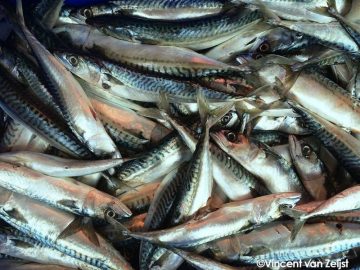
    Atlantic mackerel has plunged into a critical state after more than a decade of overfishing has been allowed to continue.

    Scientists say the Atlantic mackerel spawning population is hugely depleted and the number of fish surviving to breed is at an all-time low. The decline will have dire consequences for the oceans and for people. Atlantic mackerel may be a little fish but they play a big role in the Atlantic Ocean ecosystem and Canada’s east coast fisheries.

    Many marine animals, including the endangered porbeagle and shortfin mako sharks, marlins, seabirds, porpoises and whales, hunt the energy rich mackerel. Commercially important and iconic bluefin tuna chase spawning schools of mackerel into Atlantic Canadian bays during summer and autumn months.

    Humans also target mackerel. They are landed in a sizeable commercial fishery and subsequently used as bait for the lobster trap fishery, one of the most important East Coast fisheries. Every summer, thousands of Atlantic Canadians fish for mackerel off wharfs and shores. It remains one of the last marine fish that everyone can access for food and recreation – a strong Maritime tradition and also a favourite pastime of newcomers. Mackerel connects everyday people to marine ecosystems.

    In turn, mackerel eat all manner of small floating prey including fish and zooplankton (e.g. copepods, larval squid, crab and lobster), which together form the base of the Atlantic Ocean food web. As food and ocean conditions shift, so too does the mackerel, the animals that feed on mackerel, and the people and fishing sectors that rely on them.

    The Atlantic mackerel population has been declining for some time, but the new 2019 science assessment done in March was more alarming than anticipated. The population is down 86% from where it was in the 1980s and the number of young fish making it to adulthood is the lowest ever. Also worrying, the age range of fish across the population is extremely diminished. There was only one age 1 fish found in 20,000 samples and no fish over 10 years old have been found for years, even though mackerel can live up to 20 years. The current population is almost entirely made up of fish hatched in 2015.

    The Atlantic mackerel population has been overfished since 2008 and overfishing continues to this day. The population is being further stressed by rapidly changing ocean temperatures, currents and food availability off Atlantic Canada. The bottom line presented by science is clear – a drastic decrease in the amount of mackerel being fished is required to allow the population to increase to healthy levels. On the other hand, maintaining the status quo threatens to reduce the stock to a level from which it may not ever recover.

    SeaChoice partner, The Ecology Action Centre, sits on the Atlantic Mackerel Advisory Committee and the Rebuilding Working Group that are grappling with the outcome of the science assessment and what it means for the mackerel fishery. The EAC has urged Canada’s fisheries minister to make the difficult decision to seriously reduce catches or even close the fishery. While no one wants to see a fishery seriously curtailed, the majority of the fishing fleets at the table understand the gravity of the situation and have also suggested measures that will require them to sacrifice their fleets.

    SeaChoice understands the serious impacts on income that a closed or severely reduced fishery has for producers. There comes a point, however, when socio-economic considerations cannot override ecological realities. While difficult for fisheries now, bold action for the next few years to ensure the mackerel population increases is preferable to small steps that are more politically palatable but are not enough to halt the species decline, thus prolonging the sacrifice of the fleets. If the necessary bold action is taken, the government should consider supporting smaller fleets and producers whose margins are too slim to absorb the loss of the mackerel portion of their income.

  • Better safe than sorry – social responsibility can no longer be ignored

    Better safe than sorry – social responsibility can no longer be ignored

    Social responsibility was the major theme at this year’s Boston Seafood Show.

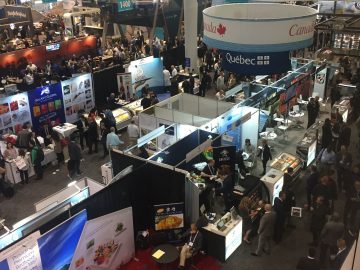
    SeaChoice recently attended North America’s largest seafood expo, the Boston Seafood Show, which brought together over 20,000 attendees from industry, non-profit organizations, and the research sector, among many other stakeholders. There were more than 1,340 exhibits in the 516,000 square foot Boston Convention and Exhibition Centre, making for a packed and bustling three days (not to mention the overlap with Saint Patrick’s Day!).

    The event was full of big announcements, including celebrity partnerships and interesting product launches such as wild Alaskan Pollock noodles. The aspect we found most notable, however, was the huge focus on social responsibility, including ethical supply chain management and improving labor conditions. The event highlighted exciting initiatives and emerging leaders, which together should serve to embed social responsibility as an essential element of sustainability among the seafood industry.

    For example, the non-profit and seafood consultancy, FishWise, used the show to launch their “Roadmap for Improving Seafood Ethics,” otherwise know as RISE. The resource was developed in partnership with human rights experts, conservation scientists and industry to provide a clear path companies can take to make improvements to the labour conditions within their supply chains. This information packed, worker-centred supply chain management resource focuses on worker treatment, policy and enforcement, community voice, and traceability and data to get seafood companies on the right track. Several large companies are already using RISE as a resource hub to compliment their own social responsibility initiatives.

    The event also highlighted the importance of industry collaborations in addressing social sustainability issues in seafood. Among these is the collaboration between the Global Sustainable Seafood Initiative (GSSI) and the Sustainable Supply Chain Initiative (SSCI) to develop a benchmark tool for social compliance. This tool will be used to move towards global alignment for certification schemes, helping to increase industry efficiency and seafood social responsibility.

    Another industry collaboration, the Seafood Business for Ocean Stewardship (SeaBOS), uses the collective influence of eight out of the ten largest seafood companies in the world to help protect the rights of future generations to healthy oceans and fisheries. Their presentation highlighted SeaBOS’s five ‘Task Force’ groups which together cover issues such as eliminating illegal fishing, modern slavery and forced labour, traceability and transparency, and ocean plastic pollution. With input from industry and scientific experts, the CEOs of these huge companies are focusing on solutions to the social and environmental problems that continue to challenge the seafood industry.

    The clear importance of holding the seafood supply chain accountable for social responsibility continued post-Boston, with the more recent announcement of the Marine Stewardship Council’s new measures to combat forced and child labour in supply chains. The update to MSC’s Chain of Custody Standard includes labour audits for companies involved in processing, packing or repacking or manual offloading from a fishery in countries that aren’t considered ‘low risk’.

    The industry shift to focus on social issues and sustainability is encouraging, though there is much work to be done. And of course, a focus on social issues needs to be in addition to the attention that must be paid to ongoing challenges with environmental sustainability, not instead of. Thankfully the two are not mutually exclusive. Incorporating social responsibility and reducing harmful labour practises will help to reduce illegal, unregulated and unreported fishing, as well as improving the lives of workers all along the supply chain.

    At SeaChoice we are also focused on ensuring social responsibility is incorporated into our Canadian seafood supply chains. One of the ways we are doing this is through Seafood Progress, which includes new performance indicators to reflect what Canada’s largest retailers are doing to make sure their sourcing practices account for social responsibility. You can find out more about your retailer’s sustainable seafood commitments here.

  • It matters where your seafood comes from, but you usually have no idea

    It matters where your seafood comes from, but you usually have no idea

    Recent media headlines are making a strong case for why Canada should mandate “country of origin” (the country where the seafood was caught or farmed) on seafood labels.

    Right now, the government only mandates a seafood label to include common name, and for imported products, country of processing (or “last major transformation”). The latter can be, and often is, different from country of origin. This matters to your health and it matters to our oceans. Here’s why.

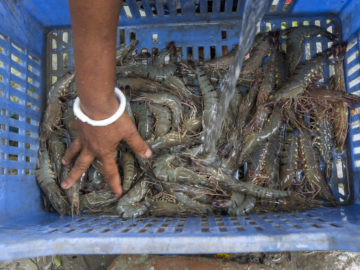
    Your health – According to last night’s news, superbugs are hiding among the imported shrimp available for purchase in Canadian retail stores. CBC’s Marketplace has found antibiotic-resistant bacteria on 17% of tested frozen shrimp products from major grocery stores – including eco-certified and organic products. According to Marketplace, India was the country of origin for more than half of the positive samples; Canada imports more shrimp from India than any other country.

    While CFIA reportedly tests for antibiotics on imported shrimp, it doesn’t currently test for bacteria. This allows the bugs to hitch a free ride into your kitchen while you remain none the wiser. While cooking might kill most bacteria, they can be easily transferred to surfaces and other foods during preparation. The solution? Consumers could choose to avoid imported shrimp, particularly those grown in India, until such time as CFIA figures out how to keep Canadians safe. However under currently labelling regulations consumers can’t be sure of where their favourite shrimp products were actually farmed.

    Our oceans – UK fish and chip shops made headlines when DNA tests suggested “UK fish and chip shops are selling endangered sharks”. Most tested fish samples turned out to be spiny dogfish, a shark species classified as Endangered in Europe. Consumers unwittingly contributing to the demise of European populations of this species would indeed be a headline worthy cause for concern. It appears, however, that the sharks were Canadian caught, hailing from non-threatened populations. In this case, the country of origin matters to whether the “fish” served along with the “chips” was sustainably sourced or not.

    Similar stories are playing out in our own backyard. Canadian officials seized Critically Endangered European eel on its way into Canada, intended for sushi restaurants and other diners across the country and worth millions of dollars. The species would simply have been sold as “eel” or “unagi”4, and consumed by Canadians without any knowledge that they were eating a highly threatened species.

    In the case of the fish and chips, the researchers called on the U.K. government to introduce more accurate food labelling in restaurants, to enable people to know what species they are eating and where it comes from. Retailers in the EU already adhere to much higher labelling standards. This is exactly what SeaChoice is asking of Canada’s government – but in our case we don’t have robust labelling requirements for retailers OR restaurants. Canadians are eating in the dark.

    SeaChoice is working to include mandatory country of origin labelling for seafood through the government’s Food Labelling Modernization Initiative. We are also actively encouraging retailers to voluntarily put more information on their seafood labels, to increase transparency, build consumer trust, and follow best practice. In the fall of 2018 over 3,200 Canadians agreed to #JoinTheShift, signing a letter asking their retailers to source local, traceable, properly labelled fish. The above examples show why retailers should continue to improve traceability and transparency in their supply chains, and voluntarily go above and beyond Canada’s weak policy requirements.

  • New year, new you? Reducing our carbon footprint in 2019

    A new Seafood Carbon Emissions Tool can help make even more sustainable seafood choices.

    It’s a new year which means new years resolutions. I have a few, the most important being reducing my carbon footprint. Being in the business of conservation I am used to bad news, some of which has kept me up at night. But nothing has kept me up like the October 2018 release of the IPCC report5. The IPCC report says “rapid, far-reaching and unprecedented changes” are needed “in all aspects of society” if humanity is to contain the average global temperature increase to 1.5 degrees Celsius. The timeframe the IPCC has set for this is just over a decade away.

    There’s one simple critical takeaway point from that report: “we need to cut carbon pollution as much as possible, as fast as possible”. Not doing this has clear and imminent risks to health, livelihoods, food security, water supply, human security, and economic growth. Not doing this will impact my children, your children – not hypothetical future generations but the ones on this earth right now.

    And what I know for sure is we are not doing enough – we need to do more. Our governments in particular need to do way more. But even if we make the changes we need to reach the 1.5°C target, our kids’ world will be so different. For example even at 1.5°C, the IPCC estimates that we’ll lose about 80% of coral reefs. That makes me sad, makes me mad, and makes me want to take action.

    There are many actions we can take as individuals to reduce our carbon footprint (read this if you think your individual actions don’t matter). Changes to our transportation habits are important ones – fly less, use more public transport. Other key actions relate to our eating habitats. As this article explains, what you eat is a key determinant of your impact on the planet – in particular how we get our protein. Spoiler alert, red meat is the biggest loser.

    Seafood lovers, on the other hand, can rejoice. When it comes to climate impacts, most seafood is much better than most terrestrial animal production. But as is the case with terrestrial animal protein, not all marine produced proteins stack up equally when it comes to climate impacts.

    Thanks to Seafood Watch and Dalhousie University you can now figure out the climate consequences of eating your favourite seafoods. Their recently released Seafood Carbon Emissions Tool was developed to allow businesses to see the carbon footprint of the seafood, wild or farmed, they purchase and even compare it to land-based protein sources. But as a consumer I find it really useful too.

    The tool includes estimates for over 150 combinations of species and gear type or farming method. The measurements are for emissions generated up to the dock where the fish is landed or, for farmed fish, everything that happens at the farm. Because seafood can be transported in many ways and over different distances, the measurements do not include processing or transportation to local markets. Canada’s poor labelling practices mean you may not know where your seafood has come from, but asking will let retailers and restaurants know people care about eating local seafood.

    Of course, carbon footprint shouldn’t be the only thing you consider when choosing seafood – the health of our oceans depends on all our actions. It is still important to choose seafood produced from healthy populations and with minimal impacts to habitats and other species. Thankfully Canadians have several options to make sustainable seafood decisions. As it turns out, some of the more environmentally sustainable choices, e.g. small bodied schooling fishes like sardine or mackerel and farmed shellfish like mussels and oysters, are also the most carbon friendly.

    I guess achieving my New Years resolution will involve eating more anchovies, sardines and mussels – along with more beans, nuts and seeds. In this way I will be contributing to the health of our planet, and also to my own.

    [1] The Intergovernmental Panel on Climate Change (IPCC) is an intergovernmental body of the United Nations, dedicated to providing the world with an objective, scientific view of climate change and its political and economic impacts.

  • How are Canadian retailers really doing when it comes to seafood sustainability?

    Canada’s retailers have commitments to source sustainable seafood but often we have no idea if they are actually living up to them.

    Do you know what your retailer’s policy is on sourcing seafood? Every retailer has one, and these policies determine what steps, if any, the retailer is taking to make sure the seafood products it sells are environmentally sustainable and socially responsible – meaning that the people who produce them are getting fair wages and working conditions. Perhaps tellingly, not all retailers are transparent about how well they are living up to their policy and if they are actually sourcing products in line with their commitments.  

    SeaChoice designed Seafood Progress to help you find out. Seafood Progress looks at several aspects of transparency, from the general, such as “does the retailer have a publicly available commitment or policy to source more environmentally sustainable seafood?”, to the specific, such as “has the retailer published information about the fisheries/farms they source their products from?”. It assesses Canada’s largest seafood retailers on their commitments – what they say they are doing on seafood sustainability and what we know they are actually doing. This is because actions, not words, are the most important indicators of whether retailers are supporting good or bad environmental and social responsibility practices through their sourcing decisions. 

    Interestingly, all of Canada’s major retailers have made a public commitment to source more sustainable seafood; a consistency we didn’t see with any other commodities when we scrutinized the retailers’ websites. However, retailers’ environmental sustainability commitments vary considerably in their level of detail, use of credible external standards or seafood sustainability assessments, and reference to timelines for meeting their commitments. Even more variable were retailers’ commitments to source socially responsible seafood and their commitments to improve traceability of products in their seafood supply chains. With no publicly available information on either of these indicators and our requests for information unanswered, some retailers scored zero. 

    Out of all the major Canadian retailers, Seafood Progress reveals that only Buy-Low Foods, Federated Cooperatives Limited (“Co-op”), Loblaw, Safeway and Save-On Foods regularly publish information on how much of their procurement meets their commitment. That said, no Canadian retailers are currently disclosing which fisheries or farms they buy their seafood from – something that some British and American retailers have started doing either independently or through initiatives like the Ocean Disclosure Project 

    Many Canadians are concerned about the social implications of their seafood, for example whether it was caught by modern day slaves, but only some retailers are transparent about their actions to address this critical issue. Four retailers – Buy-Low Foods, Loblaw, METRO, and Save-On Foods – told us that their suppliers have all signed a Code of Conduct requiring them to uphold all aspects of the retailer’s commitments.  And only three retailers – Loblaw, METRO and Walmart Canada – have social responsibility commitments that reference international standards and include clear actions or expectations on their suppliers to do everything they can to ensure that human rights abuses play no part in their supply chain.  

    SeaChoice has followed up with every retailer profiled in Seafood Progress with recommendations for how they could improve their scores by working closer to best practice, and many of these recommendations are related to transparency. Transparency about what retailers are doing, or requiring their suppliers to do, is important so that you can be sure that you’ll be able to buy seafood long into the future, without compromising the rights and dignity of people who work to get it to your plate.  

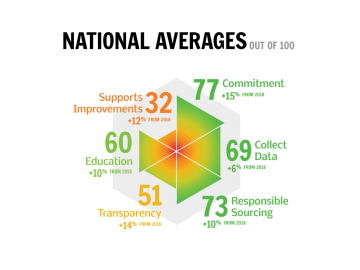
    This year, Canada’s major seafood retailers scored an average of 37 out of a possible 100 on Seafood Progress’s transparency step; there is room for improvement. In early 2019, SeaChoice will be reaching out to retailers again to review their Seafood Progress profiles and see what has changed; we’ll update the profiles accordingly. We are hoping that retailers will score better when it comes to transparency around their procurement practices, especially in disclosing how their procurement is meeting their commitment and their social responsibility actions.  

    In the meantime, check out your retailers’ profiles and let them know you care about the transparency of their sustainable seafood actions.  There is a button on every retailer’s profile so that you can quickly and easily write a tweet to them that will help bring this message home.