Category: Seafood

  • Traceability and labelling: two pre-conditions for supporting sustainable seafood

    Traceability and labelling: two pre-conditions for supporting sustainable seafood

    Canadian seafood needs better traceability and labelling so consumers can tell what it is, where it was produced, which method of fishing or farming produced it, and where it was processed.

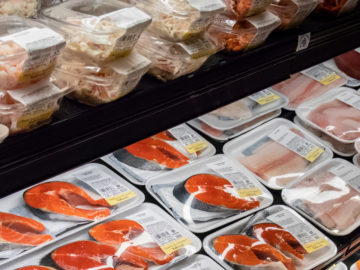
    How do you decide what kind of seafood to buy? Do you go to the supermarket looking for something specific, or do you just go and see what looks good? Regardless of your approach, some supermarkets make it much easier than others to know what you’re actually buying, where it came from, and how it was produced. These pieces of information are essential if you’re trying to support sustainable fisheries and aquaculture. Unfortunately, Canada’s lax labelling regulations mean retailers are only required to include a common name (which can be the same across many different species such as “sole”) and, if the product was imported, the country of “last major transformation”(for example where the fish was filleted, not where it was actually caught or farmed). Common name and country of processing are not enough to determine the sustainability of your seafood.


    In most cases, retailers do not have a system for collecting and displaying the more detailed information that would allow consumers to vote with their dollar and buy seafood that is in line with their ethics and values. In order to label products with this information, it must travel with the fish or seafood product from the point of harvest all along the supply chain to the point of sale. This traceability is essential for verifying the sustainability of products. Without robust traceability and honest labelling, consumers are vulnerable to buying seafood sold under false pretenses.

    This is why SeaChoice has been analyzing the quality of Canadian retailers’ seafood labels through our citizen science DNA testing projects. Our 2017 testing found that while the level of seafood mislabelling (using an incorrect or improper common name) in supermarkets was relatively low (7%), 26% of labels were unsatisfactory and 57% were poor in terms of providing information above the legal minimum. SeaChoice is running this project again in 2018 and the results should be in soon.

    SeaChoice has also been looking at Canadian retailers’ current use of traceability systems through Seafood Progress. Seafood Progress evaluated the traceability, labelling and data collection policies of every major retailer in Canada. Some retailers are star performers regarding data collection and labelling, and others had no information publicly available (and did not provide it upon request) to answer these questions. On average, retailers scored 36 out of a possible 100 on their seafood labelling policy, 44 out of 100 on traceability commitments, and 62 out of 100 for data collection. You can find out how your retailer did by visiting www.SeafoodProgress.org and clicking on their logo (see KPI 4.1, KPI 1.3 and Step 4, respectively).

    SeaChoice is working to improve these scores across the board by supporting innovative traceability initiatives (such as Know Your Fish) raising consumers’ awareness of seafood labelling through our citizen science projects and by mobilizing the public to “join the shift” and call on retailers to voluntarily improve their traceability and labelling practices.

    You can give your support to Canadian seafood businesses to implement better traceability and labelling by signing this open letter to retailers. You can also let your retailers know directly that you care about seafood sustainability by asking questions about the seafood in their stores – for example, by asking which species it is, where it was caught, or how it was farmed.

  • A deeper dive into our ASC global report

    A deeper dive into our ASC global report

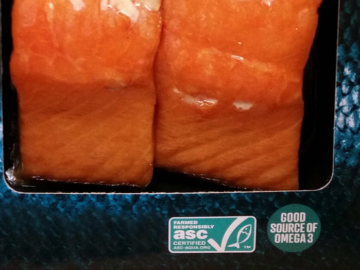
    In light of recent criticism, SeaChoice provides further information on our report , “Global Review of Aquaculture Stewardship Council’s Salmon Standard”.  The report provides the rationale and options for immediate and medium-term actions the ASC can take to reform key deficiencies and maintain or enhance the scheme’s credibility and its positive environmental and social impact. Our findings raise significant concerns for which, in turn, SeaChoice offers key recommendations.

    The Salmon Standard v.1.1 explicitly states, “Farms must meet 100 percent of the requirements in this document to achieve certification” 1.

    In order to assess whether ASC certified farms were in fact meeting this statement, we analyzed every audit from the first in 2014 to March 2018. We were able to review farm conformance and performance as certification progressed: from a farm’s initial audit to surveillance to recertification. In doing so, we were able to identify whether auditor reporting of farm-level metrics had improved (it has, mostly2), and whether farm conformance improved over time (it varied3). We additionally reviewed whether performance on Standard key indicators has changed over time. For example, SeaChoice examined farm’s forage fish dependency ratios – comparing Salmon Standard versions 1.0 and 1.1 feed requirements. We found certified farms have improved their fishmeal dependency ratios over time and that 95% of farms can easily meet version 1.1 Standard requirements, leading us to recommend that the ASC consider further reductions to reflect current best practices4.

    It is important to note that the Salmon Standard (and the other ASC standards) is supplemented with an auditor guidance document, known as the Certification Accreditation Requirements (CAR). SeaChoice’s review analyzed the CAR, as written and as operated, through the 456 audit reports. Our report found deficiencies with the CAR. For example certified farms in major non-conformance with the Standard have sold and are able to sell their product with the ASC logo5. This demonstrates the CAR’s suspension and withdrawal rules need strengthening.

    In addition, the ASC deploys a number of processes which affect the way in which the Standard and/or auditing processes (i.e. the CAR) operate. These include, variances (alterations to the Standard requirements at the request of auditors) and interpretations (ASC guidance to auditors). While these processes are deemed necessities for certification scheme operations, these processes in practice amend the Standard and/or CAR as written.  Some amendments were found to be undermining the organisation’s theory of change by eroding the best practices codified in the Standard.

    Critically, the variance request (VR) approval process lacks stakeholder engagement, as well as independent technical and scientific advice6. As International Social and Environmental Accreditation and Labeling (ISEAL) members, ASC follows defined codes of practices.  Section 6.4 of ISEAL’s Standard Setting Code states, “The standard is relevant in the local contexts where it is applied, based in part on input from local stakeholders”. To date, aside from the farm client (industry) themselves, no local stakeholders have been included in the VR process. We will continue to advocate for an inclusive and transparent VR process until such time as ASC has publicly moved toward stakeholder and technical inclusion.

    SeaChoice’s review also found some variances can enable farms that would otherwise be in major non-conformance with the Standard to be certified7.  ASC’s own accreditation body Accreditation Services International (ASI) warned ASC that such VRs substantially alter the intent of the Standard and are “probably putting at risk the program integrity”. They further recommended, “In case a VR changes the original intent of the Standard it is recommended that this should not be possible without public consultation and stakeholders review”.

    Our report also found ASC’s interpretations to be problematic. For example, an ASC interpretation allows auditors to omit intermediary stages from compliance8. Consequently, an ASC label does not guarantee the fish was “farmed responsibly” from egg to harvest. It also means an ASC-certified salmon in Australia or Canada (where interim farms are common) is not held to the same level of scrutiny as an ASC-certified salmon farmed in Chile or Norway.

    Furthermore, the ASC’s proposal for their Parasitcide Treatment Index (PTI)  operational review takes an approach that is more aligned with an aquaculture improvement project (AIP) model and not that of a ‘best practices’ certification9. The ASC PTI review proposes increasing the number of allowable sea lice treatments by up to 450 % in some countries (e.g. 11 sea lice treatments for Chilean farms) on the “condition” these farms eventually meet the ‘global target’ metric (i.e. 4 sea lice treatments). Yet our report found that 96% of farms can easily meet the current PTI threshold (2-3 sea lice treatments). To clarify, the ASC PTI proposal is not linked in any way to the ASC’s recently announced Improver Programme. However, on reflection, perhaps the PTI proposal would be more ideally suited for the Improver Programme.

    Eco-certifications, when done right, can help drive important sustainability gains. This is why SeaChoice advocates for consumers and retailers to use credible eco-certifications to guide their seafood purchasing decisions. In addition to being able to demonstrate improved environmental performance of eco-certified producers, credible eco-certifications’ practices must be transparent and inclusive, with procedures that are fair, and criteria that are rigorous and upheld. It is with that vision we provided ASC with recommendations that have the potential to strengthen the certification scheme in the long-term10. This in turn could help drive sustainability gains in the industry. Many of our recommendations are easily applicable to all ASC Standards as many stem from concerns systemic across the ASC scheme.

    SeaChoice member groups have been active stakeholders in the ASC and Salmon Aquaculture Dialogue for more than a decade. This has included steering committee representation during the original Aquaculture Dialogues, core participation in numerous ASC advisory and working groups, and active stakeholder engagement on ASC audits and projects. We will continue to work with the ASC, through various mechanisms, to ensure the intent of the Salmon Standard is upheld.

  • Let’s have an honest discussion about aquaculture

    Let’s have an honest discussion about aquaculture

    I recently attended an Aquaculture 101 event in Vancouver hosted by chef and aquaculture advocate Ned Bell. It brought together B.C. chefs and others to dispel the idea that all farmed seafood is bad. Bell is concerned that when it comes to aquaculture and Vancouver’s higher-end restaurants “farm” has become a four-letter word.

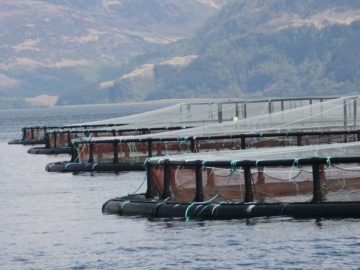
    Open net-pen farmed Atlantic salmon aquaculture in B.C. operating in First Nations territories without consent has been getting bad press lately. Chefs have been vocal in their opposition to the industry, with more than 50 signing an open letter against farms operating in unceded First Nations territories in the Broughton Archipelago. The Chefs’ Table Society of B.C. is also on record as voicing its disapproval, and the Union of B.C. Municipalities passed a resolution urging the province to shift the industry to closed systems.

    Speakers at the event pointed to the benefits of farmed seafood and the many sustainable options available. Sustainably farmed seafood, it was proposed, was in danger of drowning in the wake of the open net-pen fish farm debate.

    B.C. prides itself for its wide range of sustainable and local farmed products. Operators who attended the meeting included Berezan Shrimp Company (closed-containment white shrimp), Gindara Sablefish (open-net pen sablefish), Kuterra (closed-containment Atlantic salmon), Northern Divine (closed-containment sturgeon, caviar), Road 17 Arctic Char (closed-containment arctic char) and West Creek (closed-containment coho salmon). Locally and globally farmed shellfish (mussels, clams and oysters) are almost always a sustainable option.

    With half of global seafood coming from aquaculture, limited options for extracting more seafood from the wild and increasing consumer demand, aquaculture must be part of a constructive discussion on how to move the seafood industry forward. It’s time to move beyond the idea that all farmed seafood is bad. It’s not – something that SeaChoice groups have long advocated for. That doesn’t mean it’s all good, especially if, as in B.C.’s open net-pen operations, it risks the health of migrating wild salmon.

    Aquaculture, like wild fisheries, can be assessed as good, bad or in between. It depends on where you set the bar, and different groups have different bars. In Canada, we can choose among the Ocean Wise Seafood Program, Seafood Watch, Aquaculture Stewardship Council and Best Aquaculture Practices. Each bar considers varying combinations of environmental impacts and social sustainability. Some bars are higher, some lower.

    SeaChoice has a bar for B.C. open net-pen farmed salmon: we do not support them based on documented environmental impacts, the absence of First Nations’ consent and failure to apply the precautionary principle on issues for which the jury is still out, such as disease transmission. Industry should have the burden of proving an absence of environmental impact, not wild salmon. Wild salmon are under a myriad of pressures and all measures should be taken to help them, including but not limited to reducing the threat of open net-pen fish farms. We’ve brought forward our evidence for disagreeing with Seafood Watch on its bar with respect to open net-pen farmed salmon and our concerns that the Aquaculture Stewardship Council’s bar is being lowered from “best practice” to rewarding business as usual.

    But that is our bar. If chefs want to support good aquaculture practices they must decide on their own standards and source seafood accordingly. This will involve homework to choose credible sustainable seafood options and understand standards, which can be complicated and technical and not always rigorously and consistently applied. SeaChoice proactively engages with eco-label initiatives to improve labelling standards and ensure certifications remain credible to make the work a bit easier. Some sustainably raised farmed seafood remains unranked, and high costs involved with certification processes become barriers for small-scale operators. Research is needed to seek them out.

    On a side note, this is not a debate about how we can improve food security at home or abroad. Farmed salmon and the other high-end examples mentioned above come at too high a cost for the average consumer, let alone the world’s poor looking for affordable protein choices. The nuances of sourcing and price better fit the upscale markets chefs cater to.

    This conversation is about whether B.C. chefs should serve farmed seafood. If chefs choose to serve it, they must advertise it honestly. Better yet, they should tell the story of how that seafood got to their customers’ plates.

  • How Federated Co-op is growing its sustainable seafood program

    How Federated Co-op is growing its sustainable seafood program

    A former SeaChoice partner, Federated Co-op has continued to make improvements by taking their commitment to sustainable seafood seriously.

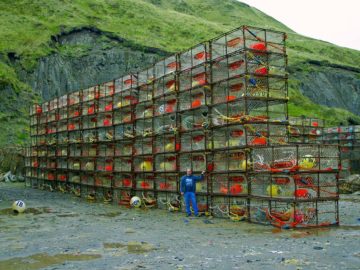
    Federated Co-operatives Limited (FCL) provides procurement and distribution of products to member co-operatives (“Co-op” stores) across Western Canada. SeaChoice partnered with FCL in 2010 and saw them make great gains in terms of increasing the sustainability of their seafood procurement. For example, FCL reduced the proportion of “Avoid” red-ranked seafood from 45% in 2013 to just 17% by the end of 2016. FCL achieved this by removing all red-ranked Canadian Atlantic Cod, shifting almost all uncertified shrimp to certified sustainable sources, swapping red-ranked Russian caught King Crab for green-ranked Alaskan sources (pictured above), and introducing green-ranked, land-based West Creek farmed Coho salmon. FCL have also worked to improve their seafood labeling by including more information on packaging and working with suppliers to develop better traceability for some types of seafood (such as rockfish) to make sure their products are coming from well-managed stocks.

    When SeaChoice announced it would be pivoting from direct retailer partnerships to a Canada-wide sustainable seafood watchdog role, we were delighted that FCL showed its clear commitment to seafood sustainability by investing in the internal resources necessary to keep collecting sustainability data and continuing to improve its seafood procurement practices.

    FCL’s Sustainable Seafood Policy is structured around the six steps of the Common Vision for Sustainable Seafood, a guiding document developed by leading environmental organizations across North America that outlines the steps businesses should take to develop robust sustainable seafood commitments. This helps ensure the commitment is well rounded and up-to-date with salient and emerging issues.

    The Common Vision is also the basis for the assessment framework within Seafood Progress.  FCL was very collaborative and provided useful feedback on the application of the principles in the Common Vision when SeaChoice was developing Seafood Progress.

    FCL’s Seafood Progress profile shows that it is currently performing above average on Steps 1, 2 and 3, and at or slightly below average on Steps 4, 5, and 6. This profile can help FCL identify where to focus its attention next as it continues to strive for improvement and as the seafood industry as a whole develops a better understanding of the environmental and social responsibility aspects of the global seafood trade.

    SeaChoice will be developing recommendations for all of the retailers profiled in Seafood Progress for how that retailer could utilize their market leverage to drive sustainability improvements down the seafood supply chain. We hope that when we update the Seafood Progress assessments next year, we will see further improvements by the industry as a whole towards best practices.

  • Seafood Progress across Canadian supermarkets

    Seafood Progress across Canadian supermarkets

    From direct retail partnerships to Canada’s seafood watchdog

    It has been one year since SeaChoice announced we would be moving away from direct retail partnerships and pivoting to hold more of a ‘watchdog’ role with regard to sustainable seafood in Canada. In the year since, we have worked hard on behalf of Canadians to find solutions to the challenges facing our Priority Species, to ensure eco-certifications remain credible, and to improve seafood labelling and traceability. Notably, we also launched Seafood Progress, an online resource that assesses and reports on Canada’s nine largest retailers’ sustainable seafood commitments and their procurement against those commitments. This initiative was born from our recognition that continuing to increase the sustainability of seafood in Canada requires the aggregation of retailer leverage across Canada.

    Seafood Progress is taking a unique approach to improving transparency and accountability of seafood businesses in Canada. Although there are many initiatives right now that aim to increase transparency and improve business practices, Seafood Progress is the only one (that we know about) that looks at all aspects of a retailers’ seafood sustainability policy. This really stood out for the SeaChoice team when we presented Seafood Progress at the SeaWeb Seafood Summit in Barcelona this past June.

    Seafood Progress assesses each retailer’s seafood policy and procurement against 22 key performance indicators derived from the Conservation Alliance for Seafood Solutions’ Common Vision for Sustainable Seafood. Both consumers and retailers can use Seafood Progress to influence sustainable seafood consumption in Canada.

    Consumers can use Seafood Progress to find useful information about the stores where they buy their seafood. For example, you can easily find out what environmental aims a retailer is committed to, what it is doing to tackle the risk of human rights violations in its supply chain, which eco-labels or rankings it uses in its procurement decisions, and what actions it is taking to improve its seafood sourcing. Some of this information will already have been publicly available somewhere online, but Seafood Progress makes it easier to find by bringing it all together in one place. However, the majority of retailers also provided SeaChoice with additional information that had not been publicly released.

    Retailers can use the resource to see where they are performing above the national average and where they should improve to meet or beat the current “best practices”. Ultimately, Seafood Progress is trying to bring about positive changes and improvements. SeaChoice will use the profiles to develop tailored recommendations for how each retailer can improve its policies, focusing on resources that are already out there and ready to be used, as well as identifying areas where retailers may benefit from coordination and collaboration.

    For example, many of the retailers that SeaChoice met with to discuss their profiles mentioned they struggled to find consistent sources of certified sustainable products because they lack the market leverage to drive change at the global level.  From this we consider there could be mutual benefits for retailers to engage in some pre-competitive collaboration; initiatives that would pool their market share to help bring about the changes that they all want to see.

    So help us celebrate our anniversary of change! Go to your retailer’s profile now and see what it is doing – and what it isn’t doing – to support sustainable seafood.

  • The B.C. Government’s fish farm announcement

    The B.C. Government’s fish farm announcement

    The B.C. Government has taken a significant step forward in defending wild salmon against open-net pen salmon farms, but the four-year timeline is too long.

    Last week’s policy announcement by the B.C. Government is a significant step forward in defending wild salmon against the array of threats posed by open net-pen salmon farms. The policy also represents a positive step towards reconciliation with First Nations, requiring as it does the consent of First Nations to farms within their territories.

    More troubling is the timeline associated with the policy: it does not take effect until 2022, and then only for new and renewing tenures—meaning it applies to less than half of the current farm tenures. The remaining tenures extend from 2023-2046. The four-year timeline is too long: B.C.’s wild stocks are in crisis, with severe run failures and unprecedented fishery closures. Another four years means virtually every  salmon run south of the central coast will be subjected to more parasitic lice, disease and predation from farms.

    Some farms may be removed earlier than 2022. Government-to-government negotiations are continuing between the Province and Broughton-area First Nations about 17 farms in their territories that are now operating on month-to-month tenures, pending the outcome of those negotiations. These Nations have been clear in their opposition to open net-pen fish farms. We commend all parties for engaging in this important process and look forward to the outcomes.

    It will be up to the federal government to determine how many farms are actually removed from the water by 2022. By that date, about 95 of the federal operating licences will be up for renewal and the Department of Fisheries and Oceans should make a determination as to the potential for harm to wild salmon when they consider renewal. To date, DFO and the federal government have shown no leadership on protecting wild salmon from viruses, parasites, predation, and other threats posed by the fish farms. Concerns raised by the Auditor General and the Cohen Commission of Inquiry, about DFO’s management of the industry, have not been addressed.

    The Provincial government’s announcement is a significant step forward for British Columbia and the wild salmon that are the heart and soul of our province. But urgent action is still required from the provincial and federal governments to protect wild salmon and all who depend on them.

    For more information:
    Living Oceans Society (SeaChoice partner organization), Georgia Strait Alliance and Watershed Watch respond to Province’s fish farm announcement
    The David Suzuki Foundation (SeaChoice partner organization) responds to Province’s fish farm announcement
    SeaChoice priority species profile for B.C. farmed Atlantic salmon


  • Berezan Shrimp Company: Bringing sustainability to shrimp farming

    Berezan Shrimp Company: Bringing sustainability to shrimp farming

    Admit it. You’ve probably bought — or at least eaten — unsustainable farmed shrimp that comes from ponds in Asia or Latin America, destroys ecosystems and hurts workers. You’re not alone. Unsustainable farmed tropical shrimp are one of Canada’s top three unsustainable seafood imports.

    Most shrimp consumed in Canada is farmed using a system of small ponds, which are a leading cause of mangrove deforestation. These farms typically release waste and chemical effluent directly into surrounding coastal areas and groundwater. They tend to rely heavily on wild fish for feed. Imported farmed shrimp have also been linked to social sustainability issues, including slavery and other human rights abuses. As a result, the Ocean Wise Seafood Program does not recommend imported conventionally farmed shrimp and Seafood Watch ranks it as “avoid” (red).

    Companies like Berezan Shrimp Farm in Langley, British Columbia, are working hard to change that. The company, whose farm is nicknamed the “shrimp spa” because of the perfect water conditions engineered for the facility, has big plans to become a world class operation in closed-containment, land-based shrimp production.

    In its current pilot stage, which is expected to last about two years, Berezan produces about 100 tonnes of shrimp a year, or 1,800 to 2,300 kilograms a week. That means about 4.2 million shrimp are onsite at any time. The company’s goal is to produce up to 20,000 tonnes per year by 2024. Compare that to about 50,000 tonnes of farmed shrimp imported into Canada in 2017 and about 92,000 tonnes of open net-cage salmon produced in B.C. in 2016.

    Warren Douglas, who led us through the operations, is proud of the operation’s sustainability. The company provides full traceability, allowing customers to know exactly where their shrimp comes from, something more and more consumers are demanding. Berezan plans to make operations even more environmentally sound by making its own feed, starting a hatchery, improving heat recapture, producing fertilizer and lowering water consumption from its current level of 11 litres per minute.

    The farm brings in baby shrimp from a certified hatchery in Florida when they are about 20 days old and smaller than the nib of a pen. More than 100 tanks are stacked vertically, replicating practices used in vertical farming. The shrimp currently take about four months to mature under computer-controlled conditions. As improvements are made, it’s hoped that will drop to two months. It’s a system of indoor aquaculture that generates far more shrimp per cubic metre of water than open pond farming or other aquaculture techniques. Twenty-five kilograms of shrimp can be grown using just one cubic metre of water.

    Small pulses of tiny feed particles are sent to the tanks continuously through an automated system. Feed includes mostly vegetable-based ingredients and only small amounts of fishmeal and oils.

    Shrimp are raised using recirculating aquaculture systems (referred to as RAS), a popular technique for closed-containment, land-based farming. Water exchange is limited and biofiltration is used to reduce ammonia toxicity, followed by degassing and oxygenation. RAS reduces the need for fresh, clean water through recycling and maintains a healthy growing environment for shrimp.

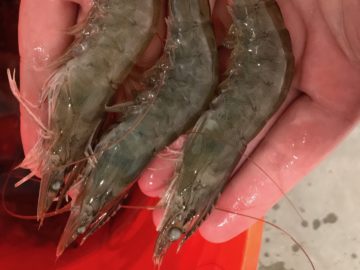
    Photo: Cooked shrimp from Berezan shrimp farm, Langley, B.C.
    Photo: Cooked shrimp from Berezan shrimp farm, Langley, B.C.

    Douglas acknowledges that there are challenges associated with this kind of operation. The first few growing cycles required experimentation with water temperature and salination, nutrition, operation intensity and general trouble-shooting and adjustments. But the enthusiasm of the 11-member team at Berezan farm is contagious and no problem appears to be without a solution. Chefs and retailers from around Metro Vancouver are expressing interest. The large shrimp are delicious and firm as confirmed by a post-tour office cooking session.

    Closed-containment shrimp farms offer a climate-friendly protein alternative to animal agriculture, which produces huge amounts of greenhouse gas emissions, consumes massive volumes of water and causes a lot of pollution. The environment benefits substantially when more people cut down on meat and other carbon-intense animal products. Feeding as many as nine billion people by 2050 will mean turning to sustainable protein innovations. The Berezan Shrimp Company is poised to be one of those innovators.

    Post by Theresa Beer, Senior Communications Specialist, David Suzuki Foundation. It also appears here.

  • Making Stewardship Count in Brussels

    Making Stewardship Count in Brussels

    Last week SeaChoice attended The Brussels Seafood Show – the largest annual fishing industry trade event with producers, processors, buyers, and national agencies represented from all over the world. We were there to host and participate in discussions and workshops around credible eco-certifications for fisheries.

    SeaChoice is a leading stakeholder in Canadian seafood certifications by the Marine Stewardship Council (MSC), the most prominent global certification program for wild fisheries. In September 2017, SeaChoice released the first review of all Canadian MSC certifications – and found that certifications have led to little change to fishery practices on the water to directly improve their impacts on habitat, non-target species and ecosystem function. We have taken our concerns into a global conversation among organizations and marine experts to ensure the credibility of the certification scheme remains high. We are among over 75 organizations and experts that are part of Make Stewardship Count – a coalition working for significant and swift improvements to MSC, an important tool in the work to ensure global fishery impacts are limited and sustainable into the future.

    It was our participation in Make Stewardship Count that brought us to Brussels, at which we participated in a forum focused on improving MSC implementation of “Principle 2” of the MSC Certification Standard and Certification Requirements – bycatch and retained species, habitat, and ecological impact. NGOs and academics with years of marine conservation and seafood certification expertise in addition to years of stakeholder participation in the MSC program have identified a set of clear asks of MSC – designed to ensure MSC fisheries properly protect habitats and marine species not considered as “target species.

    As stakeholders in MSC certification processes, SeaChoice member organizations will continue to engage and encourage these improvements, both at a fishery level and with the standards themselves.

  • Declaration in Defence of Wild Salmon

    Declaration in Defence of Wild Salmon

    Declaration asks British Columbians to support removal of open net-pen fish farms to shield wild salmon from the spread of farm-related pollution and diseases.

    Today in Vancouver, a diverse group of B.C. community, Indigenous, and business leaders announced the launch of the “Declaration in Defence of Wild Salmon”.  The declaration seeks to draw together the growing number of voices calling on the B.C. government to take action on salmon farming by refusing to renew fish farm leases when they expire this June.

    The declaration describes B.C. wild salmon stocks as a “public treasure”, and points to disease and pollution from open-net fish farms as a reversible threat to their survival. The declaration’s proponents are calling for its immediate implementation in the Broughton Archipelago, where leases are expiring in the traditional territories of First Nations who have resisted salmon farming for decades.

    The group is calling on more British Columbians from all walks of life to sign the declaration today. Time is running out to show the Provincial government the strength of support for transitioning open net-pen salmon farms to land. The declaration is found at www.safesalmon.ca, a website hosted by SeaChoice partner organization Living Oceans Society, Watershed Watch Salmon Society and Georgia Strait Alliance. SeaChoice partner organization David Suzuki Foundation is among the 27 groups and prominent individuals that have launched the declaration.

    Visit our priority species profile to learn more about the sustainability challenges and solutions with open-net pen salmon farming in B.C.