Category: Seafood

  • How much seafood is actually covered by retailers’ sustainable seafood policies?

    How much seafood is actually covered by retailers’ sustainable seafood policies?

    It may be less than you think.

    What if we told you that most Canadian retailers don’t include all of the seafood products sold in their stores in their sustainability commitments? It all comes down to the scope of their commitment.

    Whether or not a certain seafood product falls under the retailer’s sustainability policy depends on three factors: the seafood’s brand type, the store department managing the product, and the “banner” of the store selling it. Using these factors, retailers will decide which products fall within the scope of their sustainability policies, and which ones are not covered. Let us explain.

    Scope factor 1: Type of product brands

    We’ll start by looking at the product brand types.

    There are three types of product brands that retailers sell:

    1. Grocery store brands, or “private label” brands, which are owned by the retailer they are sold by (e.g. Loblaw’s President’s Choice, Sobeys’ Compliments, Costco’s Kirkland Signature);
    2. Seafood company brands, or “national brands”, which are companies that sell products across a range of businesses (e.g. Birds Eye, High Liner, Clover Leaf);
    3. Products with no brand are typically fresh, and sometimes frozen, products sold without any branding on the packaging (except perhaps for the logo of the store on the price label). Examples of “no brand” or “unbranded” products would be seafood you buy from your retailer’s fresh counter, such as fillets to order wrapped by a sales associate, or plastic-wrapped fillets on a Styrofoam or plastic tray.

    Retailers have different levels of control over products of different brand types. They have a lot more control and decision-making power when it comes to their grocery store brands and the unbranded products because they work directly with suppliers or distributors to purchase these products. For important or high risk store-branded products, retailer’s involvement in the supply chain may start at the landing dock or fish farm.

    Seafood companies, on the other hand, manage their brand’s supply chains and their agreements with suppliers. Although retailers have less direct control over where company-branded products come from or how they were produced, as major buyers of these products they have a lot of leverage to influence seafood companies’ practices. They just aren’t using it yet. One of the first steps in that direction is for retailers to include seafood company branded products in their seafood commitments, ensuring a level playing field across all of their products. Save-On-Foods’ and Walmart’s sustainable seafood commitments do not apply to the seafood company branded products, and Costco’s and Sobeys’ commitments do not apply to seafood company branded products or products with no brand.

    Scope factor 2: Store department

    A summary of which retailer’s commitments or policies apply to which seafood segment.

    The department where you find seafood also matters. There are specific terms for the different categories of seafood that retailers sell, depending on how they are presented to the consumer and by which department. Fresh or frozen seafood is usually managed by a retailer’s meat (or sometimes “meat and seafood”) department. Canned, jarred, or pouched seafood that is stored at ambient room temperature is often referred to as “shelf stable”. These products don’t need to be refrigerated or frozen, and they are often managed by a retailer’s “grocery” department.

    It’s important to know the difference between these types of products because retailers often use this language when describing their commitment. Sometimes only the “meat and seafood” department manages and follows the retailer’s commitments to sustainable seafood, while the “grocery” department of the same retailer does not. In these instances, the “meat and seafood” department will source fresh and frozen products (sometimes unbranded and private label only) in line with their commitments, but shelf-stable products, managed by “grocery”, may not be acquired in the same way. This is the case with Buy-Low Foods, Costco, Save-On-Foods and Sobeys.

    Scope factor 3: Store brands (“banners”)

    The store’s “banner” is one more dimension of the scope of a retailer’s commitment that determines which products are sourced according to the retailer’s seafood policy. Retailers frequently own multiple supermarket brands, called banners. For example, the retailer Loblaw owns the banners Atlantic Superstore, Extra Foods, Loblaws, Provigo, Real Canadian Superstore and Zehrs (among others). This can get very confusing, as sometimes multiple retailers have the rights to operate under the same banner, like with IGA. Only three IGAs in B.C. are owned by Sobeys – the rest of B.C.’s IGAs are owned by Georgia Main Food Group. To add further confusion, IGA stores in Quebec are managed by Sobeys Quebec, which operates independently from the national Sobeys. Alternatively, some retailers only operate banners under their name, such as Costco and Walmart. The following retailers do not require all of the banners they operate to adhere to their sustainable seafood policy: Buy-Low Foods (Budget Foods, Choices Market, Meinhardt Fine Foods, Quality Foods and Shop n’Save do not), Loblaw (Arz, Real Canadian Wholesale Club and T&T Supermarket do not), METRO (Marché Adonis does not) and Save-On-Foods (Bulkley Valley Wholesale, PriceSmart Foods and Urban Fare do not).

    So, how can shoppers tell what is covered by their retailer? 

    Some retailers have information about the scope and limits of their sustainable seafood policy stated publicly and transparently – others are less clear. SeaChoice thinks that consumers should know whether the seafood they’re buying was sourced in accordance with a retailer’s commitment or not. We’ve developed an infographic that sums this up (see above) and scope information is included at the bottom of each retailers’ Seafood Progress profile overview page.

    If you want your retailer to increase the scope of its seafood policy or commitment, please let them know by talking to an associate in-store, contacting their customer services department or using the Tweet buttons that are on each retailer’s profile page.

  • Use it or lose it: seafood eco-certifications and stakeholder engagement

    Use it or lose it: seafood eco-certifications and stakeholder engagement

    NGO stakeholders are increasingly opting out of eco-certifications because their input disappears into the schemes’ “black box” of decision-making.

    Many seafood eco-certifications gain credibility due to the engagement opportunities they provide for stakeholders. Civil society organizations, alongside industry stakeholders, often play central roles in standard development and governance of eco-certifications. More often than not it is environmental and social justice non-governmental organizations (NGOs) that provide invaluable expertise and local knowledge by way of input to a fishery or farm certification. For example, that “certified sustainable” tuna in your pantry likely had an NGO help establish the sustainability criteria it met or, perhaps, register objections to its certification.

    In fact, stakeholder consultation is a fundamental component of any legitimate eco-label according to the frameworks that a number of seafood eco-certifications adhere to, including the United Nations Food and Agriculture Organisation (UN FAO) eco-labelling guidelines and the International Social and Environmental Accreditation and Labelling (ISEAL) codes of practice.

    Yet, despite these guidelines and codes, there is growing discontent by many NGO stakeholders who report fatigue, frustration and disillusionment with seafood eco-certifications. A number of NGO stakeholders have withdrawn or decreased their engagement with certifications citing little benefit to continuing their efforts. Some groups, including SeaChoice, have even initiated public campaigns in response, at least in part, to certain certification schemes’ inability to effectively address stakeholder concerns. The international Make Stewardship Count campaign is a good example.

    In light of these challenges, SeaChoice conducted an NGO stakeholder workshop during the 2019 Seafood Summit in Bangkok, Thailand, as well as an online survey, to explore stakeholder sentiment about participating in eco-certification processes, including any challenges and barriers, as well as what improvements scheme holders could make to help ensure meaningful stakeholder engagement.

    Read the full report here.

    Report Highlights

    Participants reported that eco-certification stakeholder processes were often not user-friendly,  requiring the need to “speak their language” (i.e., either referring to technical jargon or to documentation that is literally not available in their language) and that local and cultural contexts can be missed by auditors and certification processes.

    We heard that where stakeholders were able to engage in the process, stakeholders commonly experienced frustrations with the lack of accountability and transparency on how decisions are made. That is, stakeholder comments often appear to go into a “black box” of decision-making, and when the outcome is announced there is no rationale or explanation as to how input was considered, or not. Where responses were provided, stakeholders typically felt that they were not meaningful as they rarely adequately addressed stakeholder concerns.

    We also heard stakeholders express a general sentiment that stakeholder disillusionment is not taken seriously enough. In many cases, negative stakeholder feedback was met with hostile responses  by eco-certification schemes rather than serious engagement. This further eroded stakeholder trust and interest in program participation.

    Evidence suggests that stakeholder engagement can lead to higher quality decision-making and outputs. However, this is strongly reliant on the quality of the processes that lead to decision-making and other outputs. Done poorly, such processes can cause stakeholders to become cynical, harbour distrust and withdraw from the process. Such cynicism can, in turn, threaten the legitimacy of the decision-making. Based on the stakeholder perspectives represented in our report, we believe there is a cause for concern that seafood certification standard holders should make more efforts to incorporate stakeholders in decision-making, and be more transparent about their processes, in order to maintain legitimacy.

    Moreover, there is widespread agreement in the available literature that stakeholder participation hinges on the need for a genuine opportunity to be heard and to influence the decision. Therefore, for engagement to be genuine, certification standard holders should be open to stakeholder influence and ensure outcomes are not predetermined.

    Our report has been shared with the major seafood eco-certifications many of which are currently in the midst of important consultation processes (e.g. from MSC and ASC). We urge these schemes to strongly consider implementing the report recommendations as though their credibility and legitimacy depends on it. Because as stakeholder sentiment demonstrates – it does.


  • What is a bocaccio and what can it teach us about patience and resilience?

    What is a bocaccio and what can it teach us about patience and resilience?

    By Scott Wallace, Senior Research Scientist at the David Suzuki Foundation and SeaChoice Steering Committee member

    After years of careful management and industry efforts, bocaccio rockfish are rebounding

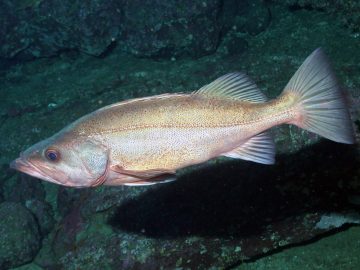
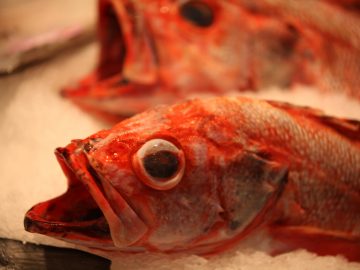
    Nobody likes a big mouth. Well, that’s not completely true. Canada’s Pacific groundfish industry is elated about a long hoped-for recovery of bocaccio rockfish. Bocaccio derive their name from the Italian term ‘bocacho’ meaning big-mouthed. While very few people have heard of this fish species, it has been the most talked about species in British Columbia’s groundfish fishery for the last 18 years.

    Rockfish fisheries are difficult to manage. There are 39 species of rockfish in our waters and they all have an inherent vulnerability to over-harvesting and a highly variable survival rate. The amazing story of bocaccio’s sudden recovery carries lessons that can be applied to most fisheries. It underlines the importance of having patience, managing expectations and building enough resilience to be able to follow nature’s lead.

    Since the 1950s, bocaccio populations from southern California to Alaska experienced a sustained decline throughout their range (Figure 1). In Canada’s Pacific waters, it is estimated that the population has declined to 3.5% of its unfished level. The situation was so severe that in 2002 the Committee on the Status of Endangered Wildlife in Canada (COSEWIC) recognized the species as threatened. Despite drastically lower catches and a prohibition on selling them, the bocaccio population continued to fall. In 2013, COSEWIC reassessed it as endangered – a more severe designation.

    In Canada, the main rebuilding strategy has been to ratchet down the level of allowable bycatch and hope for a period of high recruitment (i.e., larval survival). Lowering the catch limit sounds easy, but the challenge with this species is that they are difficult to avoid while targeting other more abundant species of fish. Even if they are returned to the water right away, rockfish do not survive being caught with commercial fishing gear. The change in pressure affects them too much on their way to the surface.  For 15 years, B.C.’s fishing fleets adapted their gear and methods to be able to stay within increasingly lower catch limits. That is, until 2019, when suddenly vessels were encountering bocaccio everywhere and could no longer avoid them. The hoped for high recruitment finally occurred.

    Independent scientific surveys corroborated the information from fishers and indicated a population recovery. The recently published Science Advisory Report suggests that in 2016, larval survival was 44 times better than average (Figure 1). Three years later, the juveniles of this cohort became large enough to be captured by trawl nets. It’s not surprising that fishers started to exceed the restrictive catch quota.

    For 2020, the quota for bocaccio has been cautiously increased, permitting industry a small level of non-directed catch while the population continues to grow (Figure 1). By 2022, a large portion of the 2016 cohort will become reproductively mature and will further contribute to rebuilding the population. Although marine ecosystems are highly unpredictable, at this point it appears that bocaccio is on a trajectory for recovery.

    This explosive recovery was a result of rebuilding efforts, ocean environmental conditions and patience. And in addition to this being a much-needed good news story in these challenging times, the story of bocaccio illustrates an important lesson: it shows that the year-to-year stability which businesses and regulators prefer can be incompatible with a species’ life history strategy.

    This means that for rockfish – and many other marine species – the only sustainable approach is to take a very small amount of what nature provides and accept that the “surplus” that we can safely harvest will change. We must be sure to leave enough resilience in the population until the next time when the ingredients of the ecosystem soup are favourable. For bocaccio, there was no predictable recovery trajectory, but all species have the capacity for resilience if we give them a chance. While it certainly was challenging, the industry had to accept lower levels of harvest and be patient while they waited for nature to provide the appropriate conditions for recovery.

    Similar to most fished marine species, bocaccio are a product of an exceedingly complex marine ecosystem. Ensuring that all species are managed with conservative catch limits, accurate reporting, and an abundance of precaution are the most important elements of maintaining wild harvests into the future.

    Figure 1: Estimates of spawning biomass (tonnes) from model published in Science Advisory Report. The median biomass trajectory appears as a solid curve surrounded by a 90% credibility envelope (quantiles: 0.05, 0.95) in light blue and delimited by dashed lines for years t=1935-2020; projected biomass appears in light red for years t=2021-2080. Also delimited is the 50% credibility interval (quantiles: 0.25-0.75) delimited by dotted lines. The horizontal dashed lines show the median Limit Reference Point (red: 0.4BMSY) and Upper Stock Reference point (green: 0.8BMSY). Catch and assumed catch policy (200 tonnes/year) are represented as bars along the bottom axis.


  • “Hybrid” salmon farms are no answer for British Columbia

    “Hybrid” salmon farms are no answer for British Columbia

    By Karen Wristen, SeaChoice Steering Committee member for Living Oceans

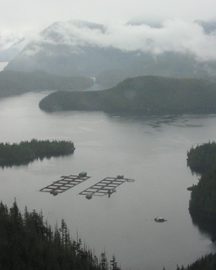
    The only effective way to protect wild Pacific salmon from salmon farms is to keep farms out of the water – completely.

    The Federal government has committed to doing something about open netpen salmon farms in British Columbia in recognition of the risks they pose to wild salmon populations – although exactly what they’ve committed to, and when, became murky after they were elected.

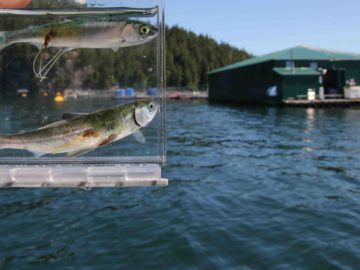
    Globally, the salmon farming industry has been forced to experiment with new productions systems because of the rapidly rising cost of controlling sea lice and disease in open netpens. As any industry would, it defaulted to the lowest-cost, highest return approach: the so-called ‘hybrid’ system in which salmon are raised to post-smolt stage in land-based facilities before being placed in the ocean.  The theory is that larger fish are less susceptible to dying from diseases and better able to withstand the ravages of sea lice. They spend only one year in the open netpen, rather than 18-24 months, so exposure time to lice and the shared diseases of salmon farms is shorter.

    This is perhaps an answer to production cost control, but it’s no answer to protecting wild salmon.

    Hybrid systems result in a higher biomass in the netpens throughout the ocean-based part of the production cycle, meaning that more pollution of surrounding waters and more fouling of the ocean floor will occur, unless the system is accompanied by extended fallow periods. The fish on the farms remain a breeding ground for the viruses, bacteria and parasites that plague salmon farms and are readily transferred to wild fish.  The farmed fish may withstand the infection and infestation pressure; but the wild salmon, particularly the vulnerable juveniles, continue to be at risk.

    Land-based farming schematic, courtesy of Kuterra

    Some companies are already using the hybrid system, which uses recirculating aquaculture technology (RAS) to raise the smolts to about 1 kg weight before putting them into netpens. While this might look like a positive step in the direction of a land-based industry, in fact it is not. Hatchery/nursery facilities for a hybrid system will be located so as to service the locations of netpens, to reduce stress on the post-smolt fish during transfer to the netpens. A full land-based RAS plant would locate closer to markets and transportation hubs. A RAS system for hybrid culture would be sized to grow the fish only to 1 kg of weight, whereas the full growout of fish in RAS requires much greater tank space and additional equipment/capacity. The industry has a limited pool of capital to draw upon, so deciding how and where to invest in land, bricks and mortar is a critical consideration for the future of salmon farming.

    The British Columbia Salmon Farmers’ Association has made it clear that its members favour the least-cost control measures: “The hybrid system, which involves extending the amount of time young fish spend in land-based hatcheries before being moved to ocean pens, is particularly promising in the near-term, and something we are actively pursuing.”

    The government promised us that it would end open netpen salmon farming in British Columbia by 2025. It would be unwise to wait while salmon farmers invest in new technology that depends on open netpens, before making it abundantly clear that those netpens will be gone within five years. That would be opening up the government to unnecessary claims for compensation. The Minister of Fisheries should be focusing her efforts on creating incentives for fully land-based RAS and making it clear to industry that it invests in alternatives that fail to protect wild salmon at its own peril.

  • Impacts of the global pandemic on Canadian seafood sectors are starting to surface

    Impacts of the global pandemic on Canadian seafood sectors are starting to surface

    We must keep the sustainable seafood industry AND the environment healthy through the COVID-19 era.

    The past few weeks have been incredibly challenging for individuals and companies across the world as the COVID-19 pandemic disrupts our daily routines and business operations. Some segments of the Canadian seafood sector have taken a hard hit. With uncertain support packages, regulatory challenges and new buying patterns, it is imperative that we figure out how to help businesses, fishing communities and the environment survive now and prosper long-term.

    Vendors of fresh products such as oyster, snow crab or lobster and producers who supply restaurants and food service are clearly struggling. Their buyers are on hiatus or have significantly scaled back – leaving many producers, distributors and wholesalers with no one to sell to. Segments geared towards selling to retailers, like the farmed salmon supply chain, seem to be faring better (at least in the short term) due to the increased spending in grocery stores across Canada and the US as people are cooking much more at home and the decreased availability of imported products due to the reduction in air travel.

    The Canadian government has declared seafood production an essential service during the COVID-19 pandemic but the details of how, where, and to whom the government allocates its support will determine whether sustainable fisheries and local food access and security are effectively supported. The Government recently (April 25) announced specific measures aimed at helping the seafood processing industry continue to operate and protect the health of their workers. There are also supports available for fishermen, but there is significant confusion about how the Government will apply them, especially for inshore, independent harvesters. This sector is facing a difficult choice; many operators are considering not fishing this season because they are concerned about the health of their crew and the lack of market for their fish – but then they may not qualify for government support benefits since they have “chosen” not to perform their essential service (fishing). Alternatively, they can fish and receive below-cost prices for their catch, because their buyers have limited reselling options, potentially driving them further into debt. The Fisheries Minister, Bernadette Jordon, has already indicated she will continue to work on more measures aimed at harvesters (update: on May 14th, Prime Minister Justin Trudeau announced a nearly $470 million package to support fish harvesters).

    In addition to making sure that businesses stay afloat until the pandemic subsides, we need to make sure that the environment is also protected. After all, a healthy marine environment also provides essential services to humanity in the form of climate regulation, sustenance, recreation, medicine and inspiration. But there have been mixed reactions from seafood industry to the proposed changes.

    The Canadian Aquaculture Industry Alliance sent a letter to the Fisheries Minister with a suite of asks, including “regulatory flexibility”, and lists as examples the requirement to conduct sea lice counts on farms or compliance with the Aquaculture Activities Regulations. These requirements are designed to minimize and mitigate the impact of salmon farms on the marine environment and wildlife – not to mention the welfare of the farmed fish. Now would be a particularly bad time to release farms from their responsibility to monitor sea lice levels because wild juvenile Pacific salmon are currently migrating past B.C. salmon farms where they are vulnerable to potentially unchecked sea lice loads, viruses and other effluent that could be lethal. In Nova Scotia, the herring, gaspereau (also known as alewife), eel and mackerel runs will also be passing salmon farms and facing similar concerns.

    While some sectors demand fewer environmental requirements, other sectors are concerned about a relaxation of requirements. When DFO announced that fisheries observers wouldn’t be allowed on commercial fishing boats for 45 days due to challenges with physical distancing onboard vessels – the B.C. groundfish trawl fleet expressed alarm for what that could mean for the protection of the stocks they fish. It’s been reported that the Groundfish Trawl Advisory Committee (GTAC) wrote to DFO recommending, among other things, that an electronic monitoring pilot project be expanded to all vessels before they are allowed to fish and that the plan to start retaining 100% of rockfish catches on May 15th be enacted immediately. The industry association and government acted quickly and on April 14th DFO and GTAC announced the implementation of an emergency electronic monitoring project to ensure coverage throughout the duration of the suspension of human observers due to COVID-19. This proactive response is encouraging. While environmental groups welcomed the move to protect observer health and understand the necessity of suspending their work on boats at the moment, they also note it is imperative for DFO to step up monitoring of fishing vessels in fleets that haven’t adopted electronic monitoring and ensure data collection requirements are met by other means during this time.

    In addition to environmental and business concerns, the pandemic is bringing to light the vulnerability of our current seafood market system as a whole. Canada exports over two-thirds of the seafood it produces and the majority of seafood that Canadians eat has been imported. This includes products that were caught or farmed in Canada, exported to another country for processing (usually somewhere far away, like China) and then re-imported. These trends are driven by market dynamics; overseas markets are willing to pay more than Canadians for our seafood and many Canadians want to eat seafood that we don’t produce domestically (like tropical farmed shrimp and prawns). We import seafood products that were harvested in Canada and shipped halfway around the world to be processed in countries with lower wages. The disruptions caused by COVID-19 are showing the weaknesses in these complicated systems, both from a business angle and a domestic food security perspective.

    And speaking of domestic food security, SeaChoice wants to thank everyone in the seafood supply chain for doing what they can to keep Canadians supplied with sustainable seafood – from inshore fishers going out in day boats to land the catch of the day, workers continuing their shifts in processing plants, and businesses that are getting creative with how they get sustainable seafood to people (for example, Organic Ocean in BC’s lower mainland and Afishionado Fishmongers in Halifax, NS). We salute you.

    SeaChoice will continue to monitor the impacts of the pandemic on the Canadian seafood supply chain as we move from the initial stage to longer-term solutions. We hope everyone out there is staying safe and physically distancing as much as possible so that we can all get back to life as usual – or perhaps even slightly improved – before too long.

  • What ASC’s new chemical rules mean for Canadian farmed salmon

    What ASC’s new chemical rules mean for Canadian farmed salmon

    ASC has changed its rules around treating sea lice – how “responsible” are the new rules?

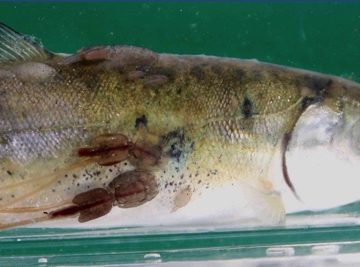
    The open nature of net-pen salmon farms means they are inherently susceptible to sea lice infections. Sea lice occur naturally in the wild ocean environment, but the “open” nature of net-pens allow the lice to infest farmed fish and multiply to unnatural levels. The lice can then infect any vulnerable juvenile wild salmon swimming by. Even low sea lice abundance on juvenile salmon can cause significant harm or death. Sea lice infestations are also a significant economic cost to the industry.

    Parasiticides (i.e. chemicals) are regularly used by farms to combat sea lice infections. The chemicals have their own set of environmental impacts, as untreated discharge and fish excrement gets released directly into the ocean. Chemical resistance has become an increasing concern – resistance can leave farmers unable to control outbreaks. This was seen at Clayoquot Sound in 2018 where farms, including Aquaculture Stewardship Council certified farms, experienced sea lice outbreaks as high as 34 adult lice per fish. Meanwhile, wild salmon runs are left with the consequences.

    It is therefore no surprise that parasiticide use is one of the sustainability concerns addressed by the ASC salmon standard. Unfortunately, the eco-label recently revised the number of chemical treatments allowed under its standard – and not for the better. The changes that go into effect at the end of this month dramatically increase the number of chemical treatments allowed in some salmon farming regions.

    Here’s what the changes mean for ASC ‘responsibly farmed’ Canadian salmon.

    First, farms on both coasts will be allowed to treat sea lice more often – with each treatment releasing parasiticides into the ocean environment and increasing the chance of chemical resistance. Many more treatments will be allowed on the east coast than in the west. Previously all ASC certified farms, regardless of their location, needed to meet a threshold of 2-3 sea lice treatments. Now, a B.C. salmon farm will be allowed 3-4 treatments, while an Atlantic Canada farm will be allowed as many as nine. Atlantic Canada farms will have up to eight years to work towards the 3-4 treatment threshold. And actually, an ASC certified B.C. farm might receive more than four treatments; an ASC interpretation means up to a year of production time can be excluded from the audit.1 During this time, environmental impacts such as sea lice treatments are simply ignored.

    Second, east coast farms benefit from another change – the removal of precautionary lobster protections. Until now, farms were penalized for chemical treatments during the sensitive lobster moulting period because the chemicals can be incredibly toxic to lobsters and other crustaceans. But the amendment no longer penalizes farms for the use of chemicals that could have significant impacts on lobster populations and/or fisheries. Deltamethrin has been found to be “extremely toxic” to crustaceans and may be lethal to lobsters up to 10 km away and several hours after release. Cypermethrin has also been found to be “very toxic” to crustaceans. Another study found azamethiphos exposure could cause sub-lethal effects, including delayed spawning in female lobster and other physiological impacts.

    Third, ASC has approved problematic variances (departures from standard criteria) that undermine the amendment’s Integrated Pest Management (IPM) requirements. The IPM requires certified farms to try and control sea lice using coordinated management practices (for example fallowing between cycles and chemical rotation), thereby reducing the risk of drug resistance. One requirement is that farms maintain lice loads of less than 0.1 mature female lice per fish. B.C. farms are exempt from this requirement, however, which has resulted in certified farms with lice counts of over 20 mature lice per fish. Another IPM requirement is area-based management. ASC’s own internal report found B.C. is the only salmon farming region without an ABM regulatory requirement. Like with the sea lice threshold, B.C. farms are exempt from the ABM requirement. Both the sea lice and ABM variances instead defer to Fishery and Oceans’ inadequate regulations.

    It’s not all bad news – there are some positive changes in the amendment. The chemical hydrogen peroxide now counts toward the treatment limit count – it didn’t before even though studies have demonstrated that hydrogen peroxide may negatively impact non-target species, including lobster and the surrounding benthic fauna and flora. Farms are also now required to monitor benthic sediment for parasiticide residues – allowing for potential short-term and long-term effects of chemical treatments to be identified and better understood. Finally, farms are now required to publicly report chemical treatment types, amounts and frequency. This is an important change given that public disclosure is not the industry’s forte.

    Certifications offer the potential to improve industry practices, but only when they go beyond industry norms and government regulations.

    Certifications offer the potential to improve industry practices, but only when they go beyond industry norms and government regulations. While the ASC parasiticide amendments are still more rigorous than required by most other aquaculture certifications, these amendments no longer reflect ‘best practices’ in salmon farming. SeaChoice continues to urge the ASC to remedy any weakening of the standard, particularly the problematic variances and the variance process itself.

    While ASC’s amendment might not meet the goal of ‘responsible’ aquaculture, the Prime Minister’s recently announced mandate to the Minister of Fisheries, Oceans and the Canadian Coast Guard is a promising step in the right direction. The Minster has been mandated to “work with the province of British Columbia and Indigenous communities to create a responsible plan to transition from open net-pen salmon farming in coastal British Columbia waters by 2025 and begin work to introduce Canada’s first-ever Aquaculture Act.” The transition of B.C. open net-pen salmon farms to closed containment by 2025 is one sure way to keep farm chemicals out of the ocean, and farmed derived sea-lice away from our wild fish (though we would like to see the transition extended to both coasts). Now that would be truly ‘responsible’ farmed salmon.

  • Fishing for change – are the world’s most influential seafood companies doing enough?

    Fishing for change – are the world’s most influential seafood companies doing enough?

    New assessment shows companies need to move from talk to action, and fast.

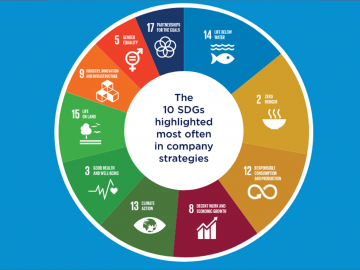
    After a long process of research, consultation, and iterative development, the World Benchmarking Alliance recently released the results of the Seafood Stewardship Index (SSI), which ranks the world’s 30 largest and most influential seafood companies against seafood-relevant commitments in the United Nations’ Sustainable Development Goals (SDGs). Specifically, the SSI assessed what contribution these companies were making towards the achievement of SDG 1 (no poverty), SDG 2 (zero hunger), SDG 5 (gender equality), SDG 8 (decent work and economic growth), SDG 12 (responsible consumption and production), SDG 14 (life below water) and SDG 15 (life on land).

    The SSI is designed to show us what companies have committed to doing to advance sustainable seafood, how transparent they are about their activities and how well they are meeting their targets. The supporting framework consists of 60 indicators across five measurement areas: governance and management of stewardship practices, stewardship of the supply chain, ecosystems, human rights and working conditions and local communities. Each indicator measures commitment, transparency or performance within these five areas.

    The approach taken with the SSI is similar to the methodology SeaChoice followed for Seafood Progress – companies’ profiles were first completed using publicly available information, and then companies were invited to submit further information to address any gaps. Interestingly, the exact same proportion of companies decided to engage in both initiatives from the get-go – two-thirds submitted additional information, while one-third chose not to.

    Of the 30 companies profiled in the SSI, there are three Canadian companies or companies with direct (as in, not run by subsidiary companies) and significant activities in Canada:

    • Cooke, ranked 25th out of 30, has salmon farming at its core but is also involved in fishing and aquaculture feed production. The SSI summarizes that “compared to its peers [Cooke] underperforms, primarily due to the general lack of information surrounding its activities. Cooke discloses few details about its operations and policies with respect to most measurement areas.”
    • High Liner Foods, ranked 21st, processes and sells value-added frozen seafood products (such as battered or breaded fish fillets or bites) to retailers, restaurants, institutions and foodservice providers. High Liner Foods scored well on the design of its environmental and social commitments, but less well on performance indicators due to the lack of information available for how it is addressing potential adverse human rights impacts.
    • Mowi (formerly known as Marine Harvest), ranked 2nd, is the world’s largest producer of farmed salmon, both in terms of volume and in terms of revenue. The company’s headquarters is in Norway, but it operates large-scale open-net pen salmon farms on Canada’s Atlantic and Pacific coasts. Mowi ranked 2nd in the benchmark, scoring well on indicators related to transparency and its commitment, but distinctly less well on indicators related to its performance against those commitments. Mowi’s profile summary ends with “although Mowi’s overall performance is good, there remain sustainability issues the company faces, such as the high quantities of fish escapes from its farms and its environmental footprint.”

    The companies profiled are so large that it must have been difficult for SSI researchers to decide on their scores, particularly when the performance of multinational companies vary across geographies or subsidiaries. For example, Mitsubishi Corporation (ranked 8th) owns over 1,400 subsidiary companies in 90 countries. One of their subsidiaries, Cermaq, runs large-scale open-net pen salmon farms on B.C.’s coast. Mitsubishi’s SSI profile summary states that “to support local communities, Mitsubishi recognises the rights of indigenous peoples. Its subsidiary Cermaq is also active in local community engagement and development programs. Moreover, Cermaq has a strong commitment to area-based management for fish farming to limit its impacts on the ecosystem.” SeaChoice can’t speak to Cermaq’s operations in other jurisdictions, but there is currently no area-based management salmon farming in Canada, and the rights of indigenous people in some areas where Cermaq operates in BC have only just started to be considered after years of formal opposition and protest.

    As with all commitment tracking and reporting platforms, the results will only be as good as the information that was fed into the analysis. To help increase the accountability of information submitted by companies, the scoring guidelines for the analysis are designed to encourage companies to make information publicly available (although the SSI methodology does allow for confidential information to be provided under non-disclosure agreements).

    In any case, the SSI very clearly shows that businesses need to be taking much more action to contribute to the achievement of the Sustainable Development Goals. And while retailers weren’t included in the scope of the SSI, as major purchasers of seafood produced around the globe, they also have a role to play in demanding and supporting truly sustainable seafood.

  • A promise to remove open-net pens is a promise for healthy oceans

    A promise to remove open-net pens is a promise for healthy oceans

    It’s time for responsible salmon farming

    SeaChoice is calling on the Government of Canada to stand by the election pledges made by four of our national parties (see pledges below), to protect wild salmon from the adverse effects of open-net pen salmon farming. For many years we have been engaged in researching the sustainability challenges posed by open-net pen aquaculture, particularly for wild salmon, and advocating for known solutions. We are encouraged by the parties’ shared commitment to this important challenge and to ocean health in Canada.

    Although the Liberal promise — to transition open-net pen fish farms to closed containment by 2025 — is specific to British Columbia, salmon farms on the east coast of Canada are just as problematic as those in B.C. We expect the government to uphold their commitment to wild salmon and healthy aquatic ecosystems on both coasts. Open-net pen fish farming needs to be transitioned out of all waters, particularly given the government’s commitment to protecting and rebuilding wild salmon stocks on both the east and west coasts of Canada. The government mandate to protect wild fish and habitats is the same across the country.

    Significant concerns remain in B.C. and Atlantic Canada regarding sea lice and pathogens and their impacts on wild fish, chemical/drug resistance, and the inability of the industry and Fisheries and Oceans Canada to successfully prevent and manage outbreaks of parasites and pathogens. It is due to these concerns that SeaChoice member groups advocate for the removal of open-net pen farms from wild salmon migration routes. In the interim, we continue to push government, industry and the markets – through collaboration and public accountability – to drive the improvements needed to alleviate the risk to wild salmon. This work, including those of many others, has helped to forward sea lice, pathogen and disease science and initiate investments in land-based Recirculating Aquaculture Systems (RAS) technology in B.C. and further afield.

    The concerns with Canada’s salmon farms were raised by both provincial and federal Ministers prior to the election, with both levels of government questioning the sustainability, environmental and/or social, of open-net pen salmon farming in B.C. The B.C. government is collaborating on a four-year program to transition farms out of the Broughton Archipelago. The federal Fisheries Minister Jonathan Wilkinson expressed, prior to the election promise, that the federal government is keen to help transition B.C. salmon farms to designs and technologies that address environmental concerns. In addition, government oversight bodies, inquiries and committees, inter alia have all called out inadequacies in regulation of the aquaculture industry in Canada (see below for details).

    Even Canadian open-net pen salmon farms eco-certified by the Aquaculture Stewardship Council (ASC) are problematic, because the ASC Salmon Standard criteria are not being applied as written. SeaChoice’s What’s Behind the Label report found that the ASC variance process is overriding the multi-stakeholder agreements that created the standard criteria and that the process lacks any scientific, technical or stakeholder input. Variances represent approved departures or exemptions from the Standard criteria and are the only reason Canadian farms are certified. These variances also mean that certified farms are not a Seafood Watch (SFW) program “Good Alternative” as was communicated in 2017. The SFW review failed to account for the fact that Canadian farms certified by ASC don’t actually meet the criteria reviewed by Seafood Watch (more here).

    SeaChoice and its member groups are supportive of responsible aquaculture. There are many forms of Canadian aquaculture that should be celebrated. When done right, farmed seafood can help feed our growing population by supplementing wild catches and adding to the overall seafood supply (important to note – farmed fish does not replace wild captured fish). However, it shouldn’t come at the expense of our wild salmon and ecosystems.

    The implementation of the Liberal’s promise is necessary to protect Canada’s wild salmon stocks, ensure healthy oceans and to reform the industry to be truly responsible. One worthy of celebrating.

    MORE INFORMATION

    Party promises:

    Liberal promise — In British Columbia, we will work with the province to develop a responsible plan to transition from open net pen salmon farming in coastal waters to closed containment systems by 2025.

    Conservative promise — Support the advancement of technology and practices that reduce contact between wild and farmed salmon.

    NDP promise — In order to protect wild salmon on the Pacific coast, we will fully implement the recommendations of the Cohen Commission and work with the province of British Columbia and First Nations to support the transition to land-based, closed-containment systems.

    Green Party promise — By 2025, move all open-net pen finfish aquaculture facilities into closed containment systems on land. As with land farmers transitioning from conventional production, provide financial and extension support to fish pen workers to make this transition.

    Example government oversight bodies, inquiries and committees that have called out inadequacies in regulation of the aquaculture industry in Canada: 

    1. Commission of the Environment & Sustainable Development (Auditor General) Salmon Farming report:

    “We concluded that Fisheries and Oceans Canada did not adequately manage the risks associated with salmon aquaculture consistent with its mandate to protect wild fish. Although the Department had some measures to control the spread of infectious diseases and parasites to wild fish in British Columbia, it had not made sufficient progress in completing the risk assessments for key diseases that were required to understand the effects of salmon aquaculture on wild fish. It also had not defined how it would manage aquaculture in a precautionary manner in the face of scientific uncertainty. Moreover, the Department did not adequately enforce compliance with aquaculture regulations to protect wild fish.

    The Canadian Food Inspection Agency had measures to prevent the introduction and spread of infectious diseases with respect to aquaculture. However, the Department and the Agency had not clarified roles and responsibilities for managing emerging diseases. This lack of clarification created a risk that potential emerging diseases affecting wild salmon would not be adequately addressed.”

    2. Report of the Independent Expert Panel on Aquaculture Science (Office of the Chief Science Advisor):

    This report makes the recommendation that DFO’s Aquaculture science needs an external, non-government Science Advisor and Review Panel.  It repeats throughout the 28-page report that DFO science on aquaculture must be more transparent, consider localized impact and be inclusive of indigenous knowledge.

    3. B.C. Minister of Agriculture’s Advisory Council on Finfish Aquaculture recommendations included:

    “Strengthen the precautionary approach to regulation salmon farming in B.C. to reduce the potential risk of serious harm to wild salmon”; and

    “Acknowledge and incorporate First Nations’ rights, title and stewardship responsibilities in all aspects of fish farm governance, including tenuring, licensing, management and monitoring in a manner consistent with the United Nations Declaration of  Rights of Indigenous Peoples (UNDRIP)”

    4. Cohen Commission of Inquiry into the Decline of Sockeye Salmon in the Fraser River:

    Found DFO has a conflicted mandate – to protect wild fish and to promote the salmon farming industry. Recommendation 3 is still not fulfilled with no plans to do so: “The Government of Canada should remove from the Department of Fisheries and Oceans’ mandate the promotion of salmon farming as an industry and farmed salmon as a product.”

    Furthermore, the Wild Salmon Policy is yet to be fully implemented (Recommendations 5 -7). DFO’s failure to implement the WSP was demonstrated by the recent voluntary suspension from MSC by the wild B.C. salmon fisheries due to DFO lack of resources to complete necessary functions.


  • Warming up to frozen fish

    Warming up to frozen fish

    It’s time to change the widely held perception that “fresh” is always better.

    Summer is officially over in Canada – and for most of us that means an end to the supply of fresh wild fish and seafood in our retail stores. Consumer research shows that “freshness” is the highest ranking consideration for people buying fish, but I don’t think many people realise that when it comes to seafood “fresh” is not the same as “freshness”.

    In seafood labelling, “fresh” means that the product has never been frozen – it doesn’t mean it was caught early this morning while you were still sleeping. In fact, it can sometimes take a week or more for fresh seafood to get from the water to store shelves. And because fresh seafood is so perishable, a lot of it ends up in the garbage. Believe it or not, frozen is often the better way to buy high quality seafood.

    For decades, the choice between “fresh” and “frozen” seafood has been debated. Don’t get me wrong, nothing beats the quality and taste of fresh seafood right out of the ocean. But most consumers don’t get their seafood that way. The vast majority of seafood available in our grocery stores has travelled a long way to get there, so freezing is critical in maintaining its freshness. In the past, fresh seafood was the clear winner (think mushy fish sticks). But the seafood world has come a long way, particularly when it comes to processing and freezing technologies.

    These days most seafood is flash frozen, rapidly brought down to between -40 to -60˚C immediately after capture. This process maintains the integrity of the protein so there’s no mush involved. Flash freezing also minimizes nutrient loss and makes the seafood safer to eat because the freezing process kills harmful bacteria. This is particularly true for raw fish consumption (think sushi).

    In addition to tasting great and being good for you, frozen seafood can also be more sustainable and more affordable than never frozen options. Fresh seafood, when not consumed locally, needs to be shipped by plane to get where it is going as quickly as possible. Frozen fish, on the other hand, can be moved by boat, rail or truck – all of which are carbon light when compared to air travel. Furthermore, seafood frozen in portions can be removed from the freezer as needed, reducing food waste – another win for sustainability. And as if that wasn’t enough, frozen seafood can be consumed anytime of the year and is often more affordable than its fresh counterpart!

    Now, not to complicate things, but it’s important to point out that seafood that is not frozen was not necessarily never frozen. There is a good chance it arrived at the store hard as a rock, but was thawed for display because sellers think you would rather buy it that way. In this case the label should state “previously frozen”, but the travesty here is when non-frozen seafood – whether it was never or previously frozen – is never eaten but ends up in the garbage. This widespread waste of fish and other seafood is a sustainability disaster – particularly for seafood on the lower end of the environmental and/or social responsibility spectrum. Freezing seafood is the best option to reduce waste all along the supply chain, including after it’s harvested, during transport, while it’s waiting to be sold and waiting to be eaten!

    Indeed, it’s time we gave not previously frozen fish a new name (“never frozen”?) because calling it “fresh” suggests that frozen fish is, well, not fresh, which couldn’t be further from the truth. In fact, properly frozen fish is among the freshest fish you can buy.

    Here are a few tips for ensuring your frozen fish is of the highest quality and taste:

    • The best flash-frozen fish will be vacuum-sealed or be encased in ice.
    • Look for freezer burn or crystals which suggest the fish has been thawed and refrozen, which affects quality.
    • Individual fish fillets in a bag or box should be separated. If they are all stuck together it could mean the package warmed up in transit but was refrozen before hitting the shelves.
    • Defrost fish in the refrigerator or in a cold-water bath – do not place in warm water as it can impact the texture of the fish.
    • Avoid refreezing fish once it has thawed. Doing so will comprise the texture of the fish.