Category: Reports

  • ASC rejects harmful seal bombs 

    ASC rejects harmful seal bombs 

    SeaChoice’s watchdogging of ASC leads to global impact. 

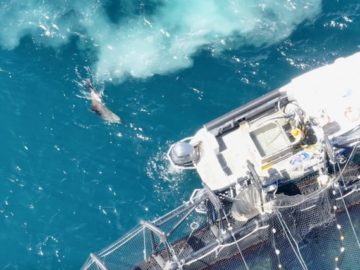
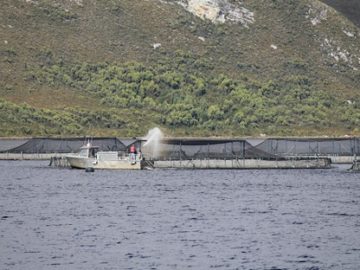
    Recently, the Aquaculture Stewardship Council rejected a request from SCS Global, on behalf of their client Tassal (owned by Cooke Aquaculture), to allow them to continue using seal bombs (underwater explosives that can cause hearing damage and death to seals) on their Tasmanian certified salmon farms despite the ASC’s “zero” tolerance use of such acoustic deterrent devices. 

    The rejection is a result of SeaChoice’s watchdogging of the ASC – demonstrating that SeaChoice’s work has global impact. 

    Back in 2017, SeaChoice was the first to expose that the ASC’s variance request process was being utilized to weaken standard criteria behind closed doors. The flawed process enabled farms that would otherwise not meet ASC criteria to be certified. For example, British Columbia salmon farms were exempted from sea lice limits, while Chilean and Scottish farms were allowed to exceed chemical use limits. 

    Heeding SeaChoice’s calls to stop approving variances behind closed doors, in 2020 the ASC revised its process to include stakeholders and technical experts. 

    This meant the Tassal request was put through a technical review with a public consultation that allowed stakeholders to intervene. ASC’s rejection states Tassal did not provide “credible evidence for the risk of harm caused to seals”. Meanwhile, stakeholders provided credible evidence that seal bombs, underwater explosives, can cause injuries ranging from hearing damage to death.

    While the rejection was a ‘win’, the request did also unveil the limitations of certifications by way of auditors’ overreliance on evidence provided by companies. 

    Case in point: for nearly ten years the auditors failed to penalize Tassal, for their use of seal bombs (government documents show nearly 60,000 bombs have been used by the company, including on ASC farms, since January 2018). Audit reports dating back to 2014 reveal that auditors relied on written company declarations that Acoustic Deterrent Devices were not used on farms. Environmental groups are now calling on the auditor to suspend Tassal’s ASC farms. 

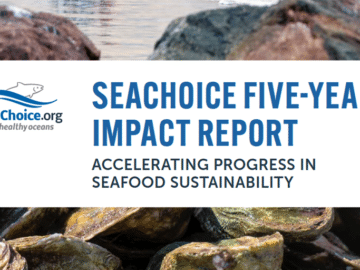
    You can learn more about SeaChoice’s watchdogging of certifications achievements in our five-year impact report.

  • Exposé connects seafood on North American shelves to atrocities found in China’s seafood operations

    Exposé connects seafood on North American shelves to atrocities found in China’s seafood operations

    A 2-part report by Ian Urbina’s Outlaw Ocean Project unveils a slew of human rights atrocities in superpower China’s seafood supply chain, and provides evidence that much of the seafood found on North American shelves is tied to Uyghur labor. 

    As evidence of its global significance, Urbina shares that China’s seafood industry accounts for a fifth of international seafood trade, is worth over thirty-five billion dollars and is responsible for catching approximately 5 billion pounds of seafood annually. 

    Part One of the report focuses on China’s opaque – and colossal – distant water fishing fleet that is notoriously challenging to monitor. Urbina’s unprecedented sleuthing reveals countless acts of inhumane working conditions, severe abuse, neglect, murder, debt bondage, illegal and unregulated fishing…and the list goes on. 

    Part Two shifts attention one step downstream where a myriad of evidence reveals that Uyghur minorities are forced to work in seafood processing plants in China. For years, the Chinese government has been forcibly relocating Uyghurs across the country through labor transfers and keeping them under strict surveillance. In addition to forced labor, acts of torture, beatings and forced sterilizations have been reported. 

    So, where does this seafood end up? 

    Despite both the Canadian and U.S. government describing China’s labor transfers from Xinjiang as a “form of genocide” and U.S. congress enforcing its Uyghur Forced Labor Prevention Act, the report finds:

    “Much of the seafood sent to America and Europe are processed by Uyghur labor.”

    The investigation reveals that major US and Canadian importers, including High Liner Foods, have bought seafood from Chinese factories that use Uyghur labor. Evidence suggests these products found their way to the shelves of major grocers across North America, including the following profiled on Seafood Progress: Costco, Loblaw, Sobeys and Walmart

    Most grocers and brands verify supplier compliance against their human rights policies by requiring they undertake third-party social audits. However, this method of verification is proven unreliable in detecting state-imposed forced labor when processing facilities are subject to self assessments where information can easily be withheld and inspections are scheduled in advance. Additionally, employees that are interviewed by auditing bodies are often afraid to speak candidly. 

    As a result of the limitations of social audits, Urbina tells us that “thousands of tons of seafood imported from factories using forced labor continue to enter the U.S.”

    What’s more, the report divulges that all seafood plants found to be using forced labor from Xinjiang were certified by the Marine Stewardship Council (MSC). 

    As part of an ongoing campaign to assess and hold eco certifications to account, SeaChoice has found several limitations to the MSC’s Standard, including it being open to interpretation and the ability to extend timelines for implementation significantly. 

    In the report, Director of Greenpeace USA’s ocean campaigns, John Hocevar, offers a summary of some other major problems associated with certification schemes: 1) they are largely self-policing, 2) they lack third-party oversight or verification, 3) they focus on environmental concerns and neglect to properly address human rights issues, and 4) they typically do not cover vessels where abuses are most likely to occur.   

    So, how can such a flawed system be fixed?

    Critical actions to address human rights abuses in seafood supply chains include:

    • Stronger traceability. Seafood supply chains are notoriously complex and challenging to trace, and regulations in Canada and the US remain largely inadequate. For years, SeaChoice has pressured the Canadian government to bring its seafood traceability standards into the 21st century. There is a critical need for Canada to improve its regulations to support better data capture and exchange for seafood imported and sold in Canada, as well as improve enforcement to deter illegal practices and trade. 
    • Cease sourcing and advocate for systemic change. One critical action outlined in the Organization for Economic Cooperation and Development (OECD) guidance is to cease sourcing products with severe and irremediable adverse impacts. As a result of Urbina’s report, Albertsons stopped sourcing products from High Liner that were found to be tied to forced labor. Since then, High Liner announced they had cut ties with a Chinese company implicated in this investigation. Such efforts are encouraging; however, as identified in Oxfam’s fourth Supermarket Scorecard, companies also need to take a far more active role in addressing systemic human rights risks across the sector.
    • Increase transparency. Despite demands for increased transparency across the seafood industry, corporations are petitioning to reduce public access to trade data. For example, the report highlights that The Commercial Customs Operations Advisory Committee (COAC)—which includes representatives from Walmart and Amazon – proposed in October 2022 that vessel manifest data be made confidential. In addition to embracing transparency, end buyers like Walmart must leverage their position in the chain to influence producers and importers to ensure the flow of critical product information from boat to plate. 
    • Look beyond certifications. Urbina’s expose, along with a host of others, clearly demonstrates the need for end buyers to stop counting exclusively on voluntary certifications and do a better job of investigating their own supply chains. 

    While Urbina’s most recent report focuses on China given its global significance, it’s important to note that accounts of human rights abuses continue to be reported on in the European Union and throughout international supply chains. It is becoming increasingly apparent that voluntary certifications and third-party social audits alone are not keeping seafood products connected to serious human rights and environmental violations off store shelves. Instead, we must advocate for stronger regulations and swift enforcement to shape global value chains, and motivate end buyers to leverage their prominent position to drive improvements upstream. 

    Check out other solutions posed in the Outlaw Ocean report, and continue to drive Seafood Progress with us by signing up for our newsletter.

  • Avoiding the seafood greenwash this holiday season

    Avoiding the seafood greenwash this holiday season

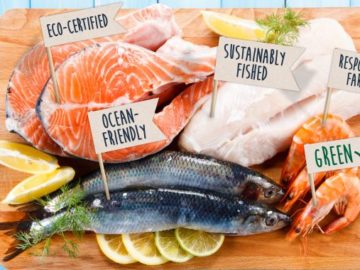
    Whether you have salmon or the classic shrimp ring on your holiday shopping list – buying ‘green’ with confidence can be a challenge thanks to misleading claims.

    This year saw a wave of greenwashing challenges and human rights exposés in seafood markets across the globe. Many of which involved seafood certifications:

    For farmed seafood, the greenwashing of salmon farmed in open net pens continues to be called out worldwide. Earlier this year, SeaChoice led a global alliance of more than 80 groups calling for the Best Aquaculture Practices and GLOBALG.A.P. certifications to remove their endorsement of salmon farms that are contributing to the decline of the endangered Maugean skate. It was followed up with a formal complaint, regarding the product being sold to consumers as ‘responsibly sourced’, to the Australian Competition and Consumer Commission.

    A greenwashing complaint has also been filed in the U.K. over the Scottish farmed salmon industry’s claims of ‘sustainable’. It follows a review of farmed salmon certifications, including the Aquaculture Stewardship Council, in Scottish farms that found they failed to live up to their claims.

    It’s a familiar story in Canada: check out our guide on how farmed salmon certifications stack up.

    Wild seafood certifications have also been in the hot seat. In the USA, major seafood brands that utilize the Marine Stewardship Council certification are facing class-action lawsuits over their sustainability claims; and in Europe, a grocer was served a formal notice over their source of canned tuna which includes MSC certified fisheries.

    The shortcomings of certifications aren’t limited to environmental claims either. A recent investigation exposed the shortcomings of certifications in addressing human rights concerns. Shockingly, all seafood plants found to be using Uyghur forced labour from Xinjiang were certified by the MSC and ASC.

    While not all eco-certified seafood is greenwashing (some of it can be a good choice), the growing number of complaints and exposés highlights that consumers are all too often shopping in the dark – unaware of the limitations and/or omissions that can sometimes occur with eco-certifications and their associated claims. 

    It also suggests grocers and companies have become over reliant on certifications for meeting their seafood sustainability commitments. This over reliance can make companies vulnerable to criticisms and brand risk. It further highlights the need for grocers and companies to go beyond seafood certifications to ensure their claims are accurate and justified. Companies need to also ensure due diligence is taken to identify, prevent and take action when/if adverse impacts (e.g., slave labour, endangered species risk) occur within their supply chain. In other words, companies shouldn’t rely on certified products as a ‘get out of jail free card’ to avoid their own roles in greenwashing and due diligence.

    SeaChoice has been advocating for grocers and seafood brands to go beyond certifications.  Our Seafood Progress platform scores grocers and companies for taking meaningful actions to improve unsustainable seafood products – beyond simply sourcing certified seafood. We also score them on how accurate and credible their sustainability claims are. While some companies have made progress, much work remains. 

    So how can you try to avoid the greenwash these holidays? Consumer guides such as Ocean Wise are helpful. Choose unsung heroes that may not normally get the holiday love on our dinner plates – but are just as delicious and are inherently more sustainable such as farmed shellfish and seaweed. And for wild seafood, buy directly off your local fisher if you can (the Local Catch Network map can help).

    May your holidays – and seafood –  be truly green this season! 

  • Gift guide for Canadian seafood lovers

    Gift guide for Canadian seafood lovers

    Looking for a last minute gift that will speak oceans? SeaChoice has curated our top 10 picks for sustainable seafood lovers.

    Note: SeaChoice provides no endorsements of any products and companies. Rather, think of it as our staff’s wishlist 😉

    1, Keep it ocean-friendly with these seafood options

      From the west coast to the east coast, and in between, buying delicious and sustainable Canadian seafood is a definite winner for any holiday feast. Here are some examples:

      Holiday Menu Pack

      Photo credit: Organic Ocean

      2. Keep the oysters coming 

            Get shucking with this gorgeous oyster shucking board handmade by LittleMeadowsPEI.

            Photo credit: LittleMeadowsPEI

            3. Get by with a little kelp from your friends

            Kelp the planet, one bite at a time with this Kelp Blend popcorn seasoning by NAAS Foods – an Indigenous-led company based in Tofino. Kelping to make those holiday movies extra flavourful. 

            Popcorn Seasoning

            Photo credit: NAAS Foods

            4. Tis the sea-son with this seafood tea towel

            This tea towel by Claire Manning will bring a smile to any holiday dinner clean ups. 

            Photo credit: ClaireManning

            5. Books to read over the holidays

            • The New Fish: The Truth about Farmed Salmon and the Consequences We Can No Longer Ignore explores and exposes the salmon farming industry from the 1970s to today. 
            • Gumboot Guys: Nautical Adventures on British Columbia’s North Coast chronicles the first-hand stories of a generation of men who answered the call of the sea.
            • Kings Of Their Own Ocean: The marvelous tale of one fish, the fisherman who first caught her, and how our insatiable appetite for bluefin tuna turned a cottage industry into a massive global dilemma.
            The New Fish: The Truth about Farmed Salmon and the Consequences We Can No Longer Ignore image number 0

            Photo credit: Patagonia Books

            Photo credit: Caitlin Press

            Photo credit: Indigo

            6. And a book for the little ones

            Margaret Wise Brown’s The Little Fisherman tells a story of two fishermen – one little, one big – as they spend a day working at sea. 

            Photo credit: Islandport Press

            7. Spice up your holiday season

            Ocean flavours abound with this Bahama Mama spice from French-Canadian freediver and spearfisher, Valentine Thomas. 

            Photo credit: Valentine Thomas

            8. Don’t forget your (sea) veggies

            Harvested and dried in Nova Scotia, this ‘sea truffle’ (red algae) hits all the marks of fanciness and deliciousness. 

            Sea Truffle - Forbes Wild Foods

            Photo credit: Forbes wild foods

            9. Colouring in for the chefs in your life

            NEW Duo Umami Black Garlic & Miso image 1

            Miso, poke, sashimi? These Umami Duo Food Crayons are a must have for Japanese seafood lovers. 

            Photo credit: Umami Duo

            10. Bring the spirit of Salish Sea Salmon to holiday decorations

            Pay tribute to wild Pacific salmon with these handcrafted ornaments by Raven Wolden from the Sts’ailes First Nation.

            Salmon Ornament Set image 2

            Photo credit: CorvinaDesign

          1. SeaChoice’s Five-Year Impact Report

            SeaChoice’s Five-Year Impact Report

            As we approach nearly two decades of collaboration among SeaChoice member organizations, our new Five-Year Impact Report details how the program’s recent evolution has placed SeaChoice as an effective program with a global reach and impact. 

            Here are some of the report highlights:

            • Our work has led a dramatic shift toward transparency among major grocers and seafood brands, thanks to our unique Seafood Progress commitment tracking tool.
            • We enabled the conditions for two vital federal government commitments to be created: a boat-to-plate traceability mandate and a transition away from unsustainable open-net pen farmed salmon in British Columbia.
            • We have built and led global alliances to hold the world’s most prominent eco-certifications to account for greenwashing. Alliance pressure has resulted in meaningful improvements to scheme standards. 
            • Our advocacy has resulted in sustainability improvements at local, national and international fishery arenas. 

            Today, SeaChoice is poised to build on its watchdog role to further its place in the global sustainable seafood movement. 

            Read more about SeaChoice’s impact in the report. 

          2. B.C. salmon farms drop Aquaculture Stewardship Certification

            What does this mean for salmon sold in your local grocer?

            Back in 2020, salmon aquaculture giant Mowi Canada West (misleadingly) boasted that its B.C. salmon farms were 100 per cent certified to the so-called gold standard, Aquaculture Stewardship Certification. Fast forward to 2023 and Mowi, as well as Cermaq Canada, have dropped ASC like a hot potato. 

            So how did we get here and what does it mean for seafood shoppers?

            Mowi, previously known as Marine Harvest, had been an active steering committee participant in the dialogues organised by World Wildlife Fund that established the ASC’s Salmon Standard. SeaChoice member groups, David Suzuki Foundation and Living Oceans, also participated in the dialogues to drive the standard’s bar for certification as high as possible.

            The final standard, published in 2012, resulted in some ‘high bars’ – at least on paper – for sea lice and First Nations’ rights. The ASC seemed to be keeping their objective to certify only farms following best practice, defined as the top 15 per cent of the global industry. But that was soon to change. 

            Spoiler alert: the ASC now certifies around 50 per cent of the global salmon farming industry. 

            From 2012 to 2022, no B.C. farm should have been able to meet the 0.1 mature female sea lice per fish limit the Aquaculture Stewardship Certification required, yet the first ASC certification in Canada was awarded in 2016. It was Mowi’s Marsh Bay farm.

            So how was Mowi’s Marsh Bay certified – despite sea lice levels that peaked at 23 mature sea lice per fish? 

            Farm auditors applied for an exemption to the sea lice limit and ASC approved it. It gets worse: ASC ignored the direct consequences to wild salmon and expanded the exemption to all B.C. farms applying for certification.

            SeaChoice has called out numerous ASC certified farms with dangerously high lice loads over the years. These lice loads place wild salmon at risk and mislead consumers into thinking they are supporting sustainable farming practices. Most recently, we called out the Aquaculture Stewardship Certification’s revised sea lice criterion that dramatically increases (up to 1,550 per cent in some regions) the number of sea lice allowed on certified farms.

            Other ASC shenanigans include auditors certifying farms as being ‘socially responsible’ and in compliance with the “gold-standard’s” First Nations’ rights criterion. However, these certified farms are located in the unceded territories of First Nations who vehemently oppose salmon farms. 

            You might think that Mowi’s withdrawal from ASC isn’t so bad, given ASC’s track record of lowering the bar for farms to become certified. 

            But sadly, Mowi has simply replaced ASC with an even lower bar certification, Best Aquaculture Practices. 

            The BAP Salmon Farms standard requires little from farms beyond the industry’s norms. BAP has no limits on sea lice, disease, chemicals or sea lion deaths. 

            Another thing that Best Aquaculture Practices lacks is transparency. To the Aquaculture Stewardship Certification’s credit, they require farms to publish certain data on their website, including sea lice counts, in a timely manner. When Mowi shifted to BAP, they promptly stopped publishing counts. This limits the ability of the public, stakeholders and independent scientists to monitor (in as close to real time as possible during the juvenile wild salmon migration) what is happening on farms. Convenient, no?

            So, what does this all mean for seafood shoppers?

            No matter what faulty certification the salmon farmers use – all fail to protect wild salmon from disease and sea lice. 

            Summed up: while salmon farmers are switching from bad to worse certifications, they still remain on the ‘avoid’ list.

            SeaChoice recently assessed the farmed salmon policies of Canadian grocers and the major brands they sell. We found nearly all rely on ASC and/or BAP certification to sell open-net pen farmed salmon. 


            Tell your grocer these certifications don’t cut it and to stop selling open-net pen salmon on our Seafood Progress platform.

          3. Make Stewardship Count Coalition Weighs in on New V3.0 MSC Fisheries Standard

            Photo credit: Make Stewardship Count

            Co-founded by SeaChoice in 2018, Make Stewardship Count is coalition of more than 90 marine conservation experts, organisations, and researchers from around the world who engage with the Marine Stewardship Council (MSC) to advance improvements in the certification.

            The coalition has been heavily engaged in the MSC Fisheries Standard Review (FSR) since it began. After 5 years, the MSC published their new revised V3.0 Fisheries Standard on October 262022, which will be in place for at least the next decade. Make Stewardship Count has reacted to the results of the review with their initial take on the Standard.

            MSC certification aims to cover all fisheries – whether large-scale industrial or small artisanal, across all gear types, many management systems and thousands of species – almost inevitably making it a mixed bag for outcomes. The coalition has primarily focused on how the certification assesses bycatch and wasteful fishing, impacts on species at risk and ecosystems, and monitoring high impact/high-risk fishing.

            While there are improvements in the new Standard, it remains riddled with ways fisheries can undermine the intention of these requirements. Ultimately, high-impact fishing gear types that many experts would not define as sustainable will continue to be certified.

            According to the coalition, the MSC has chosen a lower bar for impacts on endangered, threatened and protected (ETP) species, monitoring of fishing practices and catch, and sustainable management objectives.

            A notable improvement is the inclusion of a strict Fins Naturally Attached (FNA) policy for all sharks landed by fisheries. FNA is the globally recognized best practice which SeaChoice and many stakeholders have called on MSC to require for more than a decade.

            The new Standard and related documents are still under comprehensive review by the coalition to confirm the full details of changes.  Please follow Make Stewardship Count to learn about their final scorecard on the Standard contents, the Review process and more details about the new V3.0 MSC Fisheries Standard.

          4. WWF review confirms aquaculture eco-certifications in need of urgent reform

            WWF review confirms aquaculture eco-certifications in need of urgent reform

            Farmed salmon sustainability labels currently not fit for purpose

            This month, WWF-Australia released a report stating that aquaculture eco-certifications, including the Aquaculture Stewardship Council (ASC) and Best Aquaculture Practices (BAP), need urgent reforms if they are to fulfill their purpose of driving sustainability improvements at salmon farming operations. As a co-founder and supporter of the ASC, WWF’s acknowledgement that eco-certifications are in need of reform is significant. The report echoes much of SeaChoice’s own findings and recommendations to ASC in the years that we have been monitoring the requirements and application of that standard.

            WWF-Australia’s report focused on events that occurred at Macquarie Harbour in south-west Tasmania. One third of the harbour is located within the boundaries of the Tasmanian Wilderness World Heritage Area. The shallow and poorly flushed estuary is home to the endangered Maugean Skate – considered one of the rarest skate species in the world. The harbour is also home to salmon farms. In recent years, Macquarie Harbour has become an unfortunate poster child for how a rapid and reckless expansion of salmon farming can result in unmitigated ecosystem degradation.

            Several of the salmon farms that contributed to the degradation, including benthic damage and lowered oxygen levels, were eco-certified with ASC’s “responsibly farmed” and BAP’s “best practice” labels. 

            In 2019, WWF-Australia commissioned a review on how and why the circumstances that led to significant impacts at Macquarie Harbour occurred, including the efficacy and limitations of certification to prevent adverse impacts.  

             As a participant in WWF’s review, we share some of our key takeaways from the report

            • Certification criteria must go beyond farm compliance with local laws and regulations, as this is not enough to ensure environmental responsibility. This is particularly the case when local regulations are weak and/or enforcement is inadequate. 
            • Farm-level certifications currently do not effectively address the cumulative impacts of the industry within a given area or waterbody. 
            • ASC sanctioned loopholes likely contributed to delayed action to address and reverse impacts at certified farms. This includes ASC’s exclusion of intermediary farms from compliance with their standard (meaning a year or more from the production cycle is never assessed for environmental impacts) and ASC’s approval of problematic variances that weakened standard rules. 
            • The BAP certification does not publish audit reports, nor were they made available for the reviewer on request. Local stakeholders are not consulted during the BAP audit process. This lack of transparency and disclosure leaves serious questions as to how auditors managed the adverse impacts at BAP certified sites. 

            SeaChoice’s 2018 Global Review of the ASC Salmon Standard included a case study of the series of events at Macquarie Harbour. We found numerous failings by the ASC and the third-party auditors that enabled farms to become and remain certified – despite the negative impacts that were occurring.

            While the scope of the review was limited to Macquarie Harbour, WWF’s report findings are consistent with other areas where these certifications are present – including Canada.

            Since 2015, the ASC has continually watered down their standard by exempting the Canadian salmon farming industry from stringent criteria and, instead, deferring to government regulations. B.C. certified farms defer to the government’s rules for sea lice limits (allowing ASC farms to have 20+ lice per fish) and Area-Based Management (despite the government not using this management principle).  In addition, the ASC continues to allow auditors to exclude interim farms (commonly used by the B.C. industry) from compliance with their standard. We even had to call out Mowi for their misleading claim that all of their farms are ASC certified (they’re not).

            Transparency and meaningful stakeholder engagement are vital for any credible certification scheme. Most/all salmon farms in B.C. and in Atlantic Canada are certified by BAP, but the audit process to attain BAP is shrouded in secrecy. SeaChoice has called on BAP to publish audit reports that demonstrate a farm’s compliance with their standards and consult with local stakeholders during audits. 

            If certifications are to fulfill their purpose of driving improvements at the industry level, then these failings need to be urgently remedied – or they risk losing market support. Because it goes without saying that eco-certifications should deliver on their promises to shoppers.

          5. Three major Canadian retailers support the government’s boat-to-plate traceability commitment

            Three major Canadian retailers support the government’s boat-to-plate traceability commitment

            A modern, full-chain seafood traceability system is long overdue in Canada

            A robust traceability program that collects and maintains information about seafood products from harvest to plate could help put a stop to the prevalence of modern slavery, seafood mislabelling, greenwashing and illegal and unregulated fishing in our global seafood supply chains. 

            Canada’s largest trading partners, the European Union, the United States and Japan, all have or are in the process of implementing strong traceability requirements through import catch documentation systems and by upgrading from a paper based data collection system to an electronic system. After years of advocacy from SeaChoice and other groups, in 2019, the Federal government instructed the Canadian Food Inspection Agency to work with the Minister of Fisheries, Oceans and the Canadian Coast Guard and the Minister of Agriculture and Agri-Food, to develop a boat-to-plate traceability program to help Canadian fishers to “better market their high-quality products”. 

            Industry plays a critical role in influencing this regulation and driving it forward. Fortunately, in May 2021, Buy-Low Foods, METRO and Save-On-Foods all sent letters to the Canadian government in support of an electronic and interoperable boat-to-plate traceability program that includes all seafood sold in Canada (not just products of high monetary value as insinuated by the policy commitment). Having the boat-to-plate traceability requirement apply to all seafood products would reflect an equivalent level of care for people who buy expensive seafood products and those that buy cheaper products. Safe, traceable seafood shouldn’t be a privilege only for the wealthy.

            Additionally, their letters stressed that, for such an initiative to benefit seafood producers and buyers and align with the practices of our major export countries, it needs to track at least the geographic origin, scientific name and method of production for seafood products from harvest to point of sale. With this information as part of a robust traceability system being exchanged throughout the supply chain, operational efficiency would improve as product recalls would be conducted more efficiently, information about a product would be readily accessible and the resiliency of the supply chain improved when disturbances occur.  Action at the federal level would also ensure a level playing field among industry actors where businesses that don’t invest in traceability can’t undercut those that do. 

            A traceability system that applies to the entire seafood supply chain in Canada will increase transparency, contribute to eliminating IUU fishing, help build consumer trust and make it easier to verify sustainability. If done right, the boat-to-plate traceability commitment could be a major step forward for the sustainability, responsibility and long-term viability of Canada’s seafood supply chains.