Category: Reports

  • Court Upholds Discovery Islands Salmon Farm Closures

    Court Upholds Discovery Islands Salmon Farm Closures

    Ruling has wide implications for the conduct of science within the Department of Fisheries and Oceans

    In a ruling released June 7th, the Federal Court of Canada upheld a decision of former Fisheries Minister Joyce Murray to keep fish farms out of the Discovery Islands, an important migratory route for wild salmon. Claims by B.C. salmon farmers and First Nations that challenged the fairness and reasonableness of the Minister’s decision were dismissed. The decision in question was made by Murray following extensive consultation with the industry, First Nations and civil society.

    Conservation groups – including SeaChoice partners David Suzuki Foundation and Living Oceans Society– intervened in support of the decision, with representation from Ecojustice. Our submissions highlighted the unique nature of the region near Campbell River B.C. where the 17 salmon farms in question operated.

    “It’s a great day for Fraser River salmon,” said Karen Wristen, Executive Director for Living Oceans Society. “We have long maintained that the narrow passages of the Discovery Islands confined and retained parasites and pathogens from the farms. Migrating juvenile salmon were forced to swim through this soup—little wonder that their early marine survival was so low.”

    The salmon farming industry and two First Nations challenged the decision to refuse further licences on several grounds, but stressed most of all that the Minister had rejected the advice of her Department to issue the licences, basing her decision in part on more recent science than the Department had conducted or reviewed. This, they contended, was unreasonable and unfair to them, as the Minister was not qualified to assess the significance of the science.

    In making these arguments, industry was attempting to obtain judicial sanction for the stranglehold that the Aquaculture Management Division has had on “official science” for decades. By burying, denying or discrediting independent science and doing little of their own to investigate the actual impacts of salmon farms on wild salmon, Departmental scientists maintained the stance that salmon farms have ‘less than minimal’ impact on wild salmon. Meanwhile, over 50 papers authored by dozens of independent scientists and some within DFO itself say the opposite: sea lice, bacteria and viruses emanating from the farms are all associated with poor outcomes for wild salmon.

    The industry strategy backfired. Far from obtaining judicial sanction for their comfortable relationship with Departmental science, industry’s arguments had the reverse effect. The Court observed that the Minister, unlike the Department officials who advised her, clearly had her overarching duty to protect wild Pacific salmon firmly in mind when refusing the licenses. Her reliance on all available sources of scientific opinion was reasonable, the judgment concluded.

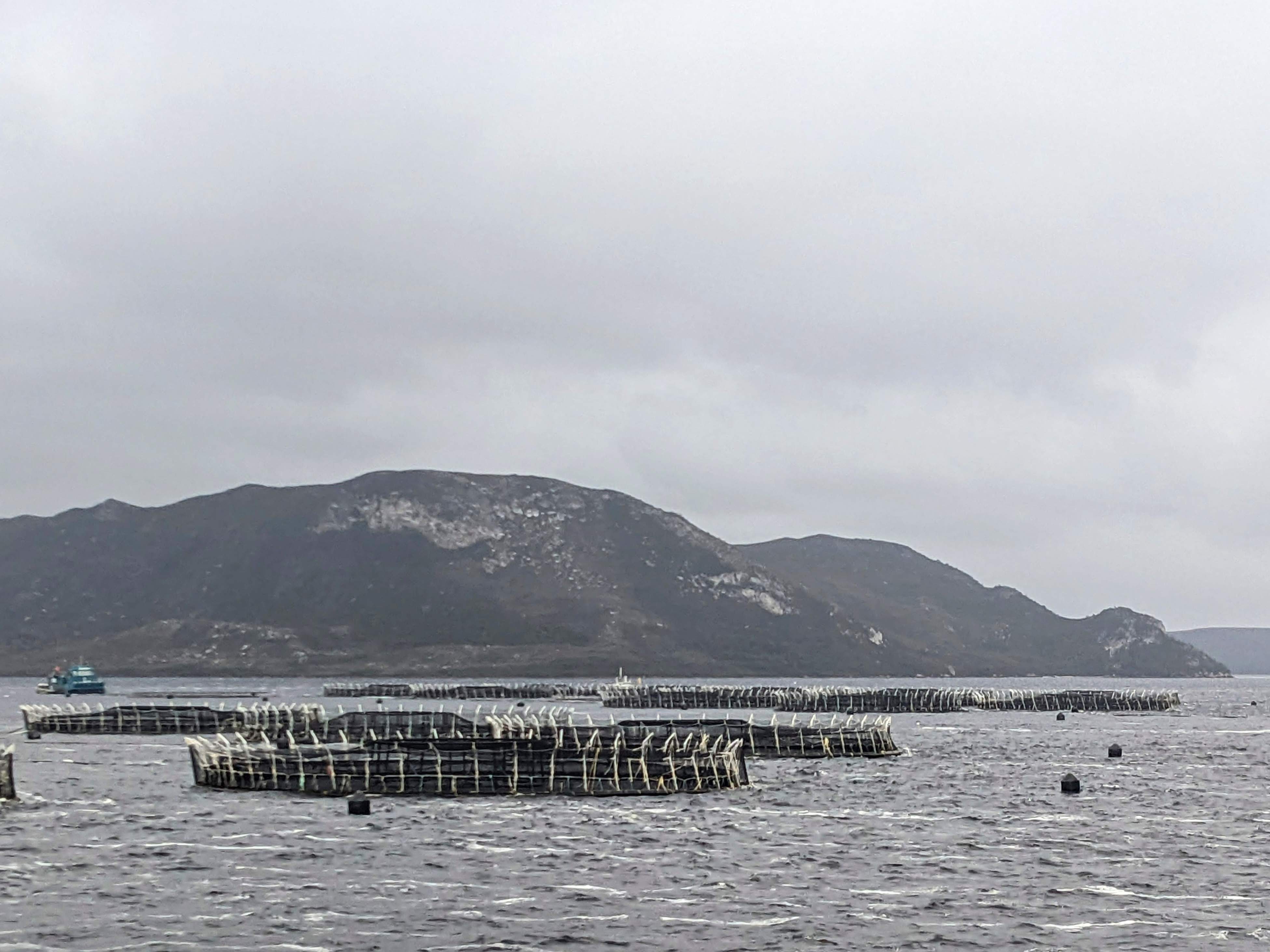
    The Court’s ruling effectively forecloses any future opportunity for salmon farming in open-net pens in the Discovery Islands. The region formerly produced nearly 40% of B.C.’s production of farmed salmon and was valued by industry for its productivity. The same features that made it an exceptional farming area make it an exceptionally important region for tiny wild salmon smolts to feed and grow.

    To stay informed and help drive change on the water, sign up for our newsletter.

  • DFO: Under Investigation

    DFO: Under Investigation

    Fisheries and Oceans Canada (DFO) is being investigated yet again, but this time, it’s personal.

    The Public Sector Integrity Commissioner has decided to launch an investigation into specific personnel at DFO who were allegedly involved in violating the Values and Ethics Code for the Public Sector. The specific complaint, made in a “disclosure” filed by Tony Allard of Wild Salmon Forever, is that staff wrongfully buried science being conducted into the impacts of salmon aquaculture on wild salmon.

    It has long been public knowledge that Dr. Kristi Miller-Saunders was put on a very short leash by her supervisors—told not to speak publicly about her work, to give media interviews about papers she published or even to testify beyond prescribed areas when giving evidence at inquiries. The disclosure makes it clear that far more was going on than has yet been made public.

    Dr. Miller-Saunders heads the molecular genomics lab at the Pacific Biological Station, where her research examines the impacts of salmon farming on wild salmon. It would be safe to say that this is the only place within DFO where any serious attempt is being made to investigate and quantify harm to wild salmon from the salmon aquaculture industry. In the disclosure document, evidence is presented that shows a pattern of suppression of evidence from this lab and attempts to control Dr. Miller-Saunders’ communications.

    As a result of the actions being investigated, ground-breaking research showing the impact of a salmon farm virus on Chinook salmon was kept from publication for over a decade. Successive Ministers of Fisheries were advised that salmon farms posed ‘no more than minimal risk’ to wild salmon and were not the cause of precipitous declines in Pacific salmon populations.

    “It’s unfortunate that an investigation of this sort is required to bring some transparency and accountability to bear on decisions about salmon farming being made by this Department,” said Karen Wristen, SeaChoice Steering Committee member for Living Oceans Society. “But it’s plain that the regulator is captured and that doesn’t happen unless someone’s values and ethics are compromised.”

    SeaChoice’s partner organization, Living Oceans Society, has coordinated a campaign reminding Prime Minister Trudeau that his government needs to fulfill its promise and transition all open-net pen salmon farms out by 2025. 

  • Global groups denounce latest Best Aquaculture Practices salmon farm standard as greenwash

    Global groups denounce latest Best Aquaculture Practices salmon farm standard as greenwash

    Open letter daylights evidence of environmental damage associated with BAP salmon farms

    More than 70 environmental, animal welfare, and community groups from 18 countries have called out the industry trade association, Global Seafood Alliance, for its continued greenwashing of industrial salmon farming with its latest version of the Best Aquaculture Practices certification.

    In an open letter, submitted on the final day of the public consultation for BAP Salmon Farm Standard issue 3.0, groups listed damning evidence of numerous BAP certified farms and facilities associated with environmental damage, illegal activity, and/or negative impacts to endangered species. Examples were found in all major salmon farming regions: the U.S., Norway, Chile, Canada, Scotland, and Australia.

    Groups criticized the new standard for failing to have limits on critical environmental impacts such as sea lice, disease, chemicals, and water quality. Instead, the standard relies on farms meeting their minimal legal obligations and following business as usual practices.

    The open letter follows recent exposés by the Outlaw Ocean Project and Corporate Accountability Lab that uncovered serious allegations of forced labor, child labor, and worker exploitation, as well as environmental damage, associated with BAP-certified facilities in the Indian shrimp supply chain.

    “There is mounting evidence that environmental harms and human rights abuses are occurring despite the ‘responsible seafood’ claims of BAP and other certifications. The new BAP Standard is no exception. Farms in Chile’s marine protected areas will be eligible for certification; so will farms in Canada, Scotland and Norway with sea lice loads that are lethal to juvenile wild salmon; as well as Australian farms that are driving the endangered Maugean skate towards extinction,” said Kelly Roebuck, SeaChoice representative from Living Oceans Society.

    A significant number of major supermarkets – such as global giants Amazon, Walmart and ALDI; Loblaws and Target in North America; Tesco and Sainburys in the UK; and Woolworths and Coles in Australia – defer to the BAP certification as part of the responsible seafood sourcing policies.

    “Major supermarkets must quit relying on these flawed certifications, stop the greenwashing, and do their own environmental and human rights due diligence on their seafood supply chains,” said Dana Cleaveley, SeaChoice Market Analyst.

    Quotes from signatories:

    Karen Wristen, Executive Director, Living Oceans Society (British Columbia, Canada):

    “It is utterly irresponsible that all British Columba salmon farms are BAP certified and sold to unsuspecting shoppers as ‘environmentally responsible’. Claiming ‘best practice’ doesn’t cut it when the practices allowed by certifications are simply farms obeying the law, and industry norms that continue to threaten wild salmon populations.”

    Frederik W. Mowinckel , Co-Founder, SalmonCamera International (Norway)

    In view of the dramatic press reports over the past 6-9 months about animal cruelty, export of sub-standard quality farmed salmon, untreated pollution and much more, it is a mystery to me how any of the salmon farmers in Norway can be approved by any serious institution.  Unfortunately, the Norwegian Government has pretty much lost control of the industry and the result is a ‘catch me if you can’ attitude among most of the salmon farmers.  It is time the certification companies take a much closer look at what they recommend us consumers to safely eat.  The current control regime is completely unacceptable and full of loopholes.

    Bonny Glambeck, Campaigns Director, Clayoquot Action (British Columbia, Canada):

    “Given the number of sea mammal deaths, pesticide dumping, sea lice, and deadly pathogens, it is shocking that salmon farms in the Clayoquot Sound UNESCO Biosphere Reserve could receive any type of eco-certification.”

    Matthew Abbott, Marine Program Director and Fundy Baykeeper, Conservation Council of New Brunswick (Atlantic Canada):

    “BAP markets its certification as promoting safe and responsible seafood practices, but BAP-certified companies in New Brunswick have been caught using pesticides illegally, even killing commercially caught lobsters. These reckless practices threaten sensitive marine ecosystems and economically and socially important fisheries. If companies with records of proven negligence can get certified by BAP, what is the point of this program?”

    Andrew Clarke, Conservation Campaign Director, Atlantic Salmon Federation (Atlantic Canada):

    “The BAP standard has not done anything to protect wild Atlantic salmon and other wildlife from salmon farms in Atlantic Canada. Entire populations of wild Atlantic salmon are being lost and the cause is aquaculture. The licensing and regulatory requirements established by provincial governments in Atlantic Canada are proven to be inadequate, and that is as high as the BAP salmon farm standard reaches.”

    Allie Brudney, Senior Staff Attorney, Corporate Accountability Lab (USA):

    “Across industries and countries, certification schemes have been shown to fail – to fail workers, local communities, and the environment. In CAL’s recent report, Hidden Harvest: Human Rights and Environmental Abuses in India’s Shrimp Industry, we documented evidence of labor exploitation, including forced labor, and environmental harm at and resulting from BAP-certified facilities. Certification schemes like BAP have become a shield for companies to hide behind. Buyers must stop treating flawed certification schemes as if participation in such schemes constitutes due diligence, and should instead work with independent worker organizations to improve conditions.”

    Rachel Mulrenan, Scotland Director, WildFish (UK):

    “Years of involvement by certification bodies such as BAP, RSPCA Assured and ASC has not translated into any meaningful improvements in the environmental and welfare performance of open-net salmon farms across the globe. If they are to be credible, certification schemes need to have stringent requirements, which are robustly enforced. Unfortunately, research conducted by WildFish, Living Oceans, SeaChoice and others shows that this is currently not the case. If these schemes aren’t going to properly hold the industry to account, then their existence risks being little more than a greenwashing operation, which misleads consumers and obscures the true cost of this inherently unsustainable industry.”

    Amelia Cookson, Industrial Aquaculture Campaigner, Feedback (UK):

    “Time and time again certification schemes prove themselves to be vehicles for greenwashing. Our research shows that the production of fish oil for the Norwegian aquaculture industry is fuelling food insecurity and loss of livelihoods throughout West Africa. In spite of this, BAP continues to certify companies, such as Norway’s Skretting, that source fish oil from the region. Since when did driving food insecurity become a marker of sustainability?”

    James Watts, Save the Skate Campaigner, Environment Tasmania (Australia):

    “We call on Australia’s supermarkets to stop using BAP and GLOBALGAP certifications to justify selling Macquarie Harbour salmon. The evidence is clear that Macquarie Harbour salmon farms are the primary threat to the survival of the endangered Maugean skate according to independent scientific advice provided to the Australian Government. BAP has lost all credibility by choosing to ignore the evidence and endorse extinction.”

    Jess Coughlan, Campaigner, Neighbours of Fish Farming (Australia):

    “There’s nothing sustainable about extinction. BAP certification is running protection for a salmon industry driving a 60-million-year-old animal, Maugean skate, towards extinction in its only natural habitat, Tasmania. Such deceptive certification defrauds consumers attempting to make ethical choices when purchasing seafood.”

    Read the full press release and open letter.

    Help drive change on the water by signing up for our newsletter.

  • The true cost of shrimp

    The true cost of shrimp

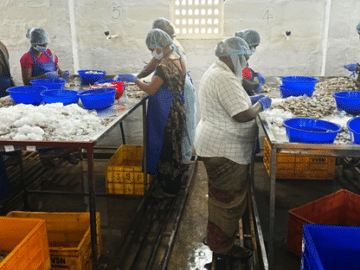
    The number one importer of farmed shrimp to the Canadian marketplace is India. This product is the latest connected with human rights and environmental abuses as part of a series of investigations that have exposed the global seafood supply chains’ failure to safeguard people and our planet.

    Investigations by the Outlaw Ocean Project and Corporate Accountability Lab (CAL) uncover serious allegations of forced labor, child labor, worker exploitation and dangerous working conditions in the Indian shrimp supply chain – from hatcheries and shrimp farms to processing plants. CAL’s report, Hidden Harvest: Human Rights and Environmental Abuses in India’s Shrimp Industry emphasizes that such abuses are a common occurrence in the Indian shrimp sector, driven by cost-cutting pressure to meet the global demand for cheap shrimp.

    The investigations point to the failures of governments (the Indian government and those who import the product) to enforce human rights and environmental laws, allowing abuses in the shrimp industry to flourish.

    The report also details how hatcheries and farms release contaminated waste into local waterways. Groundwater and drinking water of nearby communities, agricultural lands and fishing waters are polluted by the effluent. Sensitive coastal habitats, including mangroves, are destroyed to build shrimp hatcheries and farms.

    The report additionally points to illegal antibiotic use, as well as an over-reliance on antibiotics recognized as “highly important” to human health by the World Health Organization. Lack of government regulation, oversight and enforcement are also recurrent concerns in India’s farmed shrimp industry. Irresponsible use of antibiotics in aquaculture (and other livestock farming) can contribute to the looming global threat of antimicrobial resistance – where bacteria and viruses become resistant to drug treatments.

    The Outlaw Ocean investigation published evidence that antibiotic-positive farmed shrimp was shipped to the United States despite the Food and Drug Administration prohibiting antibiotics in shrimp. Canada also prohibits the import of shrimp containing antibiotics; however, only five percent of imports are tested by the Canadian Food Inspection Agency. In comparison, the European Union tests 50 percent of imported shrimp.

    Outlaw Ocean and CAL also point the finger at seafood certifications for reassuring customers with claims of responsibly produced seafood when in reality they “function as little more than marketing ploys that fail to protect workers of the environment”. For example, the industry-established and dominant certification, Best Aquaculture Practices, was found to exclude crucial stages of the supply chain from compliance, masking stages of production at high risk of labor abuses and forced labor. Evidence showed audits were often compromised, resulting in missed or ignored violations. The Aquaculture Stewardship Council was also called out for its auditing practices.

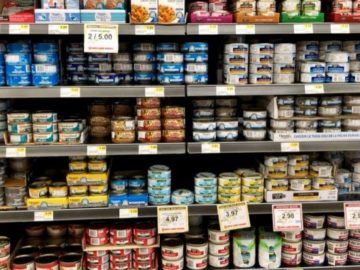
    Major grocers rely on certifications as part of their sustainable seafood policies. However, growing evidence (including SeaChoice’s own work) shows these schemes are not fit for purpose. CAL’s report recommends grocers utilize their significant power to transform the Indian shrimp sector by prioritizing human rights and sustainability practices across the supply chain. They call on significant buyers such as Walmart to change their procurement practices.

    With seafood certifications increasingly exposed for greenwashing and ‘fair-washing’, grocers and seafood companies must go beyond certification and implement due diligence with respect to human rights and sustainability throughout their supply chains.

    To ensure companies do take action to protect human rights and the environment, governments need to establish legislation that mandates preventative and remedial action in relation to adverse impacts within their supply chain. The European Parliament is expected to adopt such legislation soon. We need Canada to follow suit.

    To stay informed on this topic and more, join our community.

  • How committed are grocers to selling responsibly sourced seafood?

    How committed are grocers to selling responsibly sourced seafood?

    Far less than you’d hope. 

    While most major grocers have public commitments to sell seafood that meets their sustainable sourcing policies, the devil is in the details. 

    To start, not all the seafood you come across when shopping meets your grocer’s sustainable sourcing policy. There are three categories of seafood that grocers sell:

    1. Private label. Grocery store brands, or “private label” brands, are owned and controlled by grocers. For example, Loblaw’s President’s Choice, Sobeys’ Compliments, Costco’s Kirkland Signature and Walmart’s Great Value. 
    2. Unbranded. Typically fresh, and sometimes frozen, these products are sold without any branding on the packaging (except perhaps for the logo of the store on the price label). Examples of “no brand” or “unbranded” products would be seafood you buy from your grocer’s fresh counter, such as plastic-wrapped fillets on a styrofoam tray.
    3. National brand. Seafood company brands, or “national brands”, are third party brands sold by grocers but owned by companies that sell products across a range of businesses. For example, High Liner, Clover Leaf, Oceans, True North and many more

    Grocers have far more control and decision-making power over their private label products and the unbranded products they sell because they work directly with suppliers to purchase these products. For important or high risk products, the grocer’s involvement in the supply chain may start at the landing dock or fish farm.

    The supply chains of national brand products, on the other hand, are managed by the seafood companies that own them. Although grocers have less control over where these products come from or how they are produced, as major buyers, they do have a lot of influence. They just aren’t using it. 

    2023 Seafood Progress results indicate that more than half of the major grocers profiled – including Sobeys and global giant Costcostill do not require the large volume of national brand seafood products they sell to meet their sustainable seafood policies. 

    Information derived from 2023 Seafood Progress profiles

    In addition to major categories of seafood being exempt from many grocers’ sustainable seafood policies, the policies themselves are problematic in that most are based on the goal to source seafood that is certified “sustainable.” Two major seafood eco-certifications are the Marine Stewardship Council (MSC) and the Aquaculture Stewardship Council (ASC). While these certifications have historically represented the highest bars for sustainable wild and farmed seafood, mounting evidence reveals critical limitations to both the MSC’s and ASC’s respective standards. 

    A recent expose by Outlaw Ocean provides compelling evidence that, in addition to timelines for implementation being continuously delayed and lacking third party oversight and verification, the MSC certification neglects to address human rights issues in seafood supply chains. In fact, the report claims that all plants found to be using forced labor from Xinjiang and half the plants found to be violating U.N. sanctions by using North Korean labor were certified by the MSC, and that much of the seafood processed in these plants is sent to America. 

    Unlike their sustainable sourcing policies, all major grocers have human rights policies that apply to all of the seafood that they sell. These policies outline their expectations of suppliers to provide products that were produced in ways that do not violate human rights. 

    Most grocers and brands require their suppliers to undertake third-party social audits as a means of verifying compliance against their human rights policies. However, this method of verification is proven unreliable in detecting forced labor when processing facilities are subject to self assessments where information can easily be withheld, inspections are scheduled in advance and employees are afraid to speak candidly during interviews. The report claims that as a result of these failures, “thousands of tons of seafood imported from factories using forced labor continue to enter the U.S.”

    In other words, grocers are not walking the talk on human rights, either.

    While Outlaw Ocean’s latest report focuses on seafood harvested and produced in China given its global significance, it’s important to note that accounts of human rights abuses continue to be reported on in the European Union and throughout international supply chains.

    Grocers have a responsibility to leverage their powerful position in the seafood chain to improve global fishing and farming practices and conditions. This starts with taking ownership of all the seafood products they sell and adopting a due diligence approach to investigating their supply chains, which includes going beyond certifications. 

    Stay informed and continue to drive Seafood Progress with us by signing up for our newsletter

  • Farmed salmon certifications confirm their complicity while supermarkets continue to profit from extinction

    Farmed salmon certifications confirm their complicity while supermarkets continue to profit from extinction

    ➔ Eco-certifications BAP and GLOBAL.G.A.P. have dismissed formal complaints by conservation groups asking them to stop endorsing Macquarie Harbour salmon farms that are having a “catastrophic” impact on the endangered Maugean Skate.

    ➔ Coles, Woolworths and Aldi use these certifications as a shield to deflect criticism and to market Macquarie Harbour salmon to shoppers as ‘responsible’ and ‘sustainable’.

    ➔ Right now is harvest season for Macquarie Harbour salmon, however, shoppers are unable to tell which salmon in store is from the Harbour. This means supermarkets are profiting from the greenwashing of extinction while shoppers are in the dark.

    ➔ The dismissals add further weight to the ACCC complaint submitted by environmental groups in December accusing supermarkets and certifications of greenwashing Macquarie Harbour salmon.

    ➔ Pressure is building from shoppers and shareholders for major supermarkets to save the skate and stop selling Macquarie Harbour salmon.

    Lutruwita/Tasmania: In letters to conservation groups, eco-certifications – Best Aquaculture Practices (BAP) and GLOBALG.A.P. – have refused to revoke their endorsements of Macquarie Harbour salmon farms despite these farms threatening the survival of the endangered Maugean skate.

    Certification watchdog SeaChoice and allies the Australian Marine Conservation Society, Bob Brown Foundation, Ekō, and Neighbours of Fish Farming submitted formal complaints to the certifications following the publication of the Australian Government’s Conservation Advice, in September 2023, that asserts reduced water quality due to salmon farming operations in Macquarie Harbour is a “very high risk” threat that is “almost certain to impact the Maugean skate throughout the entire harbour” with “catastrophic” consequences.

    The complaints detail how the certifications are not fit for purpose for Macquarie Harbour’s unique ecosystem. BAP and GLOBALG.A.P. have no dissolved oxygen compliance limits and no requirements to measure oxygen levels in the mid or bottom waters of the harbour where water quality impacts are occurring in the skate’s habitat. As a consequence, critical impacts are not detected or penalized.

    The dismissals argue that farm compliance with legal obligations is sufficient to be certified. This is contrary to the role of eco-certifications which should be to go above and beyond mere legal obligations.

    BAP and GLOBALG.A.P.’s unwillingness to revoke Macquarie Harbour certificates adds further weight to a greenwashing complaint lodged with the Australian Consumer and Competition Commission (ACCC) by the Environmental Defenders Office on behalf of groups in December 2023. Both certifications are

    implicated within the complaint, alongside Aldi, Coles and Woolworths’ who label all Tasmanian salmon including that sourced from Macquarie Harbour as ‘responsibly sourced’.

    To date, more than 80 conservation, animal welfare, and shark groups from around the world called for BAP and GLOBALG.A.P. to revoke their certificates from Macquarie Harbour farms. Around 57,000 shoppers have petitioned Aldi, Coles, and Woolworths to stop selling salmon from the harbour. Last month, a first of its kind shareholder activism campaign to save the skate was launched targeting Coles and Woolworths.

    Quotes:

    Dr. Kilian Stehfest, SeaChoice representative from David Suzuki Foundation, said:

    “BAP and GLOBALG.A.P. are turning a blind eye to an extinction emergency. No compliance limits for oxygen levels are required by certified farms. Instead, they defer to local Licence Conditions that have been found to be inadequate by two independent reviews. As a result, critical environmental impacts– namely low oxygen levels in the skate’s habitat – go undetected and unpenalized by these certifications. Credible certifications are meant to reduce the environmental impact of aquaculture, not ignore impacts.”

    Kelly Roebuck, SeaChoice representative from Living Oceans Society, said:

    “The dismissal of the complaint by BAP and GLOBALG.A.P. confirms there is no salmon they will refuse to certify – even those driving an ancient relic to extinction. Supermarkets should immediately stop hiding behind these misleading certifications under their so-called seafood sustainability commitments and exercise due diligence by ceasing procurement of Macquarie Harbour salmon.”

    Adrian Meder, Sustainable Seafood Program Manager at the Australian Marine Conservation Society, said:

    “The Australian Marine Conservation Society has produced the GoodFish Sustainable Seafood Guide for Australians for 20 years. Any seafood production – like Macquarie Harbour fish farming – that poses an extinction threat to an endangered species is rightfully on the GoodFish Guide’s ‘say no’ red list. Australian seafood consumers value what sustainability means, and they deserve certifications they can trust to choose seafood without risking a side serve of extinction. To gain that trust, and to serve as meaningful labels to consumers looking for real sustainability, these certifications must show they stand for more than merely rubber stamping a minimum environmental performance required of farms by law.”

    Alistair Allan, Marine Campaigner at the Bob Brown Foundation, said:

    “These certifications are established by industry, for industry. They exist in a feeble attempt to maintain social license for the hugely damaging factory farming of salmon. Salmon companies hire and pay for auditors to certify them. No audit reports of certified farms are published. And as we found out, complaint investigations involve the certifications and/or auditors investigating themselves. It’s a classic case of the fox guarding the hen house.

    Nish Humphreys, Senior Campaigner at EKŌ, said:

    “These certifications are failing to do their job and as a result Australia’s living dinosaur, the skate, could go extinct. The big supermarkets selling salmon from Macquarie Harbour are misleading shoppers by slapping responsibly sourced labels on and making a profit. But now, more than 56,000 shoppers are calling on the supermarkets to save the skate and are ready to take further action.”

    Jessica Coughlan, campaigner at Neighbours of Fish Farming, said:

    “The RSPCA and the Aquaculture Stewardship Council stopped endorsing Macquarie Harbour fish farms due to impacts a long time ago. The fact that Global G.A.P and BAP continue to endorse Macquarie Harbour farms contributing to extinction is greenwashing at best, and complicit in the loss of a species at worst. Their dismissal of the scientific evidence underscores the need for the ACCC to conduct an immediate investigation into the greenwashing of Macquarie Harbour salmon by certifications and supermarkets.”

  • Facing the red flag: The imperative of Atlantic mackerel recovery

    Facing the red flag: The imperative of Atlantic mackerel recovery

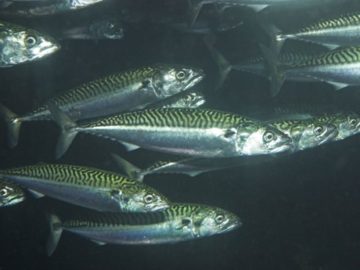
    With over a decade of overfishing and mismanagement, it is no surprise that Canadian Atlantic mackerel remains ranked as “red”, meaning shoppers should “avoid” buying the product, according to Monterey Bay Aquarium Seafood Watch program in their recommendations. 

    Justification by Seafood Watch focuses on the dire status of the species stating “the 2023 Canadian stock assessment shows the stock to be in the Critical Zone. Because the Atlantic mackerel stock is currently overfished, abundance is deemed a high concern”, as well as uncertainty for rebuilding, and its important role in the ocean ecosystem. 

    This updated assessment comes at a time when the Minister of Fisheries and Oceans is deciding on the management of this fishery for the 2024 season. In 2022, the dire state of mackerel led the government to close the commercial and bait fishery, but will the closure remain this year and will the government take the necessary steps to implement a robust rebuilding plan for the survival of this crucial forage fish? 

    SeaChoice partner The Ecology Action Centre, who sits on the Atlantic Mackerel Advisory Committee and the Rebuilding Working Group has been advocating for a sustained closure of this fishery until the stock shows strong signs of recovery. 

    If the government decides to re-open the fishery too soon, the chances of mackerel ever rebuilding are slim to none. 

    An ocean without mackerel, one of the key forage species in the Atlantic, would have dire effects on the ecosystem and people. Many marine animals, including the endangered porbeagle and shortfin mako sharks, marlins, seabirds, porpoises and whales, hunt the energy rich mackerel. Indigenous peoples have fished the abundant mackerel for millennia in this region and continue to do so for food, cultural, and economic value. The commercial lobster fishery, which is the economic backbone of many of our coastal communities, has relied heavily on mackerel for bait. It remains one of the last marine fish that everyone in Atlantic Canada can access for food and recreation – a strong Maritime tradition and a favorite pastime of newcomers. Mackerel connects everyday people to marine ecosystems.

    The Department of Fisheries and Oceans is in the final stages of publishing a revised rebuilding plan, which will outline steps to take to rebuild the stock. The Ecology Action Centre has been a prominent voice in the development of this plan and continues to communicate the importance of implementation for the government to fulfill its obligations under the Fisheries Act.

    SeaChoice understands that while difficult for fisheries now, full implementation of the mackerel rebuilding plan will ensure the mackerel population can rebuild to support a commercial fishery again one day and healthy, balanced marine ecosystems. Science tells us that the Atlantic mackerel does have a chance to rebuild within a decade, but only if we take necessary and bold action now. 

    To follow our work and learn more sign up for our newsletter!

  • Shareholder activism X Sustainable seafood

    Shareholder activism X Sustainable seafood

    In a global first, a shareholder activism campaign targeting farmed salmon was launched this month in Australia. It’s a groundbreaking move that has the potential to shake up the sustainable seafood realm, worldwide, where the majority of efforts to date have centered around market-based incentives and large financial investors. 

    The Save the Skate campaign is aimed at Australia’s two largest supermarkets, Coles and Woolworths, calling on them to stop procuring farmed salmon from Macquarie Harbour farms that are considered a “catastrophic” threat to the endangered Maugean Skate. 

    Individual investors, unless they’re billionaires, typically lack influence over companies and their boards. But working together, small shareholders can have a big influence over the social and environmental practices of companies. SIX (Sustainable Investment Exchange) will rally more than 100 shareholders to drive forward the proposals, corporate engagement, and necessary interventions to achieve a positive outcome for the skate.

    Shareholder activism is a strategy of strength in numbers – and it works. 

    Need convincing? SIX lists some examples where shareholder activism has achieved big results:

    “In the last year Apple has agreed to report on union rights and Visa has promised to provide more details about its gender and racial pay disparities. A few years ago activist fund manager Engine no.1 installed 3 new board directors at Exxon despite holding only 0.02% of the company shares. Tulipshare was able to get a 44% vote for a resolution supporting factory worker rights at Amazon, even though its supporting shareholders held just $42,000 of shares in the USD$1.6 Trillion company.”

    The number of environmental, social, and corporate governance (ESG) shareholder activism campaigns have been on the rise in recent years. Most have centered around climate action and human rights. Some activism has begun around ocean plastic commitments, and past wins include Starbucks and McDonalds phasing out plastic straws. 

    But shareholder activism in the sustainable seafood space is new – and long overdue. 

    Back in 2022, Loblaw faced pressure from shareholders to publish supply chain audit records in light of concerns the company could be importing textile products with ties to Uyghur forced labor. While the motion did not pass, activist shareholders vowed to refile if the company and board failed to take appropriate action. 

    Late last year, Outlaw Ocean exposed a number of grocers (including Loblaw) and seafood brands with ties to Uyghur forced labor in Chinese seafood processing plants. Whether stakeholder activists in the publicly traded companies take up the cause remains to be seen.

    Fortunately, with the launch of the Save the Skate shareholder campaign, we are hopeful that a wave of similar actions to do with sustainable and socially responsible seafood will begin worldwide.

    The Save the Skate campaign is the first shareholder activism campaign to hold major companies to account for unsustainable seafood procurement. It is also likely the first shareholder activism centered around a species extinction emergency. Significantly, eco-certifications are also implicated within the campaign, as supermarkets rely on flawed farmed salmon certifications to sell Macquarie Harbour salmon as “responsible” to shoppers

    As part of our watchdogging of global farmed salmon certifications, SeaChoice member group Living Oceans has been leading the call for the BAP and GLOBALG.A.P. certifications to drop their endorsement of Macquarie Harbour farmed salmon. Living Oceans is also one of the collaborators of the SIX campaign. 
    Stay tuned to see what waves will be made in the shareholder activism X sustainable seafood space by subscribing to the SeaChoice newsletter.

  • New MSC standard delayed

    New MSC standard delayed

    Conservation groups disappointed at two year delay for new Fisheries Sustainability Standard

    Make Stewardship Count, a coalition of more than 90 global marine conservation organizations, experts and academics, is incredibly disappointed by a recent decision by the Marine Stewardship Council (MSC) to delay full implementation of a new Fishery Standard that would raise the bar for sustainable fisheries.

    On January 31, MSC announced that it was allowing fisheries an additional two years to implement the revised standard, known as “version 3.0.” Fisheries that are new to the program will now have until 2026 to implement version 3.0, while currently certified fisheries will have until 2030.

    MSC’s Fisheries Standard provides a framework to assess the environmental impacts and effective management of fisheries. Fisheries adhering to the standard’s sustainability criteria are allowed to display the MSC “blue fish tick” ecolabel on their products. At present, more than 20,000 products globally display this ecolabel.

    “This delay is a massive step backward both for protecting endangered species and ensuring good governance in fisheries,” said Kate O’Connell, senior policy consultant for the Marine Life Program at the Animal Welfare Institute. “We fear that the council, which claims to operate the world’s leading ecolabel for wild-caught seafood, is caving to industry pressure instead of making substantive changes that are critically needed to ensure its stated goal of ‘oceans teeming with life.”

    MSC’s decision comes nearly a year after the council began implementing the revised standard and follows several years of hard work by the council, fishing industry representatives, and conservation groups to create a stronger standard for fisheries. MSC also announced recently that it would conduct an independent review of its Evidence Requirements Framework (ERF), a method meant to ensure that accurate information is being used to assess fisheries, to see if it could be implemented in a way that limits complexity and cost. Make Stewardship Count is concerned about the transparency of this ERF process.

    “After wide-ranging improvements to MSC’s standard were weakened during the review process, the current standard represents what is minimally acceptable to have healthy oceans and fisheries,” said Shannon Arnold, associate director of marine programs at the Ecology Action Centre. “Even so, MSC seems more interested in keeping fisheries in its program and generating profits than upholding its mission.”

    Initially, MSC’s standard review process provided a historic opportunity for it to drive real changes in global fishery management over the next decade. In releasing the revised standard in October of 2022, the council declared that it had followed the “most comprehensive review of the MSC Fisheries Standard ever undertaken” in its 25-year history.

    However, it soon became apparent to the Make Stewardship Count coalition that the MSC label would continue to be awarded to fisheries that routinely catch vulnerable nontarget animals, waste excessive amounts of sea life, damage ecosystems, and target overfished species. Throughout the process, fishery representatives balked at having to provide better information about what they are pulling out of the water, how they are fishing, and the associated impacts on endangered species and the environment.

    “If MSC further weakens its ecolabel requirements, then it is simply certifying the status quo and not advancing any real changes or rewarding those fisheries that have made strides in reducing their environmental impact,” said Dr. Iris Ziegler, head of international cooperation at SHARKPROJECT International. “MSC is failing to act as a driver for improvements on the water, and this delay will only exacerbate the situation for endangered, threatened and protected marine species, particularly sharks.”

    “With this latest move, MSC continues to lose credibility as a global leader of truly sustainable fishing,” said Dr. Cat Dorey, independent fisheries advisor. “The initial timelines provided to fisheries to implement this updated standard were generous and provided ample time to make the necessary changes. Consumers are increasingly aware of sustainability claims, and MSC is running the risk of losing its market power.”