Category: Campaigns

  • Seafood Progress across Canadian supermarkets

    Seafood Progress across Canadian supermarkets

    From direct retail partnerships to Canada’s seafood watchdog

    It has been one year since SeaChoice announced we would be moving away from direct retail partnerships and pivoting to hold more of a ‘watchdog’ role with regard to sustainable seafood in Canada. In the year since, we have worked hard on behalf of Canadians to find solutions to the challenges facing our Priority Species, to ensure eco-certifications remain credible, and to improve seafood labelling and traceability. Notably, we also launched Seafood Progress, an online resource that assesses and reports on Canada’s nine largest retailers’ sustainable seafood commitments and their procurement against those commitments. This initiative was born from our recognition that continuing to increase the sustainability of seafood in Canada requires the aggregation of retailer leverage across Canada.

    Seafood Progress is taking a unique approach to improving transparency and accountability of seafood businesses in Canada. Although there are many initiatives right now that aim to increase transparency and improve business practices, Seafood Progress is the only one (that we know about) that looks at all aspects of a retailers’ seafood sustainability policy. This really stood out for the SeaChoice team when we presented Seafood Progress at the SeaWeb Seafood Summit in Barcelona this past June.

    Seafood Progress assesses each retailer’s seafood policy and procurement against 22 key performance indicators derived from the Conservation Alliance for Seafood Solutions’ Common Vision for Sustainable Seafood. Both consumers and retailers can use Seafood Progress to influence sustainable seafood consumption in Canada.

    Consumers can use Seafood Progress to find useful information about the stores where they buy their seafood. For example, you can easily find out what environmental aims a retailer is committed to, what it is doing to tackle the risk of human rights violations in its supply chain, which eco-labels or rankings it uses in its procurement decisions, and what actions it is taking to improve its seafood sourcing. Some of this information will already have been publicly available somewhere online, but Seafood Progress makes it easier to find by bringing it all together in one place. However, the majority of retailers also provided SeaChoice with additional information that had not been publicly released.

    Retailers can use the resource to see where they are performing above the national average and where they should improve to meet or beat the current “best practices”. Ultimately, Seafood Progress is trying to bring about positive changes and improvements. SeaChoice will use the profiles to develop tailored recommendations for how each retailer can improve its policies, focusing on resources that are already out there and ready to be used, as well as identifying areas where retailers may benefit from coordination and collaboration.

    For example, many of the retailers that SeaChoice met with to discuss their profiles mentioned they struggled to find consistent sources of certified sustainable products because they lack the market leverage to drive change at the global level.  From this we consider there could be mutual benefits for retailers to engage in some pre-competitive collaboration; initiatives that would pool their market share to help bring about the changes that they all want to see.

    So help us celebrate our anniversary of change! Go to your retailer’s profile now and see what it is doing – and what it isn’t doing – to support sustainable seafood.

  • The B.C. Government’s fish farm announcement

    The B.C. Government’s fish farm announcement

    The B.C. Government has taken a significant step forward in defending wild salmon against open-net pen salmon farms, but the four-year timeline is too long.

    Last week’s policy announcement by the B.C. Government is a significant step forward in defending wild salmon against the array of threats posed by open net-pen salmon farms. The policy also represents a positive step towards reconciliation with First Nations, requiring as it does the consent of First Nations to farms within their territories.

    More troubling is the timeline associated with the policy: it does not take effect until 2022, and then only for new and renewing tenures—meaning it applies to less than half of the current farm tenures. The remaining tenures extend from 2023-2046. The four-year timeline is too long: B.C.’s wild stocks are in crisis, with severe run failures and unprecedented fishery closures. Another four years means virtually every  salmon run south of the central coast will be subjected to more parasitic lice, disease and predation from farms.

    Some farms may be removed earlier than 2022. Government-to-government negotiations are continuing between the Province and Broughton-area First Nations about 17 farms in their territories that are now operating on month-to-month tenures, pending the outcome of those negotiations. These Nations have been clear in their opposition to open net-pen fish farms. We commend all parties for engaging in this important process and look forward to the outcomes.

    It will be up to the federal government to determine how many farms are actually removed from the water by 2022. By that date, about 95 of the federal operating licences will be up for renewal and the Department of Fisheries and Oceans should make a determination as to the potential for harm to wild salmon when they consider renewal. To date, DFO and the federal government have shown no leadership on protecting wild salmon from viruses, parasites, predation, and other threats posed by the fish farms. Concerns raised by the Auditor General and the Cohen Commission of Inquiry, about DFO’s management of the industry, have not been addressed.

    The Provincial government’s announcement is a significant step forward for British Columbia and the wild salmon that are the heart and soul of our province. But urgent action is still required from the provincial and federal governments to protect wild salmon and all who depend on them.

    For more information:
    Living Oceans Society (SeaChoice partner organization), Georgia Strait Alliance and Watershed Watch respond to Province’s fish farm announcement
    The David Suzuki Foundation (SeaChoice partner organization) responds to Province’s fish farm announcement
    SeaChoice priority species profile for B.C. farmed Atlantic salmon


  • Making Stewardship Count in Brussels

    Making Stewardship Count in Brussels

    Last week SeaChoice attended The Brussels Seafood Show – the largest annual fishing industry trade event with producers, processors, buyers, and national agencies represented from all over the world. We were there to host and participate in discussions and workshops around credible eco-certifications for fisheries.

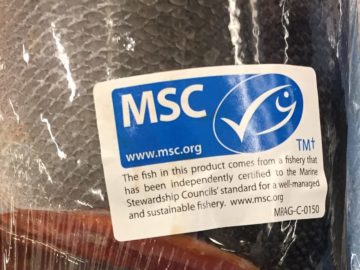
    SeaChoice is a leading stakeholder in Canadian seafood certifications by the Marine Stewardship Council (MSC), the most prominent global certification program for wild fisheries. In September 2017, SeaChoice released the first review of all Canadian MSC certifications – and found that certifications have led to little change to fishery practices on the water to directly improve their impacts on habitat, non-target species and ecosystem function. We have taken our concerns into a global conversation among organizations and marine experts to ensure the credibility of the certification scheme remains high. We are among over 75 organizations and experts that are part of Make Stewardship Count – a coalition working for significant and swift improvements to MSC, an important tool in the work to ensure global fishery impacts are limited and sustainable into the future.

    It was our participation in Make Stewardship Count that brought us to Brussels, at which we participated in a forum focused on improving MSC implementation of “Principle 2” of the MSC Certification Standard and Certification Requirements – bycatch and retained species, habitat, and ecological impact. NGOs and academics with years of marine conservation and seafood certification expertise in addition to years of stakeholder participation in the MSC program have identified a set of clear asks of MSC – designed to ensure MSC fisheries properly protect habitats and marine species not considered as “target species.

    As stakeholders in MSC certification processes, SeaChoice member organizations will continue to engage and encourage these improvements, both at a fishery level and with the standards themselves.

  • Declaration in Defence of Wild Salmon

    Declaration in Defence of Wild Salmon

    Declaration asks British Columbians to support removal of open net-pen fish farms to shield wild salmon from the spread of farm-related pollution and diseases.

    Today in Vancouver, a diverse group of B.C. community, Indigenous, and business leaders announced the launch of the “Declaration in Defence of Wild Salmon”.  The declaration seeks to draw together the growing number of voices calling on the B.C. government to take action on salmon farming by refusing to renew fish farm leases when they expire this June.

    The declaration describes B.C. wild salmon stocks as a “public treasure”, and points to disease and pollution from open-net fish farms as a reversible threat to their survival. The declaration’s proponents are calling for its immediate implementation in the Broughton Archipelago, where leases are expiring in the traditional territories of First Nations who have resisted salmon farming for decades.

    The group is calling on more British Columbians from all walks of life to sign the declaration today. Time is running out to show the Provincial government the strength of support for transitioning open net-pen salmon farms to land. The declaration is found at www.safesalmon.ca, a website hosted by SeaChoice partner organization Living Oceans Society, Watershed Watch Salmon Society and Georgia Strait Alliance. SeaChoice partner organization David Suzuki Foundation is among the 27 groups and prominent individuals that have launched the declaration.

    Visit our priority species profile to learn more about the sustainability challenges and solutions with open-net pen salmon farming in B.C.

  • SeaChoice reports on Seafood Expo North America 2018

    SeaChoice reports on Seafood Expo North America 2018

    Increasing traceability and transparency in seafood sales and trade were key issues at SENA

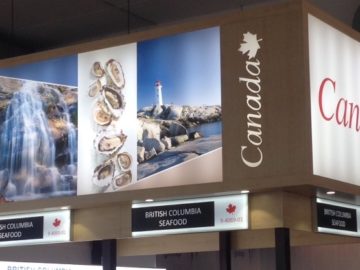
    Three SeaChoice representatives attended this year’s Seafood Expo North America (SENA) in Boston, along with thousands of seafood producers, processors, distributors, marketers, and conservation organizations. With companies from 57 different countries, walking around the expo floor was like a world tour of seafood, highlighting how global (and globally traded) these products are. Canada, whose seafood exports rose 5% last year to reach $6.9 billion (DFO News release), was well represented with exhibitors from British Columbia, Alberta, Manitoba, Ontario, Quebec, Newfoundland, Prince Edward Island, Nova Scotia, and New Brunswick. For more information on the sustainability of Canada’s seafood trade, click here.

    Boston Seafood Show 2018
    Boston Seafood Show 2018

    Growing along with the continual increase in global seafood trade is the development of new tools and technologies to increase the traceability of seafood – ways to track products as they make their way from the harvesters to the end consumer. From conference sessions on best practices to avoid seafood fraud to new toolkits for the seafood industry, it was clear that traceability is increasingly recognized as a necessary component of sustainable seafood.

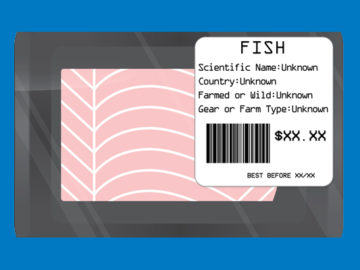
    Traceability is also necessary so that seafood can be labelled accurately with the information consumers need to help them make sustainable choices. However, in Canada, the legal requirements for seafood labelling are some of the lowest in the developed world, with only a common name required for seafood that is produced in Canada, and common name and ‘country of last major transformation’ for imported seafood. SeaChoice is working to raise this bar.

  • Washington State to end Atlantic salmon farming

    Washington State to end Atlantic salmon farming

    Washington State has taken a precautionary approach to protecting wild salmon.

    Governor Inslee has signed into law a bill to phase out Atlantic salmon farming from Washington State waters. Farms will cease operations at the conclusion of their current leases. The phase out will be complete by 2022.

    The potential risk farmed Atlantic salmon pose to declining wild salmon populations was the key reason for the historic move. It also follows after a major fish farm collapse last year, which saw around 250,000 fish escape into the Salish Sea.

    Open-net pen salmon farms situated along wild salmon migration routes can pose threats such as sea lice and disease transfer. Thirteen Pacific wild salmon populations are currently listed by COSEWIC as Endangered or Threatened. A number of these migrate in both Washington and B.C waters.

    It remains to be seen whether the B.C. government will follow Washington State’s precautionary lead. Numerous B.C. salmon farm tenures are up for renewal this June – many of which are in unceded First Nations territories that have actively opposed open-net salmon farming for decades.

    Read more in the press release issued by SeaChoice partner organization Living Oceans Society and their allies.

    For more information on open-net pen aquaculture and the accompanying challenges, you can visit our information centre, as well as our priority species profiles for Atlantic salmon farmed on the east and west coasts of Canada.

  • DNA testing reveals limited seafood fraud, but poor labelling, by retailers

    DNA testing reveals limited seafood fraud, but poor labelling, by retailers

    Of the 7% mislabelled seafood, just 1% represented species substitutions, or fraud

    A countrywide SeaChoice research project found seafood fraud in Canada is minimal, but on-package seafood labels generally lack critical information that would allow consumers to make informed purchases.

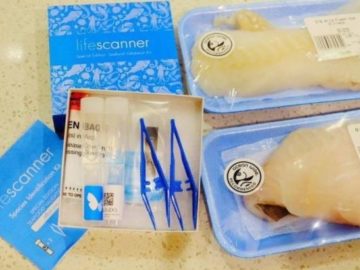
    In spring 2017, SeaChoice partnered with the University of Guelph Centre for Biodiversity Genomics’ Life Scanner program to engage 300 volunteer “citizen scientists” across Canada. Each was provided with two DNA ID kits to sample seafood in their local grocery stores. The results are now public on the LifeScanner website.

    The results show that just one per cent of the seafood tested across Canada was not what the label said it was, and seven per cent of tested seafood was mislabelled – sold under a name that was not compliant with the Canadian Food Inspection Agency’s labelling regulations.


    For more information:

    Press release
    LifeScanner portal for full results
    LabelMySeafood.ca
    Labelling and traceability – on SeaChoice website

  • New SeaChoice report: What’s behind the label?

    New SeaChoice report: What’s behind the label?

    Click to download “What’s behind the label?”

    Our latest report reveals that seafood eco-certifications by two prominent organizations are falling short.

    What’s behind the label? Assessing the impact of MSC and ASC seafood certifications in Canada is the first review of whether the Marine Stewardship Council (MSC) and Aquaculture Stewardship Council (ASC) have improved sustainability in Canadian seafood production.

    With two-thirds of Canadian fisheries MSC-certified, and an industry goal to achieve ASC certification for all British Columbia farmed salmon by 2020, it is crucial these eco-labels are credibly applied and delivering genuine improvements.

    While both eco-certifications may have been on the cutting edge of best practice at their outset, our analysis suggests this is no longer the case. After a decade, the role of MSC to help push improvement forward in Canadian fisheries is increasingly limited with most Canadian fisheries now certified. After only two years in Canada, ASC is in danger of lowering its sustainability bar by deferring to government regulations that are below their Standard.

    It is essential that the Standards’ requirements of ‘sustainability’ are set high enough to reap adequate improvements to fishery and farming practice as they aim for certification. The schemes, otherwise, are only reinforcing status quo and, at worst, potentially undermining efforts to raise the bar higher. At risk is the credibility of eco-certifications, and ultimately, the health of marine ecosystems.

    SeaChoice is committed to working with both certification schemes on recommended improvements as well as with government regulatory agencies to ensure that Canada’s laws and policies for fisheries and aquaculture operations set a high bar for sustainability.

    More information:

    What’s behind the label? (page on SeaChoice website)

    Press release

    Download reports:

    What’s behind the label? Assessing the impact of MSC and ASC seafood certifications in Canada

    A decade of MSC certifications in Canada – technical report

    Aquaculture Stewardship Council (ASC) certifications in Canada – technical report


  • SeaChoice launches labelmyseafood.ca

    SeaChoice launches labelmyseafood.ca

    SeaChoice has launched its new website on seafood labelling the Canadian marketplace.

    Visit labelmyseafood.ca to find out more about the inadequacy of Canadians seafood regulations, why it matters, SeaChoice’s recommended labelling action plan for Canada, and what you can do to help!