Category: Campaigns

  • A promise to remove open-net pens is a promise for healthy oceans

    A promise to remove open-net pens is a promise for healthy oceans

    It’s time for responsible salmon farming

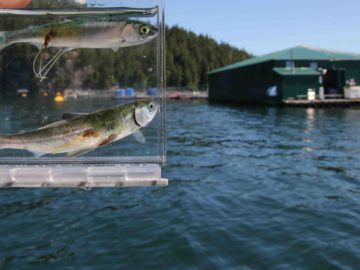
    SeaChoice is calling on the Government of Canada to stand by the election pledges made by four of our national parties (see pledges below), to protect wild salmon from the adverse effects of open-net pen salmon farming. For many years we have been engaged in researching the sustainability challenges posed by open-net pen aquaculture, particularly for wild salmon, and advocating for known solutions. We are encouraged by the parties’ shared commitment to this important challenge and to ocean health in Canada.

    Although the Liberal promise — to transition open-net pen fish farms to closed containment by 2025 — is specific to British Columbia, salmon farms on the east coast of Canada are just as problematic as those in B.C. We expect the government to uphold their commitment to wild salmon and healthy aquatic ecosystems on both coasts. Open-net pen fish farming needs to be transitioned out of all waters, particularly given the government’s commitment to protecting and rebuilding wild salmon stocks on both the east and west coasts of Canada. The government mandate to protect wild fish and habitats is the same across the country.

    Significant concerns remain in B.C. and Atlantic Canada regarding sea lice and pathogens and their impacts on wild fish, chemical/drug resistance, and the inability of the industry and Fisheries and Oceans Canada to successfully prevent and manage outbreaks of parasites and pathogens. It is due to these concerns that SeaChoice member groups advocate for the removal of open-net pen farms from wild salmon migration routes. In the interim, we continue to push government, industry and the markets – through collaboration and public accountability – to drive the improvements needed to alleviate the risk to wild salmon. This work, including those of many others, has helped to forward sea lice, pathogen and disease science and initiate investments in land-based Recirculating Aquaculture Systems (RAS) technology in B.C. and further afield.

    The concerns with Canada’s salmon farms were raised by both provincial and federal Ministers prior to the election, with both levels of government questioning the sustainability, environmental and/or social, of open-net pen salmon farming in B.C. The B.C. government is collaborating on a four-year program to transition farms out of the Broughton Archipelago. The federal Fisheries Minister Jonathan Wilkinson expressed, prior to the election promise, that the federal government is keen to help transition B.C. salmon farms to designs and technologies that address environmental concerns. In addition, government oversight bodies, inquiries and committees, inter alia have all called out inadequacies in regulation of the aquaculture industry in Canada (see below for details).

    Even Canadian open-net pen salmon farms eco-certified by the Aquaculture Stewardship Council (ASC) are problematic, because the ASC Salmon Standard criteria are not being applied as written. SeaChoice’s What’s Behind the Label report found that the ASC variance process is overriding the multi-stakeholder agreements that created the standard criteria and that the process lacks any scientific, technical or stakeholder input. Variances represent approved departures or exemptions from the Standard criteria and are the only reason Canadian farms are certified. These variances also mean that certified farms are not a Seafood Watch (SFW) program “Good Alternative” as was communicated in 2017. The SFW review failed to account for the fact that Canadian farms certified by ASC don’t actually meet the criteria reviewed by Seafood Watch (more here).

    SeaChoice and its member groups are supportive of responsible aquaculture. There are many forms of Canadian aquaculture that should be celebrated. When done right, farmed seafood can help feed our growing population by supplementing wild catches and adding to the overall seafood supply (important to note – farmed fish does not replace wild captured fish). However, it shouldn’t come at the expense of our wild salmon and ecosystems.

    The implementation of the Liberal’s promise is necessary to protect Canada’s wild salmon stocks, ensure healthy oceans and to reform the industry to be truly responsible. One worthy of celebrating.

    MORE INFORMATION

    Party promises:

    Liberal promise — In British Columbia, we will work with the province to develop a responsible plan to transition from open net pen salmon farming in coastal waters to closed containment systems by 2025.

    Conservative promise — Support the advancement of technology and practices that reduce contact between wild and farmed salmon.

    NDP promise — In order to protect wild salmon on the Pacific coast, we will fully implement the recommendations of the Cohen Commission and work with the province of British Columbia and First Nations to support the transition to land-based, closed-containment systems.

    Green Party promise — By 2025, move all open-net pen finfish aquaculture facilities into closed containment systems on land. As with land farmers transitioning from conventional production, provide financial and extension support to fish pen workers to make this transition.

    Example government oversight bodies, inquiries and committees that have called out inadequacies in regulation of the aquaculture industry in Canada: 

    1. Commission of the Environment & Sustainable Development (Auditor General) Salmon Farming report:

    “We concluded that Fisheries and Oceans Canada did not adequately manage the risks associated with salmon aquaculture consistent with its mandate to protect wild fish. Although the Department had some measures to control the spread of infectious diseases and parasites to wild fish in British Columbia, it had not made sufficient progress in completing the risk assessments for key diseases that were required to understand the effects of salmon aquaculture on wild fish. It also had not defined how it would manage aquaculture in a precautionary manner in the face of scientific uncertainty. Moreover, the Department did not adequately enforce compliance with aquaculture regulations to protect wild fish.

    The Canadian Food Inspection Agency had measures to prevent the introduction and spread of infectious diseases with respect to aquaculture. However, the Department and the Agency had not clarified roles and responsibilities for managing emerging diseases. This lack of clarification created a risk that potential emerging diseases affecting wild salmon would not be adequately addressed.”

    2. Report of the Independent Expert Panel on Aquaculture Science (Office of the Chief Science Advisor):

    This report makes the recommendation that DFO’s Aquaculture science needs an external, non-government Science Advisor and Review Panel.  It repeats throughout the 28-page report that DFO science on aquaculture must be more transparent, consider localized impact and be inclusive of indigenous knowledge.

    3. B.C. Minister of Agriculture’s Advisory Council on Finfish Aquaculture recommendations included:

    “Strengthen the precautionary approach to regulation salmon farming in B.C. to reduce the potential risk of serious harm to wild salmon”; and

    “Acknowledge and incorporate First Nations’ rights, title and stewardship responsibilities in all aspects of fish farm governance, including tenuring, licensing, management and monitoring in a manner consistent with the United Nations Declaration of  Rights of Indigenous Peoples (UNDRIP)”

    4. Cohen Commission of Inquiry into the Decline of Sockeye Salmon in the Fraser River:

    Found DFO has a conflicted mandate – to protect wild fish and to promote the salmon farming industry. Recommendation 3 is still not fulfilled with no plans to do so: “The Government of Canada should remove from the Department of Fisheries and Oceans’ mandate the promotion of salmon farming as an industry and farmed salmon as a product.”

    Furthermore, the Wild Salmon Policy is yet to be fully implemented (Recommendations 5 -7). DFO’s failure to implement the WSP was demonstrated by the recent voluntary suspension from MSC by the wild B.C. salmon fisheries due to DFO lack of resources to complete necessary functions.


  • Canada’s proposed seafood labelling laws miss the mark

    Canada’s proposed seafood labelling laws miss the mark

    The Canadian Food Inspection Agency has missed the mark on their proposed regulations to modernize seafood labelling. We have one last chance to push for robust seafood labelling laws.

    Over the past six years the Canadian Food Inspection Agency (CFIA) has worked on a Food Labelling Modernization initiative with the goal to “develop a more modern food labelling system that responds to current and future challenges.” SeaChoice has been involved in this process by advocating for best practice seafood labelling – best practice labels include three key elements 1) scientific name, 2) geographic origin (where the seafood was farmed or fished), and 3) method of farming or fishing

    Unfortunately CFIA’s proposed regulations fail to meet current best practices and offer no improvements for consumers to Canada’s opaque approach to seafood labelling. The proposed changes still only require companies to indicate the common name of any seafood product, and if imported, ‘the place of last major transformation’ of the product, for example, where the seafood was canned or filleted (also called “country of origin”). The proposed regulations do little to inform buyers about potential health implications, environmental or social sustainability, quality assurance, or even truthful naming of the products. It further obstructs Canadians from supporting local Canadian fisheries and seafood products.

    While we have advocated for the introduction of several elements for best practice during this labelling modernization work of CFIA, for this last consultation opportunity. SeaChoice is focusing on the need for labels to specify the species scientific name and geographic origin.

    Scientific name is critical on a label because Canada’s current seafood labelling regulations allow for many different species with variety of health and safety, environmental and social concerns to be vaguely labelled. Also including the species scientific name on a label can reduce confusion when one species may have a variety of common names based on language, culture, or region. For example, “shrimp” is an acceptable common name for 41 different shrimp species and “sardine” is used as a common name for Atlantic herring which is an entirely different species.

    The geographic origin of a seafood product is also critical. Consumers often interpret country of origin that is listed on the package to be the geographic origin – where the food was caught or farmed. However, seafood is often caught or harvested in one country/region then processed in another, such that the geographic origin is not the country of origin indicated on a label. For example, an Atlantic Halibut caught in the Gulf of St. Lawrence by a Canadian fishing vessel may be exported to China for processing into fillets, then re-imported into Canada with a label that says “Product of China”. For more examples of why country of origin labelling is confusing, check out our other post here.

    Overall, CFIA’s modernization effort tries to streamline labelling standards for all food products at the expense of improving transparency for seafood. SeaChoice has reiterated our position to CFIA with respect to species name and geographic origin on seafood labels. In addition to these central concerns, we oppose other proposed changes that have weakened the previous regulations. For example, lake whitefish, the only species category that historically has benefitted from strong labelling requirements including lake and province of origin is having these requirements repealed. Furthermore, CFIA is seeking feedback on changing the term used to present country of origin on a label from “Product of” to “Imported from” or “From”. SeaChoice does not support this change as consumers will remain in the dark on whether their seafood was caught, harvested or processed in the country indicated on the label.

    SeaChoice wants Canada’s seafood-labelling laws brought into the 21st century so they reflect what Canadians are looking for, meet or exceed standards enjoyed by other countries and are consistent with issues the CFIA has itself identified. If you agree then please consider making your own submission to the consultation process. The CFIA is seeking feedback on the draft regulations. Please send an email now to voice your concerns https://davidsuzuki.org/action/seafood-labelling/

  • Made in Canada, eh?

    Made in Canada, eh?

    Have your say on proposed “Made in Canada” labelling guidelines.

    Do you care about the transparency of food labels and where your seafood comes from? Have your say on CFIA’s proposed changes to the “Made in Canada” and “Product of Canada” food labelling claims. The consultation is open until June 23rd.

    Made in Canada

    The CFIA is proposing to remove necessary information to the “Made in Canada” claim guidance. Many of you have concerns regarding the health and safety, environmental sustainability and social responsibility of the seafood products you purchase – and the origin of seafood is a contributing factor to these risks. The proposed changes reduce the transparency of seafood products and eliminate information you need to understand where your food comes from. This impedes your ability to make informed purchasing decisions.

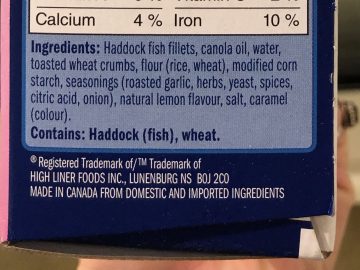
    Right now, products “Made in Canada” have to state if any ingredients were imported. For example, the seafood brand High Liner Foods has the qualifying statement “made from domestic and imported ingredients” on their “Made in Canada” frozen fish products when their product was processed and packaged in Canada, but some or all of the fish was caught or farmed in another country. The CFIA proposal is to get rid of the qualifying statement, so that products can be labelled as “Made in Canada” with no comment as to whether the ingredients were imported.

    The CFIA proposal is to get rid of the qualifying statement, so that products can be labelled as “Made in Canada” with no comment as to whether the ingredients were imported.

    SeaChoice has let CFIA know we do not agree with their proposal. If you agree with our concerns, we encourage you to do the same. You can submit your concerns here. Below is some text we have prepared to support the rationale for your submission, which we invite you to use as is or edit as you see fit.

    Suggested content for rationale box:

    I do not support the proposed guidelines for “Made in Canada” claims. The proposal to remove the qualifying statement accompanying the “Made in Canada” claim creates the opportunity for a food label to be misrepresentative and misleading. As a seafood consumer, I look for information such as the origin of a product’s content to understand where my food comes from. I do this because the origin is a risk factor to the health and safety, environmental sustainability and social responsibility of the seafood product and/or because I want to support Canada’s seafood industry. The qualifying statement at least tells me if the ingredients are fished, harvested or grown in Canada or internationally. This basic information is crucial in the absence of more detailed seafood labelling, as is often the case under Canada’s current seafood labelling laws.

    Product of Canada

    We are also concerned with the proposed change to the “Product of” claim, and have let CFIA know we do not support it.

    Under the current definition of “Product of Canada,” all or virtually all major ingredients, processing, and labour used to make the food product are Canadian. “All or virtually all” has been interpreted to mean greater than 98% – but CFIA is proposing to reduce this threshold to 85%. Under the 85% guidelines, seafood caught in Canada and processed overseas would not meet the “Product of” threshold. Ironically, imported raw seafood that receives further processing in Canada could be a “Product of Canada” if most of the other ingredients, processing and labour were Canadian. We think this is opposite to what Canadians are looking for in their seafood labelling, for the reasons identified in our “Made in Canada” rationale above, and consider the proposed guidance to be misleading and not truthful. If you agree with our concerns, we encourage you to tell CFIA here.

  • Canadians continue to eat in the dark when it comes to retail seafood

    Canadians continue to eat in the dark when it comes to retail seafood

    The 2018 results are in: Almost 1 in 10 seafood products were mislabelled and only 1 in 5 were labelled according to best or near-best practices.

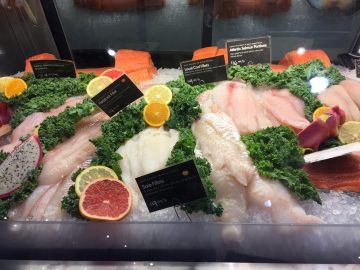
    Seafood sold in the Canadian marketplace is subject to inadequate labelling regulations that allow for misrepresentation or fraud to occur along the supply chain. Under current regulations, consumers are left not knowing what species they are eating, what country it came from, and whether their purchases contribute to environmental degradation, or human right abuses.

    Global best practice include six pieces of information on seafood labels:

    1. common name,
    2. species scientific name,
    3. geographic origin (the location of catch or of the aquaculture operation),
    4. country of last major transformation/processing,
    5. production method (whether farmed or wild), and
    6. gear type or farming method.

    Canada currently requires only 1) for domestic seafood, and 1) and 4) for imported seafood.

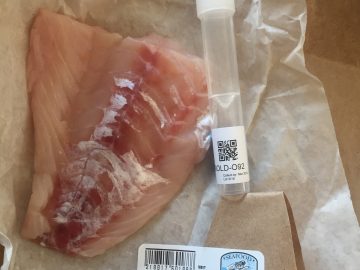
    In 2017 we partnered with LifeScanner to carry out a broad test of all kinds of seafood in many different retail stores – looking at both the accuracy and quality of Canada’s seafood labels. In 2018 we repeated the study, and worked with LifeScanner and 81 volunteer citizen scientists to assess the quality and accuracy of retailers’ seafood labelling, turning the data into an index from which we can track improvements. Based on our 2017 results, we focused this round of testing on major retailers and the most challenging products that are commonly available in the Canadian marketplace (i.e. cod, sole, snapper/rockfish, wild salmon and farmed shrimp). Volunteers sent the DNA samples and pictures of the seafoods’ labels in to LifeScanner.

    Our dedicated citizen scientists submitted 272 samples, which represented 123 unique products, from 85 individual stores belonging to Canada’s seven major retailers.

    Labelling accuracy

    Almost one in ten unique seafood products had samples that were determined to be mislabelled. This might not initially seem like a lot, but it adds up to a significant problem considering we focused on seafood sold in large volumes by Canada’s biggest retailers. Mislabelled products had a common name that did not match the Canadian Food Inspection Agency’s (CFIA) Fish List guidelines for acceptable common or market name for that species.

    Seafood mislabelling can occur anywhere along the supply chain and it can be hard to determine at which point the mistake was made. The seafood mislabelling we identified can be divided into three main types: common name confusion, closely related species confusion, and clear species substitution.

    Common name confusion can occur where CFIA has different naming guidelines for different species within a species group. For example ten species of rockfish from Canada’s Pacific waters can be labelled under the common name ‘Pacific snapper’, but eighteen species of rockfish are not permitted to use this name.

    Closely related species confusion can arise when species are mislabelled even though they are not caught in the same fishery, or even the same ocean. For example, we found samples where Atlantic cod (Gadus morhua) was labelled as Pacific cod (Gadus macrocephalus).

    The final type of mislabelling was species substitution, when one species is substituted for another in a way that is untruthful or misleading, even if it happened by accident. For example, “wild Pacific sole” that turned out to be Atlantic cod (Gadus morhua).

    We would like to reiterate that these instances of mislabelling might not be due to actions by the retailers themselves, but they are ultimately responsible for ensuring their products are properly labelled. This is why good seafood traceability systems are essential for correct naming. We have shared our results with each retailer so they can try to find out what went wrong.

    Labelling quality

    Similar to our 2017 results, our more focused 2018 sampling revealed that retailers are doing a relatively good job of telling Canadians whether their seafood is wild caught or farmed. However, only one quarter of the products had labels indicating where the product was fished or farmed, just over 1 in 10 products indicated a scientific name, and less than 1 in 10 specified a production method. Canadians continue to eat in the dark when it comes to our seafood.

    We are going to be working with retailers to improve the key information they include on seafood labels, and are continuing our work with the Canadian government to try to raise the bar on their requirements for seafood labelling. You can learn more about our efforts here.

    If you want to help, you can let your retailer know you want better seafood labelling by speaking to them in store or by tweeting them and using the tag #SeafoodProgress. You can also find suggested tweets for each retailer on their Seafood Progress profile and message them that way.

  • SeaChoice calls for end to harmful fisheries subsidies

    SeaChoice calls for end to harmful fisheries subsidies

    SeaChoice has joined 59 organizations from around the world in calling for the World Trade Organization to end harmful fisheries subsidies by December 2019, and ensure a sustainable future for our ocean and the livelihoods that depend on it. Harmful subsidies are a major factor in the worldwide declines in fish stocks. Our call was delivered in a letter to the WTO ambassadors. The text is as follows:

    April 30, 2019

    Re: World Trade Organization Fisheries Subsidies Negotiations

    Excellency:

    This year will be pivotal for the world’s ocean.

    We urge you to fulfil the December 2017 ministerial mandate for WTO members to agree to “comprehensive and effective disciplines that prohibit certain forms of fisheries subsidies that contribute to overcapacity and overfishing, and eliminate subsidies that contribute to illegal, unreported, and unregulated fishing” by the end of 2019. The months ahead will be critical to realizing this commitment and achieving UN Sustainable Development Goal target 14.6 by 2020, universally agreed to in 2015.

    Though not all subsidies are harmful, comprehensive estimates of global fisheries subsidies show that as much as $20 billion1 is spent by governments globally on capacity-enhancing subsidies – harmful payments that offset fishing costs such as fuel, gear, and vessel construction, and allow fishers to travel farther for longer— which risk leading to fishing above sustainable biological limits. Applying economic theory to the fisheries sector reveals that in an open-access fishery, a revenue-enhancing or cost-reducing subsidy increases marginal profits at each level of fishing effort, and therefore leads to an increased overall fishing effort2.

    In 2018, the United Nations Food and Agriculture Organization (FAO) State of World Fisheries and Aquaculture estimated that a third of all fish stocks are exploited at unsustainable levels and another 60% have no room for increased fishing without jeopardizing sustainability3. Decades of overfishing have taken a significant toll on ocean health, contributing to poverty, food insecurity, ecosystem imbalances, distorted markets, and unemployment. This is compounded by harmful subsidies, leading to serious social, environmental and economic impacts for the more than 1 billion people who depend on seafood as a main source of protein, and the more than 40 million people who rely directly on fishing for their income4.

    There is now a brief window in which WTO members can achieve transformative change for the world’s ocean and the livelihoods of many coastal communities by addressing one of the drivers of global overfishing. If negotiations reach a successful conclusion, members will reignite confidence that multilateral cooperation can achieve global outcomes. In the wake of many rounds of fisheries subsidies negotiations dating back to the Doha Ministerial Conference in 2001, there is now an opportunity to not only demonstrate the vitality and effectiveness of the WTO, but to serve as leaders for an issue of shared global importance.

    We, the 59 undersigned organizations, support members’ efforts to reach an ambitious agreement to end harmful fisheries subsidies by December 2019, and ensure a sustainable future for our ocean and the livelihoods that depend on it.

    Download the letter and list of signatories here.

  • How to spot seafood you can feel good about

    How to spot seafood you can feel good about

    Seafood eco-labels can help you buy products that are environmentally sustainable and socially responsible.

    A few weeks ago, SeaChoice hosted representatives from Canada’s major retailers to an online webinar on the differences between seafood eco-labels. The aim was to alleviate any confusion caused by the ever-increasing array of seafood eco-labels in the market. Our webinar was directed at large-volume seafood buyers, but there are some key differences among types of eco-labels that smaller-volume buyers, like you and me, should be aware of too.

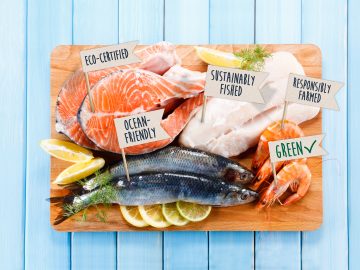
    There are three main categories of seafood eco-labels: eco-certifications, rankings and recommendations, and self-claims. This article will only discuss the environmental aspects of seafood eco-labels, but as my colleague highlighted in a recent article, an increasing number of organizations are developing methods to assess social responsibility and reflect it in eco-labels.

    Eco-certifications

    The primary distinguishing characteristic of eco-certifications, compared to other types of eco-labels, is that they assess fisheries or farms against a published standard or set of requirements, and assessments are carried out by independent, third-party companies hired by the fishery/farm. The assessments are peer-reviewed and also made available for stakeholder input. Some certification schemes, like the Marine Stewardship Council (MSC) and Aquaculture Stewardship Council (ASC) also require every actor along the supply chain to be certified against their Chain of Custody Standard, which results in very high confidence that the product you buy in store is what you think it is.

    However, while robust eco-labels like MSC and ASC can help you spot environmentally sustainable products, certification is voluntary (and quite expensive, especially for small producers) and the majority of fisheries and farms don’t have these certifications, so they aren’t always easy to find in Canada.

    Fortunately, there are other eco-labels that can help you choose sustainably produced, but non-certified, products.

    Rankings and recommendations

    There have been many different ranking systems developed to suit markets around the world, but the most common in Canada are the Ocean Wise Seafood Program developed by the Vancouver Aquarium and Seafood Watch rankings developed by our southern neighbors at the Monterey Bay Aquarium.

    Seafood ranking and recommendation programs work by scoring the sustainability of a fishery or farm. They usually rely on published methodologies to justify their judgments, and like eco-certifications, assessments are peer-reviewed and made available for stakeholder comments. Consumer-facing programs will make their recommendations freely available on their website, on mobile apps, or on paper handouts. You will need detailed information regarding the seafood in question in order to use these tools (more on this below). Some programs also allow their logo to be used on seafood products or on menus, such as the Ocean Wise Recommended logo.

    Fisheries or farms generally don’t get a say in whether they are ranked by these programs – decisions are typically driven by product importance to the market. This means a wider range of seafood is ranked, compared to eco-certified. This makes rankings useful when trying to figure out which kinds of seafood are particularly worrisome from an environmental point of view, for example products in Seafood Watch’s ‘Avoid’ category.

    In contrast to the eco-certifications programs outlined above, ranking and recommendation programs generally don’t include traceability requirements. This means retailers or restaurants need to have their own system in place to make sure the products they are buying are what they think they are.

    Another consideration with ranking programs is that due to Canada’s lax labelling laws, which only require seafood labels to include a common name (and for imported products, the country of last major processing), you may not have enough information to use the program. A seafood’s rank or rating depends on which species it is, how it was produced, and where it was produced. SeaChoice’s ongoing studies into seafood labels in Canada shows that products usually aren’t labelled with any of this information. We are actively working with the Canadian government to raise standards and with Canadian retailers to improve labelling voluntarily.

    Self-claims

    Finally, there’s one more type of eco-label you might see on your seafood – especially if you’re buying frozen or canned products – and that’s self-claims.

    Self-claims are either logos or slogans on seafood products that a company has developed on their own. Self-claims might refer to the company’s sourcing policy or set of sourcing standards, or they might refer to nothing at all. Some businesses’ provide details on their websites, but the details can be ambiguous. For example, one company’s eco-label is stated to represent a commitment to sourcing from “MSC-certified fisheries, fisheries under MSC pre-assessment or fisheries identified for Fishery Improvement Projects”. The last category could mean very little in terms of sustainability. Fisheries identified by who? Have they started on the project or are they just identified as needing to? What are the goals of the improvement project, and are they actually making progress? How much of this product is being sourced from each category?

    This lack of clarity, and the fact that most are neither independently verified nor traceable, means it can be hard to know how sustainable these products truly are.

    SeaChoice and eco-labels

    Recently, SeaChoice has been taking a close look at eco-certifications to see if the fisheries and farms they are certifying actually live up to their standards. This is because we believe in the potential they have to bring positive changes to practices on the water, particularly because of the joint market power of retailers and other industry actors who have committed to using them.

    Now that we have a good understanding of where these eco-labels are at, we are going to be turning our attention to the other types of eco-labels, especially self-claims. Stay tuned for the results of our first census of self-claims on seafood products sold in Canada’s major grocery stores.

    And next time you find yourself in the seafood aisle, take a look at the packaging. How many eco-labels can you see? Is it clear what they mean? If you’re not sure, find a staff member to ask. And if they aren’t sure, choose something else.

  • It matters where your seafood comes from, but you usually have no idea

    It matters where your seafood comes from, but you usually have no idea

    Recent media headlines are making a strong case for why Canada should mandate “country of origin” (the country where the seafood was caught or farmed) on seafood labels.

    Right now, the government only mandates a seafood label to include common name, and for imported products, country of processing (or “last major transformation”). The latter can be, and often is, different from country of origin. This matters to your health and it matters to our oceans. Here’s why.

    Your health – According to last night’s news, superbugs are hiding among the imported shrimp available for purchase in Canadian retail stores. CBC’s Marketplace has found antibiotic-resistant bacteria on 17% of tested frozen shrimp products from major grocery stores – including eco-certified and organic products. According to Marketplace, India was the country of origin for more than half of the positive samples; Canada imports more shrimp from India than any other country.

    While CFIA reportedly tests for antibiotics on imported shrimp, it doesn’t currently test for bacteria. This allows the bugs to hitch a free ride into your kitchen while you remain none the wiser. While cooking might kill most bacteria, they can be easily transferred to surfaces and other foods during preparation. The solution? Consumers could choose to avoid imported shrimp, particularly those grown in India, until such time as CFIA figures out how to keep Canadians safe. However under currently labelling regulations consumers can’t be sure of where their favourite shrimp products were actually farmed.

    Our oceans – UK fish and chip shops made headlines when DNA tests suggested “UK fish and chip shops are selling endangered sharks”. Most tested fish samples turned out to be spiny dogfish, a shark species classified as Endangered in Europe. Consumers unwittingly contributing to the demise of European populations of this species would indeed be a headline worthy cause for concern. It appears, however, that the sharks were Canadian caught, hailing from non-threatened populations. In this case, the country of origin matters to whether the “fish” served along with the “chips” was sustainably sourced or not.

    Similar stories are playing out in our own backyard. Canadian officials seized Critically Endangered European eel on its way into Canada, intended for sushi restaurants and other diners across the country and worth millions of dollars. The species would simply have been sold as “eel” or “unagi”4, and consumed by Canadians without any knowledge that they were eating a highly threatened species.

    In the case of the fish and chips, the researchers called on the U.K. government to introduce more accurate food labelling in restaurants, to enable people to know what species they are eating and where it comes from. Retailers in the EU already adhere to much higher labelling standards. This is exactly what SeaChoice is asking of Canada’s government – but in our case we don’t have robust labelling requirements for retailers OR restaurants. Canadians are eating in the dark.

    SeaChoice is working to include mandatory country of origin labelling for seafood through the government’s Food Labelling Modernization Initiative. We are also actively encouraging retailers to voluntarily put more information on their seafood labels, to increase transparency, build consumer trust, and follow best practice. In the fall of 2018 over 3,200 Canadians agreed to #JoinTheShift, signing a letter asking their retailers to source local, traceable, properly labelled fish. The above examples show why retailers should continue to improve traceability and transparency in their supply chains, and voluntarily go above and beyond Canada’s weak policy requirements.

  • New year, new you? Reducing our carbon footprint in 2019

    A new Seafood Carbon Emissions Tool can help make even more sustainable seafood choices.

    It’s a new year which means new years resolutions. I have a few, the most important being reducing my carbon footprint. Being in the business of conservation I am used to bad news, some of which has kept me up at night. But nothing has kept me up like the October 2018 release of the IPCC report5. The IPCC report says “rapid, far-reaching and unprecedented changes” are needed “in all aspects of society” if humanity is to contain the average global temperature increase to 1.5 degrees Celsius. The timeframe the IPCC has set for this is just over a decade away.

    There’s one simple critical takeaway point from that report: “we need to cut carbon pollution as much as possible, as fast as possible”. Not doing this has clear and imminent risks to health, livelihoods, food security, water supply, human security, and economic growth. Not doing this will impact my children, your children – not hypothetical future generations but the ones on this earth right now.

    And what I know for sure is we are not doing enough – we need to do more. Our governments in particular need to do way more. But even if we make the changes we need to reach the 1.5°C target, our kids’ world will be so different. For example even at 1.5°C, the IPCC estimates that we’ll lose about 80% of coral reefs. That makes me sad, makes me mad, and makes me want to take action.

    There are many actions we can take as individuals to reduce our carbon footprint (read this if you think your individual actions don’t matter). Changes to our transportation habits are important ones – fly less, use more public transport. Other key actions relate to our eating habitats. As this article explains, what you eat is a key determinant of your impact on the planet – in particular how we get our protein. Spoiler alert, red meat is the biggest loser.

    Seafood lovers, on the other hand, can rejoice. When it comes to climate impacts, most seafood is much better than most terrestrial animal production. But as is the case with terrestrial animal protein, not all marine produced proteins stack up equally when it comes to climate impacts.

    Thanks to Seafood Watch and Dalhousie University you can now figure out the climate consequences of eating your favourite seafoods. Their recently released Seafood Carbon Emissions Tool was developed to allow businesses to see the carbon footprint of the seafood, wild or farmed, they purchase and even compare it to land-based protein sources. But as a consumer I find it really useful too.

    The tool includes estimates for over 150 combinations of species and gear type or farming method. The measurements are for emissions generated up to the dock where the fish is landed or, for farmed fish, everything that happens at the farm. Because seafood can be transported in many ways and over different distances, the measurements do not include processing or transportation to local markets. Canada’s poor labelling practices mean you may not know where your seafood has come from, but asking will let retailers and restaurants know people care about eating local seafood.

    Of course, carbon footprint shouldn’t be the only thing you consider when choosing seafood – the health of our oceans depends on all our actions. It is still important to choose seafood produced from healthy populations and with minimal impacts to habitats and other species. Thankfully Canadians have several options to make sustainable seafood decisions. As it turns out, some of the more environmentally sustainable choices, e.g. small bodied schooling fishes like sardine or mackerel and farmed shellfish like mussels and oysters, are also the most carbon friendly.

    I guess achieving my New Years resolution will involve eating more anchovies, sardines and mussels – along with more beans, nuts and seeds. In this way I will be contributing to the health of our planet, and also to my own.

    [1] The Intergovernmental Panel on Climate Change (IPCC) is an intergovernmental body of the United Nations, dedicated to providing the world with an objective, scientific view of climate change and its political and economic impacts.

  • Traceability and labelling: two pre-conditions for supporting sustainable seafood

    Traceability and labelling: two pre-conditions for supporting sustainable seafood

    Canadian seafood needs better traceability and labelling so consumers can tell what it is, where it was produced, which method of fishing or farming produced it, and where it was processed.

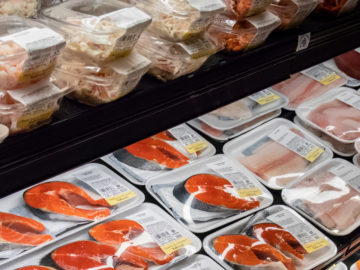
    How do you decide what kind of seafood to buy? Do you go to the supermarket looking for something specific, or do you just go and see what looks good? Regardless of your approach, some supermarkets make it much easier than others to know what you’re actually buying, where it came from, and how it was produced. These pieces of information are essential if you’re trying to support sustainable fisheries and aquaculture. Unfortunately, Canada’s lax labelling regulations mean retailers are only required to include a common name (which can be the same across many different species such as “sole”) and, if the product was imported, the country of “last major transformation”(for example where the fish was filleted, not where it was actually caught or farmed). Common name and country of processing are not enough to determine the sustainability of your seafood.


    In most cases, retailers do not have a system for collecting and displaying the more detailed information that would allow consumers to vote with their dollar and buy seafood that is in line with their ethics and values. In order to label products with this information, it must travel with the fish or seafood product from the point of harvest all along the supply chain to the point of sale. This traceability is essential for verifying the sustainability of products. Without robust traceability and honest labelling, consumers are vulnerable to buying seafood sold under false pretenses.

    This is why SeaChoice has been analyzing the quality of Canadian retailers’ seafood labels through our citizen science DNA testing projects. Our 2017 testing found that while the level of seafood mislabelling (using an incorrect or improper common name) in supermarkets was relatively low (7%), 26% of labels were unsatisfactory and 57% were poor in terms of providing information above the legal minimum. SeaChoice is running this project again in 2018 and the results should be in soon.

    SeaChoice has also been looking at Canadian retailers’ current use of traceability systems through Seafood Progress. Seafood Progress evaluated the traceability, labelling and data collection policies of every major retailer in Canada. Some retailers are star performers regarding data collection and labelling, and others had no information publicly available (and did not provide it upon request) to answer these questions. On average, retailers scored 36 out of a possible 100 on their seafood labelling policy, 44 out of 100 on traceability commitments, and 62 out of 100 for data collection. You can find out how your retailer did by visiting www.SeafoodProgress.org and clicking on their logo (see KPI 4.1, KPI 1.3 and Step 4, respectively).

    SeaChoice is working to improve these scores across the board by supporting innovative traceability initiatives (such as Know Your Fish) raising consumers’ awareness of seafood labelling through our citizen science projects and by mobilizing the public to “join the shift” and call on retailers to voluntarily improve their traceability and labelling practices.

    You can give your support to Canadian seafood businesses to implement better traceability and labelling by signing this open letter to retailers. You can also let your retailers know directly that you care about seafood sustainability by asking questions about the seafood in their stores – for example, by asking which species it is, where it was caught, or how it was farmed.