When Canadians buy seafood, we should be able to know where it came from, how it was caught, and whether it entered our market legally and responsibly. SeaChoice’s new report, Canada’s Seafood at Risk, compares Canada’s seafood import controls with those of the European Union, the United States and Japan. The findings are clear: Canada is falling behind.
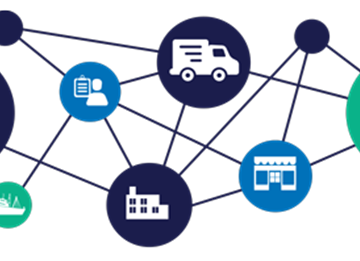
Seafood supply chains can span multiple vessels, countries, ports and processing facilities before a product reaches a Canadian consumer. Without the right information at each step, it is difficult for authorities to identify seafood that may have been illegally caught or associated with human rights abuses.
The report compares countries against 17 key data elements needed to trace seafood from harvest to market. Canada currently requires just 3 of these 17 elements (only 12%). By comparison, the European Union requires 100%, while the United States and Japan each require approximately 71%.
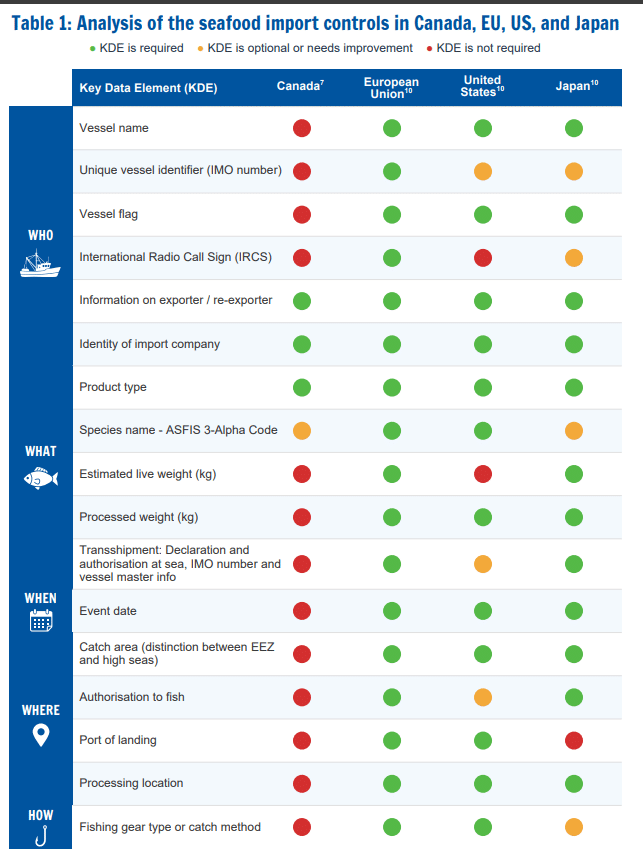
Canada does not need to start from scratch. Through its participation in regional fisheries management organizations, Canada already collects and uses much of the information needed to track certain seafood products. Other major seafood markets have taken steps to strengthen traceability and transparency. Canada can learn from these systems and develop an approach that is both effective and efficient, and that aligns with our international trading partners.
SeaChoice recommends that Canada:
- Develop a new import control scheme that requires reporting of key data and facilitates full chain traceability of seafood products entering Canada, in line with those of trade partners.
- Change seafood labelling regulations to include the scientific name, the location of catch or the location of the aquaculture operation, the production method (farmed or wild) and the gear type or farming method.
- Continue funding international bilateral fisheries monitoring missions and improve information sharing with countries across the seafood supply chain to strengthen compliance and oversight.
- Establish domestic electronic monitoring standards, expand on-vessel fisheries observation levels, and invest in modern data processing tools in order to improve domestic fisheries management and science and meet Canada’s international commitments.