Author: Shannon Arnold

  • New MSC standard delayed

    New MSC standard delayed

    Conservation groups disappointed at two year delay for new Fisheries Sustainability Standard

    Make Stewardship Count, a coalition of more than 90 global marine conservation organizations, experts and academics, is incredibly disappointed by a recent decision by the Marine Stewardship Council (MSC) to delay full implementation of a new Fishery Standard that would raise the bar for sustainable fisheries.

    On January 31, MSC announced that it was allowing fisheries an additional two years to implement the revised standard, known as “version 3.0.” Fisheries that are new to the program will now have until 2026 to implement version 3.0, while currently certified fisheries will have until 2030.

    MSC’s Fisheries Standard provides a framework to assess the environmental impacts and effective management of fisheries. Fisheries adhering to the standard’s sustainability criteria are allowed to display the MSC “blue fish tick” ecolabel on their products. At present, more than 20,000 products globally display this ecolabel.

    “This delay is a massive step backward both for protecting endangered species and ensuring good governance in fisheries,” said Kate O’Connell, senior policy consultant for the Marine Life Program at the Animal Welfare Institute. “We fear that the council, which claims to operate the world’s leading ecolabel for wild-caught seafood, is caving to industry pressure instead of making substantive changes that are critically needed to ensure its stated goal of ‘oceans teeming with life.”

    MSC’s decision comes nearly a year after the council began implementing the revised standard and follows several years of hard work by the council, fishing industry representatives, and conservation groups to create a stronger standard for fisheries. MSC also announced recently that it would conduct an independent review of its Evidence Requirements Framework (ERF), a method meant to ensure that accurate information is being used to assess fisheries, to see if it could be implemented in a way that limits complexity and cost. Make Stewardship Count is concerned about the transparency of this ERF process.

    “After wide-ranging improvements to MSC’s standard were weakened during the review process, the current standard represents what is minimally acceptable to have healthy oceans and fisheries,” said Shannon Arnold, associate director of marine programs at the Ecology Action Centre. “Even so, MSC seems more interested in keeping fisheries in its program and generating profits than upholding its mission.”

    Initially, MSC’s standard review process provided a historic opportunity for it to drive real changes in global fishery management over the next decade. In releasing the revised standard in October of 2022, the council declared that it had followed the “most comprehensive review of the MSC Fisheries Standard ever undertaken” in its 25-year history.

    However, it soon became apparent to the Make Stewardship Count coalition that the MSC label would continue to be awarded to fisheries that routinely catch vulnerable nontarget animals, waste excessive amounts of sea life, damage ecosystems, and target overfished species. Throughout the process, fishery representatives balked at having to provide better information about what they are pulling out of the water, how they are fishing, and the associated impacts on endangered species and the environment.

    “If MSC further weakens its ecolabel requirements, then it is simply certifying the status quo and not advancing any real changes or rewarding those fisheries that have made strides in reducing their environmental impact,” said Dr. Iris Ziegler, head of international cooperation at SHARKPROJECT International. “MSC is failing to act as a driver for improvements on the water, and this delay will only exacerbate the situation for endangered, threatened and protected marine species, particularly sharks.”

    “With this latest move, MSC continues to lose credibility as a global leader of truly sustainable fishing,” said Dr. Cat Dorey, independent fisheries advisor. “The initial timelines provided to fisheries to implement this updated standard were generous and provided ample time to make the necessary changes. Consumers are increasingly aware of sustainability claims, and MSC is running the risk of losing its market power.”

  • Critically depleted small fish will have big consequences in Atlantic Canada

    Critically depleted small fish will have big consequences in Atlantic Canada

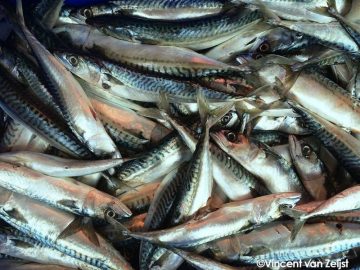
    Atlantic mackerel has plunged into a critical state after more than a decade of overfishing has been allowed to continue.

    Scientists say the Atlantic mackerel spawning population is hugely depleted and the number of fish surviving to breed is at an all-time low. The decline will have dire consequences for the oceans and for people. Atlantic mackerel may be a little fish but they play a big role in the Atlantic Ocean ecosystem and Canada’s east coast fisheries.

    Many marine animals, including the endangered porbeagle and shortfin mako sharks, marlins, seabirds, porpoises and whales, hunt the energy rich mackerel. Commercially important and iconic bluefin tuna chase spawning schools of mackerel into Atlantic Canadian bays during summer and autumn months.

    Humans also target mackerel. They are landed in a sizeable commercial fishery and subsequently used as bait for the lobster trap fishery, one of the most important East Coast fisheries. Every summer, thousands of Atlantic Canadians fish for mackerel off wharfs and shores. It remains one of the last marine fish that everyone can access for food and recreation – a strong Maritime tradition and also a favourite pastime of newcomers. Mackerel connects everyday people to marine ecosystems.

    In turn, mackerel eat all manner of small floating prey including fish and zooplankton (e.g. copepods, larval squid, crab and lobster), which together form the base of the Atlantic Ocean food web. As food and ocean conditions shift, so too does the mackerel, the animals that feed on mackerel, and the people and fishing sectors that rely on them.

    The Atlantic mackerel population has been declining for some time, but the new 2019 science assessment done in March was more alarming than anticipated. The population is down 86% from where it was in the 1980s and the number of young fish making it to adulthood is the lowest ever. Also worrying, the age range of fish across the population is extremely diminished. There was only one age 1 fish found in 20,000 samples and no fish over 10 years old have been found for years, even though mackerel can live up to 20 years. The current population is almost entirely made up of fish hatched in 2015.

    The Atlantic mackerel population has been overfished since 2008 and overfishing continues to this day. The population is being further stressed by rapidly changing ocean temperatures, currents and food availability off Atlantic Canada. The bottom line presented by science is clear – a drastic decrease in the amount of mackerel being fished is required to allow the population to increase to healthy levels. On the other hand, maintaining the status quo threatens to reduce the stock to a level from which it may not ever recover.

    SeaChoice partner, The Ecology Action Centre, sits on the Atlantic Mackerel Advisory Committee and the Rebuilding Working Group that are grappling with the outcome of the science assessment and what it means for the mackerel fishery. The EAC has urged Canada’s fisheries minister to make the difficult decision to seriously reduce catches or even close the fishery. While no one wants to see a fishery seriously curtailed, the majority of the fishing fleets at the table understand the gravity of the situation and have also suggested measures that will require them to sacrifice their fleets.

    SeaChoice understands the serious impacts on income that a closed or severely reduced fishery has for producers. There comes a point, however, when socio-economic considerations cannot override ecological realities. While difficult for fisheries now, bold action for the next few years to ensure the mackerel population increases is preferable to small steps that are more politically palatable but are not enough to halt the species decline, thus prolonging the sacrifice of the fleets. If the necessary bold action is taken, the government should consider supporting smaller fleets and producers whose margins are too slim to absorb the loss of the mackerel portion of their income.