Author: Scott Wallace

  • What is a bocaccio and what can it teach us about patience and resilience?

    What is a bocaccio and what can it teach us about patience and resilience?

    By Scott Wallace, Senior Research Scientist at the David Suzuki Foundation and SeaChoice Steering Committee member

    After years of careful management and industry efforts, bocaccio rockfish are rebounding

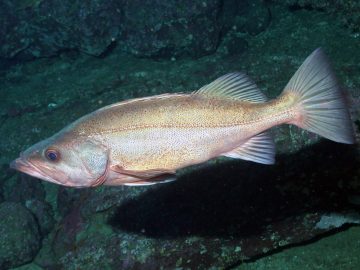
    Nobody likes a big mouth. Well, that’s not completely true. Canada’s Pacific groundfish industry is elated about a long hoped-for recovery of bocaccio rockfish. Bocaccio derive their name from the Italian term ‘bocacho’ meaning big-mouthed. While very few people have heard of this fish species, it has been the most talked about species in British Columbia’s groundfish fishery for the last 18 years.

    Rockfish fisheries are difficult to manage. There are 39 species of rockfish in our waters and they all have an inherent vulnerability to over-harvesting and a highly variable survival rate. The amazing story of bocaccio’s sudden recovery carries lessons that can be applied to most fisheries. It underlines the importance of having patience, managing expectations and building enough resilience to be able to follow nature’s lead.

    Since the 1950s, bocaccio populations from southern California to Alaska experienced a sustained decline throughout their range (Figure 1). In Canada’s Pacific waters, it is estimated that the population has declined to 3.5% of its unfished level. The situation was so severe that in 2002 the Committee on the Status of Endangered Wildlife in Canada (COSEWIC) recognized the species as threatened. Despite drastically lower catches and a prohibition on selling them, the bocaccio population continued to fall. In 2013, COSEWIC reassessed it as endangered – a more severe designation.

    In Canada, the main rebuilding strategy has been to ratchet down the level of allowable bycatch and hope for a period of high recruitment (i.e., larval survival). Lowering the catch limit sounds easy, but the challenge with this species is that they are difficult to avoid while targeting other more abundant species of fish. Even if they are returned to the water right away, rockfish do not survive being caught with commercial fishing gear. The change in pressure affects them too much on their way to the surface.  For 15 years, B.C.’s fishing fleets adapted their gear and methods to be able to stay within increasingly lower catch limits. That is, until 2019, when suddenly vessels were encountering bocaccio everywhere and could no longer avoid them. The hoped for high recruitment finally occurred.

    Independent scientific surveys corroborated the information from fishers and indicated a population recovery. The recently published Science Advisory Report suggests that in 2016, larval survival was 44 times better than average (Figure 1). Three years later, the juveniles of this cohort became large enough to be captured by trawl nets. It’s not surprising that fishers started to exceed the restrictive catch quota.

    For 2020, the quota for bocaccio has been cautiously increased, permitting industry a small level of non-directed catch while the population continues to grow (Figure 1). By 2022, a large portion of the 2016 cohort will become reproductively mature and will further contribute to rebuilding the population. Although marine ecosystems are highly unpredictable, at this point it appears that bocaccio is on a trajectory for recovery.

    This explosive recovery was a result of rebuilding efforts, ocean environmental conditions and patience. And in addition to this being a much-needed good news story in these challenging times, the story of bocaccio illustrates an important lesson: it shows that the year-to-year stability which businesses and regulators prefer can be incompatible with a species’ life history strategy.

    This means that for rockfish – and many other marine species – the only sustainable approach is to take a very small amount of what nature provides and accept that the “surplus” that we can safely harvest will change. We must be sure to leave enough resilience in the population until the next time when the ingredients of the ecosystem soup are favourable. For bocaccio, there was no predictable recovery trajectory, but all species have the capacity for resilience if we give them a chance. While it certainly was challenging, the industry had to accept lower levels of harvest and be patient while they waited for nature to provide the appropriate conditions for recovery.

    Similar to most fished marine species, bocaccio are a product of an exceedingly complex marine ecosystem. Ensuring that all species are managed with conservative catch limits, accurate reporting, and an abundance of precaution are the most important elements of maintaining wild harvests into the future.

    Figure 1: Estimates of spawning biomass (tonnes) from model published in Science Advisory Report. The median biomass trajectory appears as a solid curve surrounded by a 90% credibility envelope (quantiles: 0.05, 0.95) in light blue and delimited by dashed lines for years t=1935-2020; projected biomass appears in light red for years t=2021-2080. Also delimited is the 50% credibility interval (quantiles: 0.25-0.75) delimited by dotted lines. The horizontal dashed lines show the median Limit Reference Point (red: 0.4BMSY) and Upper Stock Reference point (green: 0.8BMSY). Catch and assumed catch policy (200 tonnes/year) are represented as bars along the bottom axis.


  • Widow rockfish receives long awaited stock assessment

    Widow rockfish receives long awaited stock assessment

    DFO’s assessment suggests stock sustainably fished, but numbers well below unfished levels.

    Two months ago, DFO quietly published a long overdue stock assessment of widow rockfish. Despite having been an important component of the groundfish trawl fishery since at least the mid 1960s and considered BC’s fourth largest rockfish fishery, widow rockfish has never received a proper stock assessment. Lack of an assessment was the main reason why widow rockfish was classified as “red” or “Avoid” under Seafood Watch recommendations and has been one of SeaChoice’s priority species.

    When widow rockfish is re-evaluated by Seafood Watch in the coming years it will likely improve in rank to a “yellow” (Good Alternative) or “green” (Best Choice), thus becoming a “buy” option. The DFO stock assessment indicated that there was a high likelihood that the population was above DFO’s reference point for being in the healthy zone (see report figure below). Widow rockfish is primarily captured through mid-water trawl gear, which incurs no habitat damage and typically less bycatch than a bottom trawl. These characteristics further contribute to its positive sustainability scores.

    Widow rockfish
    Photo: Status of Widow rockfish relative to DFO reference points, from CSAS Science Advisory Report 2019/044.

    All of BC’s large volume rockfish species including Pacific ocean perch, yellowtail, silvergrey, canary, redstripe and yellowmouth are now all being fished at DFO defined sustainable levels with assessments (although some outdated) to back this up. There are still several smaller volume rockfish species without assessments including rougheye, shortraker and darkblotched rockfish.

    This is generally positive news but it does require some additional consideration. The concept of “sustainable”, when it comes to a wild fishery interacting with an ecosystem, is difficult to pin down. A deeper dive into the uncertainties and nuances of all these rockfish assessments indicates a high degree of precaution is required when carrying out rockfish fisheries. All of these fisheries are “sustainably” targeting greatly reduced populations with skewed age structures (older fish are less frequent in the populations). The harvest rate is such that a “sustainable” yield is being maintained but by no means are the populations close to their historical non-fished abundance, carrying out the same pre-fishery ecological roles, and unlikely maintaining their genetic diversity.

    The harvest rate is such that a “sustainable” yield is being maintained but by no means are the populations close to their historical non-fished abundance, carrying out the same pre-fishery ecological roles, and unlikely maintaining their genetic diversity.

    With the exception of redstripe rockfish, all of BC’s rockfish species populations with catch quotas (~15) are far below what is estimated to have been the “unfished” abundance levels. Canary rockfish is only 22% of it’s estimated historical abundance and Pacific ocean perch about 30%. For long lived species, this depletion rate qualifies them as “Endangered” under criteria used by the IUCN or COSEWIC.

    The opposing scientific perspective where a fish that qualifies as an endangered species can also be the target of a sustainable fishery has been enabled by the tightly held fisheries management concept of maximum sustained yield (MSY). This concept stems from a time when fisheries scientists believed that the trajectory of a fished population was predictable and that the population would be more productive per unit of fish when their numbers were intentionally lowered through catching them. However, even DFO’s stock assessment scientists have agreed that MSY targets may not be appropriate for long lived low productivity species – such as rockfish. Unfortunately, there are no broadly accepted alternative approaches.

    Increasingly the use of marine protected areas and refugia are gaining recognition as a means of mitigating the uncertainty associated with traditional fisheries management. There is currently an MPA network being developed for Canada’s Pacific waters. If properly designed this network can provide additional insurance for fisheries managers responsible for these populations. MPAs in combination with fisheries science, good monitoring and enforcement, and ongoing research surveys can collectively safeguard these populations and maintain a healthy fishery in an ever-uncertain ocean.

    DFO and industry deserve credit for moving this challenging fishery toward sustainability but no one should think these fisheries are being undertaken without a persistent risk to biodiversity.

  • Strong recovery actions for British Columbia Chinook salmon

    Strong recovery actions for British Columbia Chinook salmon

    June 2019 marks the half way point in the International Year of the Salmon. On Canada’s Pacific coast this is an opportunity to bring attention to long-standing conservation issues facing Chinook salmon. Some of these concerns are starting to be addressed with recent unprecedented action by Fisheries and Oceans Canada (DFO) to restrict Chinook harvest on populations returning to southern BC rivers to spawn. Changes in management include both seasonal and area closures designed to minimize the impact to depleted Chinook populations.

    Several unique Chinook populations in Southern BC have been in decline for nearly two decades. In November 2018, the Committee on the Status of Endangered Wildlife in Canada (COSEWIC) released a report that found the majority of 16 south coast and Fraser River Chinook populations assessed were either endangered or threatened. This information was consistent with DFO’s own assessments and validated the need for the strong actions announced last month. Because COSEWIC assessments are part of the Species at Risk Act as opposed to the Fisheries Act, there was further impetus for implementing stronger management measures.

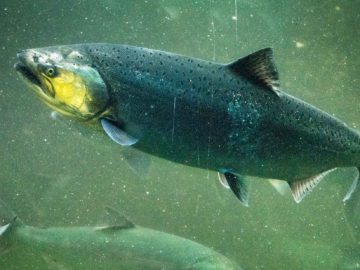
    Most people consider Chinook salmon as a single species, and while that is true, in British Columbia they are comprised of 68 different populations which collectively contribute to their overall abundance. Each population has unique attributes, such as when and where they spawn and amount of time spent in rivers versus in the ocean. These differences result in a unique genetic composition. Protecting the biodiversity of wild Chinook salmon across the entire landscape of British Columbia is the conservation goal. Because most Chinook fisheries access salmon while at sea, there is no practical way of only targeting the healthy populations and consequently this mixed stock approach incurs a high risk to endangered populations. The announced management measures are in effect until mid July and are designed to allow the most at risk populations to swim through the fishing grounds without being caught.

    Chinook salmon is the most valuable recreational fish species in the province supporting an enormous industry. Strong recovery actions are necessary to ensure these fisheries exist in the future. In addition to their importance to fisheries these same populations of Chinook are heavily relied upon as a prey source for the endangered Southern Resident Killer Whale considered to be at imminent risk of extinction.