Author: Kelly Roebuck

  • WWF review confirms aquaculture eco-certifications in need of urgent reform

    WWF review confirms aquaculture eco-certifications in need of urgent reform

    Farmed salmon sustainability labels currently not fit for purpose

    This month, WWF-Australia released a report stating that aquaculture eco-certifications, including the Aquaculture Stewardship Council (ASC) and Best Aquaculture Practices (BAP), need urgent reforms if they are to fulfill their purpose of driving sustainability improvements at salmon farming operations. As a co-founder and supporter of the ASC, WWF’s acknowledgement that eco-certifications are in need of reform is significant. The report echoes much of SeaChoice’s own findings and recommendations to ASC in the years that we have been monitoring the requirements and application of that standard.

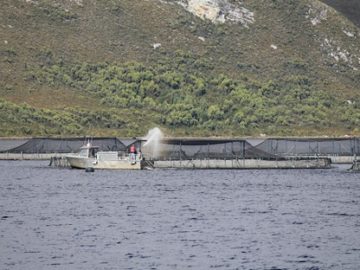
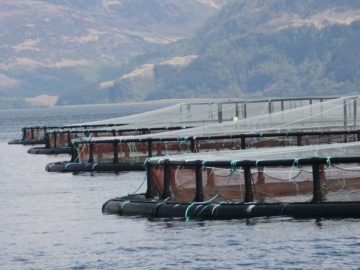
    WWF-Australia’s report focused on events that occurred at Macquarie Harbour in south-west Tasmania. One third of the harbour is located within the boundaries of the Tasmanian Wilderness World Heritage Area. The shallow and poorly flushed estuary is home to the endangered Maugean Skate – considered one of the rarest skate species in the world. The harbour is also home to salmon farms. In recent years, Macquarie Harbour has become an unfortunate poster child for how a rapid and reckless expansion of salmon farming can result in unmitigated ecosystem degradation.

    Several of the salmon farms that contributed to the degradation, including benthic damage and lowered oxygen levels, were eco-certified with ASC’s “responsibly farmed” and BAP’s “best practice” labels. 

    In 2019, WWF-Australia commissioned a review on how and why the circumstances that led to significant impacts at Macquarie Harbour occurred, including the efficacy and limitations of certification to prevent adverse impacts.  

     As a participant in WWF’s review, we share some of our key takeaways from the report

    • Certification criteria must go beyond farm compliance with local laws and regulations, as this is not enough to ensure environmental responsibility. This is particularly the case when local regulations are weak and/or enforcement is inadequate. 
    • Farm-level certifications currently do not effectively address the cumulative impacts of the industry within a given area or waterbody. 
    • ASC sanctioned loopholes likely contributed to delayed action to address and reverse impacts at certified farms. This includes ASC’s exclusion of intermediary farms from compliance with their standard (meaning a year or more from the production cycle is never assessed for environmental impacts) and ASC’s approval of problematic variances that weakened standard rules. 
    • The BAP certification does not publish audit reports, nor were they made available for the reviewer on request. Local stakeholders are not consulted during the BAP audit process. This lack of transparency and disclosure leaves serious questions as to how auditors managed the adverse impacts at BAP certified sites. 

    SeaChoice’s 2018 Global Review of the ASC Salmon Standard included a case study of the series of events at Macquarie Harbour. We found numerous failings by the ASC and the third-party auditors that enabled farms to become and remain certified – despite the negative impacts that were occurring.

    While the scope of the review was limited to Macquarie Harbour, WWF’s report findings are consistent with other areas where these certifications are present – including Canada.

    Since 2015, the ASC has continually watered down their standard by exempting the Canadian salmon farming industry from stringent criteria and, instead, deferring to government regulations. B.C. certified farms defer to the government’s rules for sea lice limits (allowing ASC farms to have 20+ lice per fish) and Area-Based Management (despite the government not using this management principle).  In addition, the ASC continues to allow auditors to exclude interim farms (commonly used by the B.C. industry) from compliance with their standard. We even had to call out Mowi for their misleading claim that all of their farms are ASC certified (they’re not).

    Transparency and meaningful stakeholder engagement are vital for any credible certification scheme. Most/all salmon farms in B.C. and in Atlantic Canada are certified by BAP, but the audit process to attain BAP is shrouded in secrecy. SeaChoice has called on BAP to publish audit reports that demonstrate a farm’s compliance with their standards and consult with local stakeholders during audits. 

    If certifications are to fulfill their purpose of driving improvements at the industry level, then these failings need to be urgently remedied – or they risk losing market support. Because it goes without saying that eco-certifications should deliver on their promises to shoppers.

  • Behind those ‘responsibly farmed’ seafood labels

    Behind those ‘responsibly farmed’ seafood labels

    Including NGOs in aquaculture certifications is key to preventing industry greenwash

    Canadian shoppers care about sustainable seafood. More than two-thirds check for eco-labels, including certifications, at least some of the time. By preferentially choosing eco-labelled seafood products over ones without, shoppers place their trust in that eco-certification, its sustainability promise and the systems behind it. But it is who is included or excluded in those behind-the-scenes systems that make an eco-certification legitimate or a potential greenwash.

    As advocates for environmental protection and social responsibility, non-governmental organisations (NGOs) have a significant stake in certification decisions, provide invaluable expertise, local knowledge and oversight of industry. Likewise, for Indigenous peoples and other local communities. These stakeholders can grant legitimacy to a certification. When legitimacy is not granted, this can lead to public facing campaigns and criticisms. 

    The three most prominent aquaculture eco-certifications, Aquaculture Stewardship Council (ASC), Best Aquaculture Practices (BAP) and GLOBALG.A.P., act as authorities for defining farmed seafood sustainability. Their eco-labels can be found on farmed seafood such as Atlantic salmon, shrimp, basa and tilapia. Retailers often cite them in their sustainable seafood policies. Aquaculture companies become certified in hopes of gaining a social licence, market access and premium prices. 

    SeaChoice’s latest report, Accountability in Seafood Sustainability: Improving the legitimacy of aquaculture certifications through better transparency and stakeholder inclusivity, reviewed the extent to which ASC, BAP and GLOBALG.A.P. are a product of and a platform for civil society stakeholder engagement. Here is some of what we found:

    • All three certifications engage with civil society stakeholders in some form or another, though, some more so than others. At a basic level, each provides stakeholder consultation opportunities during the development and revision of their standard(s). But the opportunities differed when we looked at governance structures and farm audit processes.
    • The GLOBALG.A.P. certification lacks civil society stakeholder representation on its standard-development and governance bodies. Instead industry members exclusively hold these positions. When eco-certifications instill a multi-stakeholder balance within their governance structures, they help ensure all opinions are fairly represented and considered. ASC and BAP includes civil society and industry stakeholders on their respective governance bodies. 
    • It is an unfortunate truth that, globally, aquaculture operations often lack transparency and consultation – both from the industry and governments. Concerningly, our report found some auditing practices of the voluntary eco-certifications are no better. For example, consumers and civil society stakeholders won’t find any published audit reports to demonstrate a farm’s compliance with the BAP or GLOBALG.A.P. standards. In addition, both lack a requirement to consult with local stakeholders during farm audits. This means that valuable expertise and on-the-ground oversight, as well as local knowledge and concerns, are being ignored. In comparison, ASC certified farms are subjected to audits that include local stakeholder consultation and audit reports are published. 
    • We also found that the ASC was the only aquaculture certification that has conducted and published a monitoring and evaluation (M&E) program. M&E programs are critical for demonstrating to all stakeholders how a scheme is performing against its stated theory of change or objectives (e.g., to improve the sustainability of aquaculture operators). 

    In short, eco-certifications are less likely to be considered ‘greenwash’ if they have buy-in and support from civil society stakeholders. But obtaining such support means schemes need to be inclusive and transparent – or risk being seen as ‘the fox guarding the henhouse’.

    So, should you continue to buy that eco-certified seafood? Generally speaking, yes. Another SeaChoice report found that independent eco-certification claims were more reliable and verifiable than self-declared environmental claims by companies. But no certification is perfect. This is why SeaChoice and other civil society groups advocate for improvements while calling out the egregious as necessary.

    Nor is certification alone the only solution to fixing the problems of farmed seafood (or whichever commodity it is). Governments need to ensure stronger regulations while protecting sensitive habitats and species (such as the removal of open-net pen salmon farms from Canadian waters). Retailers and seafood companies need to make sure their supply chains are not contributing to environmental degradation and social harms (see Seafood Progress to view how your local supermarket performs). 

    Finally, sometimes we don’t need to rely on eco-labels to tell us the best options for the health of our planet: recycled paper, electric vehicles, solar power. These are all better options in their commodity fields. Likewise, there are some farmed seafood options – such as shellfish and seaweed – that are inherently more sustainable regardless of whether or not they have a certified label. Moules frites, anyone?

  • Not all True North Seafood officially recommended as sustainable by Ocean Wise

    Not all True North Seafood officially recommended as sustainable by Ocean Wise

    You’ve heard the old saying – if it sounds too good to be true, it probably is. 

    Case in point: Last month, Cooke Aquaculture, one of the largest salmon farming companies in the world, proclaimed in its press release and social media posts “True North Seafood officially recommended as sustainable by Ocean Wise”. Some media outlets have amplified the misrepresentation. So, let’s set the record straight.

    Contrary to Cooke’s statement, only a part of the True North Seafood brand and associated products are endorsed by Ocean Wise. 

    Stating that the True North Seafood brand is “recommended as sustainable” by the Ocean Wise program could mislead unsuspecting shoppers to assume all of their seafood, including the brand’s net-pen farmed Atlantic salmon, is Ocean Wise endorsed. When in fact, it is not

    Why does this matter? Large corporations overreaching their green credentials is, unfortunately, nothing new. However, the negative ramifications from misleading green claims can be far reaching. 

    As outlined in our recently released study, Certification, Verification or Fabrication? An investigation of seafood environmental claims in Canadian retailers, misleading claims can lead to consumer confusion and skepticism towards all environmental claims. At worst, they have the potential to undermine efforts aimed at improving fishery and aquaculture sustainability.  

    A YouGov poll conducted simultaneously with our study found that 83% of Canadians are “somewhat to very concerned” about greenwashing and that 78% of Canadians who purchase seafood would likely stop purchasing a seafood product if its claim were found to be greenwashing.

    There’s no hiding that Cooke Aquaculture has had some not-so-green practices. For example, the company was fined by Washington State for violations associated with the 2017 collapse of their Cypress Island net pen farm that released 250,000 farmed salmon escapees into Puget Sound. Their Kelly Cove division was charged and pleaded guilty to illegal pesticide use that was connected with the deaths of hundreds of lobsters in the Bay of Fundy in 2009. Overly simplified public relation assertions won’t erase these track records. 

    The Ocean Wise program works with its partners to encourage improvements in their sustainability practices and procurement. SeaChoice sincerely hopes positive gains for our oceans are made through the partnership. 

    But we call on Cooke to represent the partnership truthfully and accurately. That is, that the partnership does not mean the True North brand (or Cooke) is recommended as Ocean Wise, but rather that some of Cooke’s True North branded products are Ocean Wise recommended. In turn, these recommended products should be clearly labelled Ocean Wise on the True North website and on product packages.

    Because at the end of the day, we should be able to trust any claims that are made on the products we buy. Environmental claims and eco-labels are meant to make shopping for sustainable seafood easier, not harder. 

  • Is the seafood sold in Canada’s retailers immune to greenwashing? Fishy claims suggest no.

    Is the seafood sold in Canada’s retailers immune to greenwashing? Fishy claims suggest no.

    Seafood companies should provide proof to back up their claims

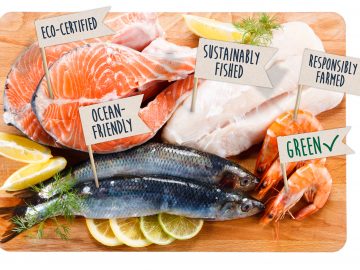
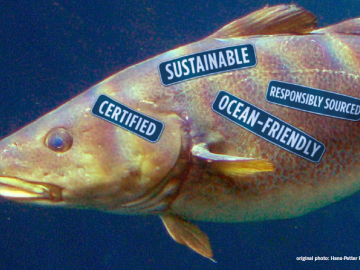
    “Sustainable”. “Ocean-friendly”. “Responsible”. From canned tuna to frozen fish sticks, these “green” claims seem to be slapped on every kind of seafood product in our grocery stores these days. But what do they mean? And better still, can we count on them to deliver on their promises? SeaChoice decided to find out. Spoiler alert: some are fishier than others. Read on to find out which.

    “Green” or environmental claims – logos and written statements – are supposed to help take the guesswork out of the selection process for shoppers who want to make ocean-friendly seafood purchases. When done right, claims represent a mechanism through which seafood consumers can ‘vote with their wallets’ and improve fishery and aquaculture practices by doing so. But greenwashing, the practice of making a misleading or unsubstantiated claim, can undermine this influence by fooling well-intentioned shoppers and shifting consumer preferences toward products that are not environmentally beneficial and/or creating an unwarranted favourable image of a company.

    We know that Canadians care about greenwashing. A YouGov poll conducted simultaneously with our investigation found that 83% of Canadians are concerned about greenwashing and 78% would likely stop purchasing a seafood product if its claim was found to be greenwashing.

    So, is there a warranted concern that greenwashing is taking place in Canadian supermarket fresh cases, aisles and freezers?

    In our study, Certification, Verification or Fabrication? an investigation of seafood environmental claims in Canadian retailers, released last week, we gathered data about environmental claims by going to 18 supermarket locations across five Canadian cities and provinces. Our sample consisted of 234 environmental claims across 181 seafood products.

    It’s important to understand that not all environmental claims are created equal. Some claims can be independent, such as third-party certifications (e.g., MSC, ASC and BAP) or non-governmental endorsements (e.g., Ocean Wise), or private company self-declarations. We categorized the claims into three types: certifications, endorsements, and self-declared claims. The different types of claims vary in their scope, accuracy, transparency and rigour. They also vary in their interpretation of “sustainability” as there are no regulations that strictly define the term for seafood (or any other commodity) sold in Canada. 

    First, we documented the prevalence of each environmental claim type and found self-declared claims – those made only by the brand, without any third-party backing – were the most common (44% of all claims). The rest were 33% endorsements and 23% certifications.

    Next, we checked whether the claims were backed up by publicly available evidence (i.e., the product label or website) and investigated whether the claim on the product could be verified to be from environmentally friendly fisheries or farms. Forty per cent of self-declarations failed to provide evidence and around six out of every ten self-declared claims were unverifiable. In comparison certifications, followed by endorsements, were found to be far more reliable.

    Finally, we compared self-declared claims against international best practice guidelines for environmental claims. Eight out of every ten self-declared claims were found to be vague and non-specific, over a third failed to provide an explanatory statement with the claim and nearly a quarter used the term “sustainable” (or a variation thereof) despite the recommendation by guidelines not to do so. 

    In summary, the most frequently found environmental claim type in Canadian supermarkets, self-declarations by companies, were the hardest to verify, typically lacked evidence and were often vague. Why would this be so? Self-declared claims rarely involve independent checks. In comparison, certifications generally have four common features: governance structures, standards for sustainability and chain-of-custody, an auditing function, and on-product logos. Self-declared claims typically lack the first three.

    SeaChoice is calling on the government to enact stronger requirements for self-declared claims, particularly for the use of the words “sustainable” and “responsible”, by stipulating that a third-party verification is the only acceptable evidence to support their use. Our investigation findings also support SeaChoice’s push for better seafood labelling laws, as having these would help substantiate the environmental credentials of a given product.

    What about conscientious shoppers just looking to buy some seafood for dinner that won’t harm the oceans? Based on our findings, your best bets are certified products, complementing these with endorsed products as needed. Regardless of the claim type, but particularly when purchasing self-declared products, look for evidence to back up the claim on the product or website. In fact, 90% of you agree that companies should provide publicly available information to back up their claims. So, tell your retailer and the seafood companies whose products  are sold within their stores that you expect this evidence to be provided.

    Lastly, If a product with an environmental claim lacks evidence to back it up, or if you suspect the claim may be a deceptive representation of the product (i.e., greenwashing), contact the Canadian Food Inspection Agency to report a food labelling concern.  Because at the end of the day, fishy claims shouldn’t have a place in our grocery aisles and freezers.  

  • Use it or lose it: seafood eco-certifications and stakeholder engagement

    Use it or lose it: seafood eco-certifications and stakeholder engagement

    NGO stakeholders are increasingly opting out of eco-certifications because their input disappears into the schemes’ “black box” of decision-making.

    Many seafood eco-certifications gain credibility due to the engagement opportunities they provide for stakeholders. Civil society organizations, alongside industry stakeholders, often play central roles in standard development and governance of eco-certifications. More often than not it is environmental and social justice non-governmental organizations (NGOs) that provide invaluable expertise and local knowledge by way of input to a fishery or farm certification. For example, that “certified sustainable” tuna in your pantry likely had an NGO help establish the sustainability criteria it met or, perhaps, register objections to its certification.

    In fact, stakeholder consultation is a fundamental component of any legitimate eco-label according to the frameworks that a number of seafood eco-certifications adhere to, including the United Nations Food and Agriculture Organisation (UN FAO) eco-labelling guidelines and the International Social and Environmental Accreditation and Labelling (ISEAL) codes of practice.

    Yet, despite these guidelines and codes, there is growing discontent by many NGO stakeholders who report fatigue, frustration and disillusionment with seafood eco-certifications. A number of NGO stakeholders have withdrawn or decreased their engagement with certifications citing little benefit to continuing their efforts. Some groups, including SeaChoice, have even initiated public campaigns in response, at least in part, to certain certification schemes’ inability to effectively address stakeholder concerns. The international Make Stewardship Count campaign is a good example.

    In light of these challenges, SeaChoice conducted an NGO stakeholder workshop during the 2019 Seafood Summit in Bangkok, Thailand, as well as an online survey, to explore stakeholder sentiment about participating in eco-certification processes, including any challenges and barriers, as well as what improvements scheme holders could make to help ensure meaningful stakeholder engagement.

    Read the full report here.

    Report Highlights

    Participants reported that eco-certification stakeholder processes were often not user-friendly,  requiring the need to “speak their language” (i.e., either referring to technical jargon or to documentation that is literally not available in their language) and that local and cultural contexts can be missed by auditors and certification processes.

    We heard that where stakeholders were able to engage in the process, stakeholders commonly experienced frustrations with the lack of accountability and transparency on how decisions are made. That is, stakeholder comments often appear to go into a “black box” of decision-making, and when the outcome is announced there is no rationale or explanation as to how input was considered, or not. Where responses were provided, stakeholders typically felt that they were not meaningful as they rarely adequately addressed stakeholder concerns.

    We also heard stakeholders express a general sentiment that stakeholder disillusionment is not taken seriously enough. In many cases, negative stakeholder feedback was met with hostile responses  by eco-certification schemes rather than serious engagement. This further eroded stakeholder trust and interest in program participation.

    Evidence suggests that stakeholder engagement can lead to higher quality decision-making and outputs. However, this is strongly reliant on the quality of the processes that lead to decision-making and other outputs. Done poorly, such processes can cause stakeholders to become cynical, harbour distrust and withdraw from the process. Such cynicism can, in turn, threaten the legitimacy of the decision-making. Based on the stakeholder perspectives represented in our report, we believe there is a cause for concern that seafood certification standard holders should make more efforts to incorporate stakeholders in decision-making, and be more transparent about their processes, in order to maintain legitimacy.

    Moreover, there is widespread agreement in the available literature that stakeholder participation hinges on the need for a genuine opportunity to be heard and to influence the decision. Therefore, for engagement to be genuine, certification standard holders should be open to stakeholder influence and ensure outcomes are not predetermined.

    Our report has been shared with the major seafood eco-certifications many of which are currently in the midst of important consultation processes (e.g. from MSC and ASC). We urge these schemes to strongly consider implementing the report recommendations as though their credibility and legitimacy depends on it. Because as stakeholder sentiment demonstrates – it does.


  • What ASC’s new chemical rules mean for Canadian farmed salmon

    What ASC’s new chemical rules mean for Canadian farmed salmon

    ASC has changed its rules around treating sea lice – how “responsible” are the new rules?

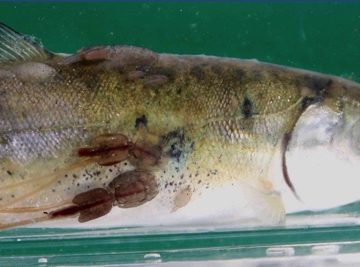
    The open nature of net-pen salmon farms means they are inherently susceptible to sea lice infections. Sea lice occur naturally in the wild ocean environment, but the “open” nature of net-pens allow the lice to infest farmed fish and multiply to unnatural levels. The lice can then infect any vulnerable juvenile wild salmon swimming by. Even low sea lice abundance on juvenile salmon can cause significant harm or death. Sea lice infestations are also a significant economic cost to the industry.

    Parasiticides (i.e. chemicals) are regularly used by farms to combat sea lice infections. The chemicals have their own set of environmental impacts, as untreated discharge and fish excrement gets released directly into the ocean. Chemical resistance has become an increasing concern – resistance can leave farmers unable to control outbreaks. This was seen at Clayoquot Sound in 2018 where farms, including Aquaculture Stewardship Council certified farms, experienced sea lice outbreaks as high as 34 adult lice per fish. Meanwhile, wild salmon runs are left with the consequences.

    It is therefore no surprise that parasiticide use is one of the sustainability concerns addressed by the ASC salmon standard. Unfortunately, the eco-label recently revised the number of chemical treatments allowed under its standard – and not for the better. The changes that go into effect at the end of this month dramatically increase the number of chemical treatments allowed in some salmon farming regions.

    Here’s what the changes mean for ASC ‘responsibly farmed’ Canadian salmon.

    First, farms on both coasts will be allowed to treat sea lice more often – with each treatment releasing parasiticides into the ocean environment and increasing the chance of chemical resistance. Many more treatments will be allowed on the east coast than in the west. Previously all ASC certified farms, regardless of their location, needed to meet a threshold of 2-3 sea lice treatments. Now, a B.C. salmon farm will be allowed 3-4 treatments, while an Atlantic Canada farm will be allowed as many as nine. Atlantic Canada farms will have up to eight years to work towards the 3-4 treatment threshold. And actually, an ASC certified B.C. farm might receive more than four treatments; an ASC interpretation means up to a year of production time can be excluded from the audit.1 During this time, environmental impacts such as sea lice treatments are simply ignored.

    Second, east coast farms benefit from another change – the removal of precautionary lobster protections. Until now, farms were penalized for chemical treatments during the sensitive lobster moulting period because the chemicals can be incredibly toxic to lobsters and other crustaceans. But the amendment no longer penalizes farms for the use of chemicals that could have significant impacts on lobster populations and/or fisheries. Deltamethrin has been found to be “extremely toxic” to crustaceans and may be lethal to lobsters up to 10 km away and several hours after release. Cypermethrin has also been found to be “very toxic” to crustaceans. Another study found azamethiphos exposure could cause sub-lethal effects, including delayed spawning in female lobster and other physiological impacts.

    Third, ASC has approved problematic variances (departures from standard criteria) that undermine the amendment’s Integrated Pest Management (IPM) requirements. The IPM requires certified farms to try and control sea lice using coordinated management practices (for example fallowing between cycles and chemical rotation), thereby reducing the risk of drug resistance. One requirement is that farms maintain lice loads of less than 0.1 mature female lice per fish. B.C. farms are exempt from this requirement, however, which has resulted in certified farms with lice counts of over 20 mature lice per fish. Another IPM requirement is area-based management. ASC’s own internal report found B.C. is the only salmon farming region without an ABM regulatory requirement. Like with the sea lice threshold, B.C. farms are exempt from the ABM requirement. Both the sea lice and ABM variances instead defer to Fishery and Oceans’ inadequate regulations.

    It’s not all bad news – there are some positive changes in the amendment. The chemical hydrogen peroxide now counts toward the treatment limit count – it didn’t before even though studies have demonstrated that hydrogen peroxide may negatively impact non-target species, including lobster and the surrounding benthic fauna and flora. Farms are also now required to monitor benthic sediment for parasiticide residues – allowing for potential short-term and long-term effects of chemical treatments to be identified and better understood. Finally, farms are now required to publicly report chemical treatment types, amounts and frequency. This is an important change given that public disclosure is not the industry’s forte.

    Certifications offer the potential to improve industry practices, but only when they go beyond industry norms and government regulations.

    Certifications offer the potential to improve industry practices, but only when they go beyond industry norms and government regulations. While the ASC parasiticide amendments are still more rigorous than required by most other aquaculture certifications, these amendments no longer reflect ‘best practices’ in salmon farming. SeaChoice continues to urge the ASC to remedy any weakening of the standard, particularly the problematic variances and the variance process itself.

    While ASC’s amendment might not meet the goal of ‘responsible’ aquaculture, the Prime Minister’s recently announced mandate to the Minister of Fisheries, Oceans and the Canadian Coast Guard is a promising step in the right direction. The Minster has been mandated to “work with the province of British Columbia and Indigenous communities to create a responsible plan to transition from open net-pen salmon farming in coastal British Columbia waters by 2025 and begin work to introduce Canada’s first-ever Aquaculture Act.” The transition of B.C. open net-pen salmon farms to closed containment by 2025 is one sure way to keep farm chemicals out of the ocean, and farmed derived sea-lice away from our wild fish (though we would like to see the transition extended to both coasts). Now that would be truly ‘responsible’ farmed salmon.

  • Is aquaculture the answer to overfishing and world hunger?

    Is aquaculture the answer to overfishing and world hunger?

    Science tests two common claims about the aquaculture industry.

    You’ve likely heard the narrative: ‘eat a farmed fish, save a wild fish’. It is a claim that the farmed salmon industry is particularly fond of. It’s a simple theory: if consumers substitute farmed seafood for wild, that should alleviate fishing pressure on wild stocks. With a third of the world’s wild fisheries overfished, any solutions to help reduce fishing pressure are certainly welcomed.

    But does the theory stack up? A recent study put it to the test and the answer, so far, is no. If the theory is true, then modelling should show that increased aquaculture production is correlated with decreases in wild catch. Instead, Longo et al. (2018) found that aquaculture has been supplementing – not suppressing – wild fishery captures. Since the 1980s, aquaculture production has steadily increased while fishery capture has remained relatively stagnant.

    The authors explored several potential factors to explain why aquaculture has not given wild fish a reprieve. The most obvious is the use of wild fish to feed farmed carnivorous fish. While fish feed manufacturers have innovated over recent years, 15 million tonnes of wild fish are still used for aquaculture. It doesn’t help that the ‘global North’ consumes predominantly high-value commodities that tend to be carnivorous and environmentally intensive, such as farmed salmon and shrimp. The authors suggest aquaculture production has focused efforts on “overall expansion rather than environmental conservation”.

    So, choosing farmed over wild isn’t alleviating pressure on wild populations – but aquaculture is adding to overall seafood production. Is it true, therefore, that farmed fish are feeding the world’s growing population, again as the industry often claims?

    A UN report recently estimated over 820 million people suffer from hunger, while 1.3 billion are food insecure (i.e. lack regular access to nutritious and sufficient food). A key element of FAO’s plan to eliminate world hunger is to increase access to fish through fishing and aquaculture.

    At the same time, studies have found the world produces more than enough food, including fish protein, for the entire global population. Between 1961 and 2013, world population grew at an average annual rate of 1.6%, while global fish supply increased annually on average by 3.2%. This highlights the need to understand and address the gap between supply and access.

    One of the reasons for the ‘gap’ is food loss and waste. Globally, around 35% of seafood is either ‘lost’ during the fishing, farming and/or processing stages (i.e. bycatch, discards, rejected, process waste, etc.) or thrown away as ‘waste’ at the retail or consumer level. Rich countries are the worst offenders. For example, nearly half of the U.S. seafood supply was found to be lost or wasted. The FAO has called on all nations to halve food loss and waste by 2030.

    Another reason for the gap between supply and access is that the type of seafood being farmed is frequently inaccessible to those who need it most, because of factors like locality, cost and/or culture. Longo et al. suggest the problem is that the industry often prioritizes the production of high-value seafood as a global commodity, think farmed salmon, rather than the production of seafood that meets human needs, think shellfish and seaweed. Other studies also suggest a shift away from farmed species that rely on feed inputs (e.g. wild fish and edible crops) is necessary to meet the protein needs of a growing population.

    Thankfully some places are closing the gap. In Bangladesh, a rapid transformation of the fish value chain – including the diversification of species farmed – has led to more affordable and accessible seafood for the domestic market, including the people who need it most.

    In the end, farmed salmon isn’t decreasing pressure on wild stocks nor is it the affordable protein that is going to feed the world (or even all Canadians) – in spite of what the industry says. But that’s not to say that we should avoid eating all farmed seafood – even if it is simply supplementing, not suppressing, the fish we catch. Maybe we just need to rethink which seafood we farm and choose to buy.

    Fisheries and Oceans last year announced a “renewed approach” to sustainable aquaculture in Canada – all targeted towards farmed salmon. However, diversifying our approach to aquaculture, beyond salmon, could help provide more accessible and affordable seafood protein options to more Canadians (though we should also ensure it is farmed sustainably). Consumers can help drive this change by purchasing the unsung sustainable farmed seafood heroes, such as shellfish and seaweed – which require no feed inputs. And please, avoid sending that extra seafood to the bin!