The shareholder campaign to protect an endangered skate in Tasmania is challenging how supermarkets manage seafood supply chain risks and what happens when investors demand stronger action.
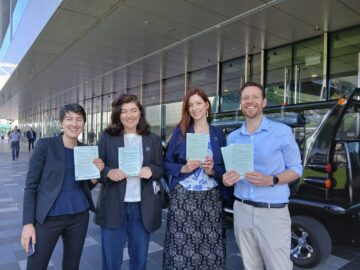
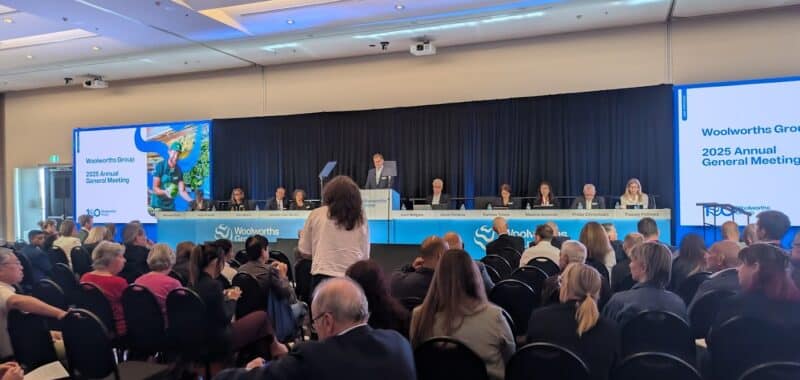
Now in its third year, Save the Skate is urging Woolworths shareholders to vote against Chair Scott Perkins’ re-election at the company’s upcoming annual general meeting. Coordinated by SIX, a members’ statement, backed by 230 shareholders, argues that the board has failed to respond adequately to repeated investor concerns.
SeaChoice member group Living Oceans Society collaborates on Save the Skate, contributing expertise in salmon farming, certification, and retailer seafood policies.
The campaign shows how seafood sourcing can become a boardroom issue — and why retailers must look beyond policies and certifications to the consequences of their purchasing decisions.
An extinction risk behind the seafood counter
Salmon farming is identified as the primary threat to the endangered Maugean skate in Tasmania’s Macquarie Harbour, which is partially within the Tasmanian Wilderness World Heritage Area. Despite this, both Woolworths and Coles continue to source salmon from the harbour.
SeaChoice and international allies challenged Best Aquaculture Practices and GLOBALG.A.P. to withdraw their endorsements of these farms given that the schemes inadequately addressed oxygen depletion in the skate’s habitat. The certifications rejected the complaints, leaving retailers able to point to certified farms despite scientific warnings about the species’ survival.
Investor pressure has delivered changes
There have been tangible changes. Both retailers have removed “responsibly sourced” claims for Tasmanian farmed salmon. Coles also established a nature-risk roadmap for its own-brand products, prioritized seafood as high risk, and claims to have reduced its salmon sourcing from Macquarie Harbour.
These developments matter. Marketing changes can reduce misleading assurances, while broader sourcing assessments can help companies identify risks across their operations and supply chains. However, neither retailer has ended its sourcing from the harbour.
Beyond certification: expectations are changing
The campaign reflects a broader shift highlighted in Make Stewardship Count’s recent report, Beyond Certification: The shift to corporate due diligence accountability across the seafood supply chain.
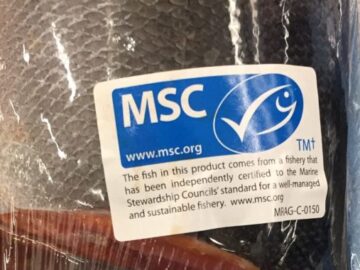
The report examines why relying solely on the Marine Stewardship Council certification cannot adequately address the environmental and human rights risks facing seafood buyers. It highlights the convergence of due diligence regulations, anti-greenwashing rules, forced labour disclosures, and investor scrutiny of nature-related risks. The report emphasizes that these growing expectations further underscore the need for retailers to proactively identify and address harms, rather than assume certification fulfils those responsibilities.
Although the report focuses on wild-caught seafood, the same principle applies to the farmed salmon at the heart of Save the Skate. A company needs to assess credible evidence about its supply and respond to the severity of the risks — even when those farms or fisheries are certified.
The shareholder campaign puts that expectation into practice. Investors are asking what retailers, and ultimately their boards, have done in response to evidence of harm. The question is whether their decisions protect nature and manage the company’s exposure to material risks.
Human rights risks also belong on investors’ radar
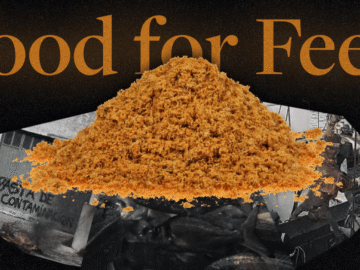
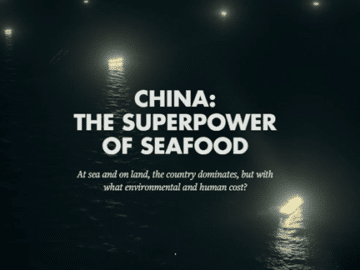
The Outlaw Ocean Project’s investigations reinforce the need for scrutiny beyond certification. Its China reporting identified supply-chain connections involving retailers and processors linked to alleged state-imposed Uyghur forced labour. Across that investigation, all ten processing plants linked to Uyghur forced labour held MSC certification; four also held ASC certification. These findings demonstrate that a certificate cannot be treated as evidence that every environmental and human rights risk has been addressed. The latest Food for Feed investigation adds another layer as various retailers from across the globe are connected to forced labour, preventable worker deaths, pollution, illegal fishing, and damage to coastal livelihoods across the fish feed supply chains supporting farmed seafood.
For investors, the implications extend beyond reputation. Exposure to serious abuses can cause sourcing disruptions and potential legal or regulatory consequences. The Woolworths shareholder statement already identifies seafood linked to alleged forced labour as one of its concerns about board oversight.
Why this matters in Canada – and all retailers across the globe
Canadian supermarkets face similar questions. Food for Feed traces fishmeal from The Gambia through Vietnamese shrimp production to Walmart Canada and Sobeys, and Peruvian fishmeal through shrimp supply chains reaching Walmart and Metro. SeaChoice has also urged Canadian retailers to respond to Outlaw Ocean’s earlier human rights investigations.
The lesson extends beyond the named companies. Retailers need traceability, meaningful engagement with affected people, and evidence that their sourcing decisions prevent harm. Investors should ask whether boards have the information and oversight needed to achieve those outcomes.
The Save the Skate campaign shows how shareholders can escalate their concerns when corporate commitments and engagement fall short. The ultimate measure of success is whether retailers act on the science and evidence — and, in Macquarie Harbour, whether they act in time to protect the skate.