Staff
SeaChoice team member profiles
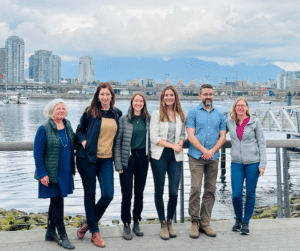
Across Canada over 25 individuals, working within the various SeaChoice member organizations, directly contribute their time and talents to the development and success of the program. In addition, SeaChoice employs various individuals on a contract basis, and values the participation of dedicated volunteers.
Your full-time SeaChoice staff members are:
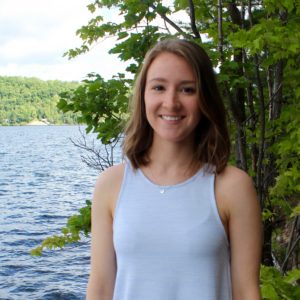
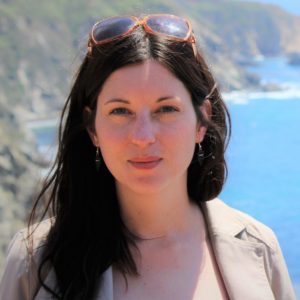
Lana Gunnlaugson- SeaChoice National Manager info@seachoice.org
After graduating from Environmental Studies at the University of British Columbia, I was thrilled to work with Project Seahorse at the UBC Fisheries Centre and then later with the David Suzuki Foundation Marine and Freshwater Conservation team. In my current position with SeaChoice, I help to manage and oversee the SeaChoice coalition as well as work to help communicate our work to new audiences.
Having grown up in the Prairies, I could not help but be completely overwhelmed in awe of our oceans and this connection drove my interest to learn more about solutions for keeping our oceans healthy. As a seafood lover, I enjoy learning about local sustainable fisheries. A personal favourite of mine is the BC Spot Prawn not only because spot prawns are so tasty, but because I am always fascinated to observe how well managed this fishery is when I go on my annual fishing trip with local fishers.
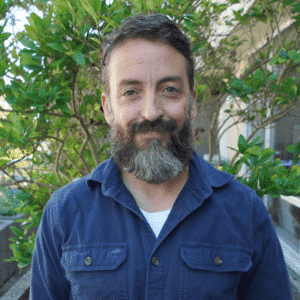
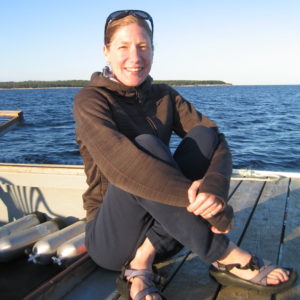
Katherine Dolmage Sustainable Seafood Market Analyst marketanalyst@seachoice.org
After completing a degree in Biology at the University of Victoria, I had the amazing opportunity to move to the Westfjords of Iceland to undertake a Master’s Degree in Coastal and Marine Management. This program introduced me to the unique management plans of Icelandic fisheries, and gave me the opportunity to work with the Ocean Wise program to complete my thesis, evaluating the program and the factors that encourage chefs in Vancouver to choose sustainable seafood.
Growing up on Vancouver Island, I have always loved the ocean and taken every opportunity I could to get out on the water and learn about sustainable fisheries. Albacore tuna, my favourite sustainable fish, is a fishery that I was able to experience first hand as a deckhand aboard a commercial fishing boat. Hauling each fish individually from troll lines makes you really appreciate your meals!
SeaChoice Members:
Business Team
Amanda Adams (Canadian Parks and Wilderness Society)Amanda is an environmentalist and outdoor enthusiast who grew up on the open prairies but has since migrated west to be closer to the coastal waters of B.C. A graduate of the University of Saskatchewan with a B.Sc. in biology and a B.A. in anthropology she recognizes and works to communicate the complexity with which environmental, economic, and social issues are intertwined.
An avid nature enthusiast, she draws her energy and inspiration from reconnecting with nature, getting out to explore the wilderness whenever she can which has lead her to live and work on the coast. Over 5 years experience working in the field of wildlife and conservation ecology has allowed Amanda to live in and experience a vast array of environments from the coast of the Great Bear Rainforest to Grasslands National Park, often working with and alongside members of the local communities. Seeing a need to reconnect people with our environment she has been working within the environmental non-profit sector focused on drawing the connections between nature and our culture, economy and health while raising awareness of the importance of our ocean ecosystems as the Marine Conservation Campaign Assistant at CPAWS-BC.
Amanda is thrilled to be working as a member of SeaChoice for CPAWS. Our ocean ecosystems are a precious resource and sustainable seafood is instrumental in ensuring the health of our oceans while supporting good fishing and aquaculture practices.
Bill Wareham (David Suzuki Foundation)
My interest in fish began at a young age. I began fishing at our family cottage in Manitoba at the age of three. Since then I have developed a never ending curiosity about fish and acquired a bachelors degree in zoology from the University of Manitoba. I also acquired an MBA from the University of Manitoba and have used my education and experience in the non profit sector to help realize conservation of fish so that the next generations can enjoy the fish well into the future. I have worked for many environmental organizations and currently work as the marine conservation specialist for the David Suzuki Foundation. A large part of my work is dedicated to SeaChoice and the promotion of sustainable seafood in the Canadian marketplace.
I enjoy many different kinds of sustainable seafood, but my all time favourite is BC spot prawns fresh out of the trap and sautéed in butter and garlic. Simple and delicious!
I am proud of the work that I do with our SeaChoice partners. By making people more aware of the long term value of ensuring that our fisheries and aquaculture practices are sustainable and by working with retailers to find sustainable sources of seafood I am confident that we are going to improve the health of our oceans. When people become aware of the sustainable options and take the initiative to avoid unsustainable ones, we’re sending a powerful message to producers to do the right thing. It’s exciting to see people getting on board this great initiative.
Kelly Roebuck (Living Oceans Society)
I grew up in on the East Coast of Australia, where the majority of Australians are not only blessed to have the ocean as their ecological backyard, but as a large part of our economy, culture and national identity.
Now living in Vancouver Canada, I still find myself connected to the one marine ecosystem that both countries share – the Pacific Ocean.
Obtaining a Bachelors degree in Applied Science, Protected Area Management from the University of Queensland allowed me to acquire not only an education in science, but how to apply business principles, government relations and stakeholder engagement to a conservation context. Working on sustainable seafood in Canada for the last 5 years has given me the opportunity to work with businesses from large retailers, foodservice operators, restaurants, suppliers and distributors, fishermen to producers – essentially the full supply chain!
I am proud to be a Steering Committee member for SeaChoice on behalf of Living Oceans Society and a working team member of the SeaChoice business team.
My favourite “Best Choice” seafood would have to be the ‘unsung hero’ of tunas – troll-caught BC albacore tuna. Not only is it a sustainably-caught local fish (unlike the usual tuna suspects from other parts of the world – think high amounts of bycatch, overfishing and illegal fishing), but the flavour of BC albacore is like melting butter in one’s mouth. Just ask any Vancouver chef in the know!
Rob Johnson (Ecology Action Centre)
Rob has a diverse background of NGO and corporate program coordination and project management, as well as varied research experience. He has a master’s degree in Natural Resource and Ecosystem Management from Stockholm University, and is a passionate advocate for the application of ecosystem-based management principles, resilience thinking applied to socio-ecological systems, and community-based adaptive management approaches to marine conservation.
My favorite sustainable seafood is farmed shellfish, and living in Atlantic Canada, the ability to source fresh and locally farmed mussels, scallops and oysters from small-scale sustainable farmers is a real treat.
My work with SeaChoice provides me with the opportunity to engage in collaborative work directly with members of the fishing and aquaculture industry. This is important as healthy oceans are rooted in resilient ecosystems as well as in healthy vibrant coastal communities where fishing and aquaculture practices (that minimize harmful impacts on the marine ecosystem) provide for long-term meaningful livelihoods.
Communications Team
Sophika Kostyniuk (David Suzuki Foundation)
Sophika Kostyniuk has spent more than a decade championing environmental causes through grassroots and consumer based campaigns, both in Canada and the US. Her efforts have focused on sustainable transportation, rainforest conservation, and more recently a farmed salmon awareness campaign that was based out of San Francisco, CA. Sophika’s love of the environment was instilled early on in childhood when her family would travel throughout North America and encourage her to explore the wilds. As a result, she now leads annual backpack trips to Alaska’s remote north east in search of musk ox and grizzly bears. She obtained a degree in Ecology from the University of Guelph, then an Enviro-Entrepreneur diploma from the Ivey School of Business. Sophika is dedicated to engaging broad consumer audiences and empowering them to influence decision makers through their actions.
Sophika’s favourite seafood is Canadian Dungeness crab! Dungeness crabs are caught on shallow sandy bottoms from Monterey California to the Aleu-tian Islands, Alaska. They are my absolute favourite seafood as they are unbelievably delicious when dipped in butter, can be put into omelets, salads, soups and sandwiches. Currently, this is considered an abundant fishery, and the crab pots present little harm to other types of marine life. A bonus is that Dungeness crabs are available year-round.
Being a mother to a young daughter, and life-long greenie, I firmly believe that my work with the SeaChoice program makes a difference. By choosing sustainable seafood, we help ensure that various marine species are not impacted by unsustainable fisheries, and that other fisheries are allowed to flourish and keep providing us with the healthy and delicious alternatives that we want to enjoy.
Science Team
Jeffery Young (David Suzuki Foundation)
I was fascinated by the complexities and mysteries of biology in high school and haven’t looked back. After working in Canada’s arctic for a few years as a biologist I returned to grad school to study Pacific salmon. I wanted to better understand how this amazing animal connects diverse ecosystems, from the open Pacific Ocean to small streams and lakes deep in the interior of the continent. I was also intrigued by fisheries management – the last great human hunt and the idea of managing a diverse, variable wild resource to support communities seemed like a real challenge. And it is. Since joining the David Suzuki Foundation in 2005 I’ve been working to improve the conservation of Pacific salmon in Canada and support more sustainable fisheries that benefit our local communities.
It’s hard to pick just one favourite green-listed seafood, but my list of faves would definitely include oysters. A good fresh oyster is like getting a delicious blast of the Pacific Ocean. I don’t think any other seafood provides as much depth of flavour.
By supporting SeaChoice’s strategic planning and providing advice on recommendations for wild Pacific Salmon I know that I’m helping protect important fish species and the places where they live.
Scott Wallace (David Suzuki Foundation)
As long as I can remember I have always loved the animals and ecosystems associated with water. It was my experience as a fisheries observer on a small gillnet fleet in the Bay of Fundy in the early 1990s that confirmed my suspicions that there was something terribly wrong with how we went about harvesting from the oceans. This lead to a doctoral degree and to the type of work I presently do.
My favourite green-listed seafood is the Pacific sardine. The fishery has little bycatch, conservative catch quotas, and from a budgetary point of view, is inexpensive. Other characteristics included being healthy for you and a low carbon footprint.
My work at SeaChoice as the science coordinator ensures that the appropriate science is being used in our assessments of various fisheries. By informing consumers and retail partners of sustainable seafood preferences we hope to put an end to unsustainable fishing practices.
Susanna Fuller (Ecology Action Centre)
Growing up in Cape Breton and spending a lot of time on the water and in the ocean has made me appreciate the pure luxury of being able to eat food that is produced from the natural ecosystem. I have to say that a fresh oyster, plucked from the sediments of the Bras D’or Lakes, cannot be beat for taste and experience.
Engaging in SeaChoice has enabled me to make the important link between the economy and the environment when it comes to marine conservation. I am very concerned about the plight of coastal communities as fisheries are industrialized and fish populations decline. Much of the sustainable seafood movement is asking for sustainable options to meet consumer demand, yet unfortunately the benefits of this demand are rarely reaped by the fishermen who are fishing sustainably in the first place.
I’m committed to working to change this through policy change and a market shift to ocean-friendly seafood. My background of growing up in rural Nova Scotia, completing a PhD. in marine biology and having worked on national and international marine policy over the past several years enables me to see the benefits that are possible from an engaged consumer and retail base, particularly when it comes to making real change on the water.